

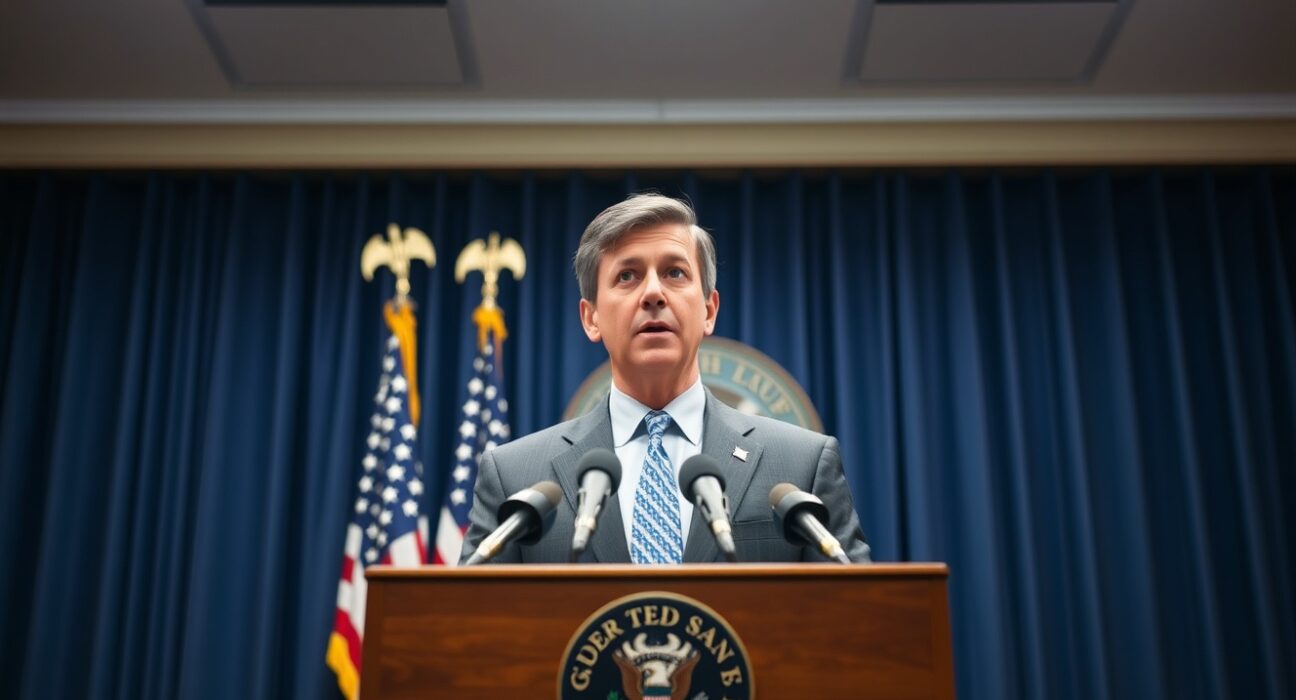
Federal Reserve Chair Kevin Warsh confirmed today that he will continue holding regular press conferences through the end of this year, signaling a commitment to transparent communication with financial markets and the public. The announcement maintains the Fed’s recent practice of providing detailed commentary after each policy meeting, a shift from the earlier approach of quarterly briefings.
Background on Fed Communication Policy
The decision to extend press conferences through year-end builds on changes implemented in recent years to increase the frequency of public briefings. Previously, Fed chairs held press conferences only after four of the eight annual meetings. The shift to post-meeting briefings began under former Chair Jerome Powell and has been continued by Warsh since he took office. The goal is to reduce market uncertainty by offering immediate context on rate decisions, economic projections, and policy rationale.
Market and Policy Implications
Investors and analysts rely heavily on these press conferences for nuanced signals about the Fed’s policy trajectory. By maintaining the schedule, Warsh provides a direct channel for clarifying complex decisions, especially during periods of economic volatility. The move is seen as reinforcing the Fed’s commitment to forward guidance, a tool used to manage market expectations without committing to a fixed policy path.
Impact on Transparency and Trust
Regular press conferences have become a cornerstone of the Fed’s transparency efforts. They allow journalists to ask follow-up questions, which can reveal subtle shifts in the Fed’s thinking that might not be apparent in written statements. For market participants, this real-time clarification helps reduce the risk of misinterpretation and sudden volatility. Warsh’s decision to continue the practice through year-end suggests the Fed views this level of openness as essential for maintaining credibility.
Conclusion
Chair Kevin Warsh’s commitment to holding press conferences through the end of the year reinforces the Federal Reserve’s dedication to clear, consistent communication. For investors, economists, and the broader public, these briefings remain a critical tool for understanding the central bank’s policy direction in a complex economic environment.
FAQs
Q1: Why does the Fed chair hold press conferences after meetings?
The press conferences provide immediate context and clarification for the Fed’s policy decisions, helping markets and the public understand the rationale behind interest rate changes and economic projections.
Q2: How often will Kevin Warsh hold press conferences this year?
Warsh will hold a press conference after each of the remaining Federal Open Market Committee (FOMC) meetings through the end of 2026, consistent with the current schedule.
Q3: Does this change affect the Fed’s independence?
No. The decision to hold press conferences is a communication practice, not a policy shift. It enhances transparency without compromising the Fed’s independent decision-making authority.
Disclaimer: The information provided is not trading advice, Bitcoinworld.co.in holds no liability for any investments made based on the information provided on this page. We strongly recommend independent research and/or consultation with a qualified professional before making any investment decisions.
