

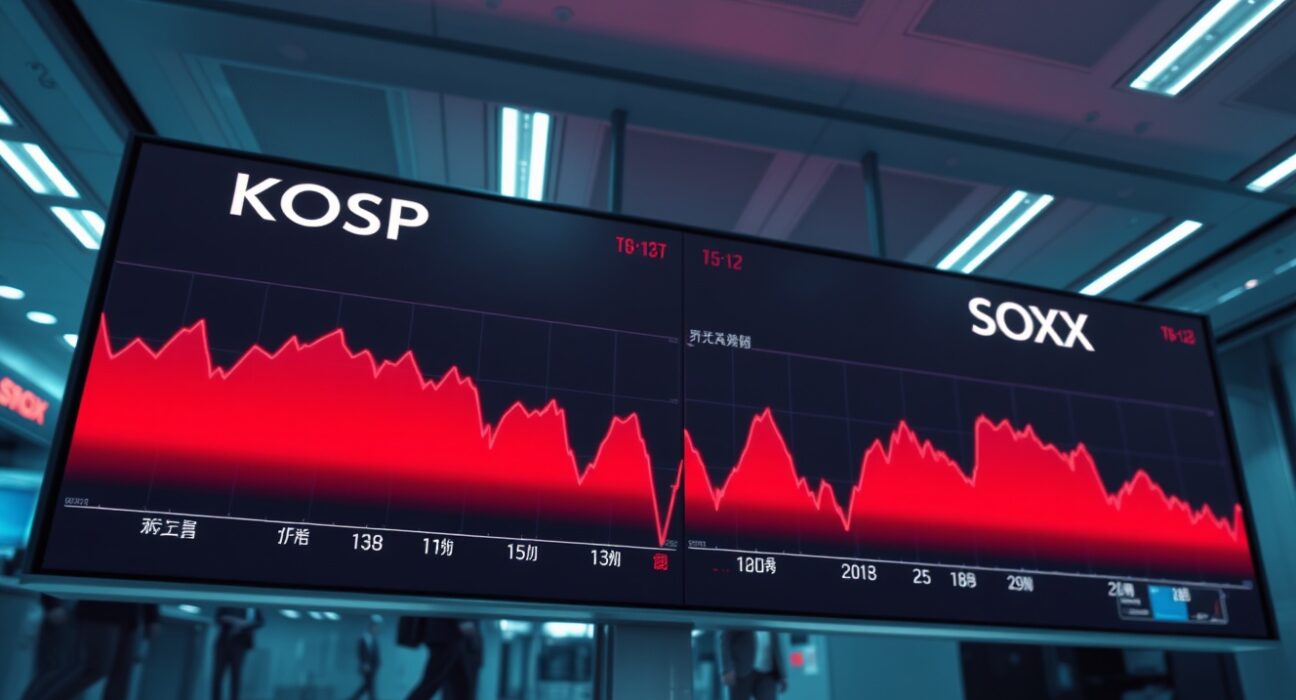
The KOSPI index has fallen 44% from its recent peak, while the SOXX semiconductor index has dropped 30% over the same period, raising serious questions about the health of the US technology sector and global semiconductor demand. As of the latest trading sessions, these declines represent one of the most significant corrections in the tech-heavy indices since the 2022 downturn.
What is driving the KOSPI and SOXX declines?
The KOSPI, South Korea’s benchmark stock index, has been hit hard by a combination of weakening global demand for memory chips, geopolitical tensions, and a slowdown in the Chinese economy, a major export market. The SOXX, which tracks US-listed semiconductor companies, has similarly suffered from oversupply concerns and reduced consumer electronics spending. Both indices are closely watched as leading indicators for the broader tech sector, and their simultaneous decline signals a synchronized downturn.
Is this a repeat of the 2022 tech crash?
While the magnitude of the current decline is severe, the context differs from the 2022 correction. In 2022, the Federal Reserve’s aggressive interest rate hikes were the primary catalyst, compressing valuations across growth stocks. Today, the sell-off appears more sector-specific, driven by inventory gluts in the semiconductor supply chain and a slower-than-expected recovery in enterprise IT spending. However, the risk of a broader recession remains a key concern for investors.
What this means for investors and the broader market
The 44% drop in the KOSPI and the 30% decline in the SOXX are not just technical corrections—they reflect underlying economic realities. For investors, these moves suggest that the tech sector may face further headwinds before stabilizing. The semiconductor industry, in particular, is cyclical, and the current downturn could persist for several quarters. On a positive note, such sharp declines have historically created buying opportunities for long-term investors, provided the fundamentals of individual companies remain sound.
Conclusion
The simultaneous decline of the KOSPI and SOXX indices by 44% and 30% respectively underscores the fragility of the current tech rally and the broader global economic environment. While the US tech sector is not necessarily on the brink of a systemic collapse, the data suggests that a sustained recovery may require a rebound in semiconductor demand and clearer signs of economic stability. Investors should monitor these indices closely as leading indicators for the technology sector’s trajectory.
FAQs
Q1: What does the KOSPI index represent?
The KOSPI (Korea Composite Stock Price Index) is the primary stock market index of South Korea, heavily weighted toward technology and semiconductor companies, including Samsung Electronics and SK Hynix.
Q2: What is the SOXX index?
The SOXX (Philadelphia Semiconductor Index) tracks the performance of 30 US-listed semiconductor companies, including NVIDIA, Intel, and AMD, and is a key benchmark for the global chip industry.
Q3: Are these declines a sign of a global recession?
While sharp drops in these indices often precede broader economic slowdowns, they are not definitive predictors. The current declines are largely driven by sector-specific supply-demand imbalances rather than systemic financial stress.
Disclaimer: The information provided is not trading advice, Bitcoinworld.co.in holds no liability for any investments made based on the information provided on this page. We strongly recommend independent research and/or consultation with a qualified professional before making any investment decisions.
