

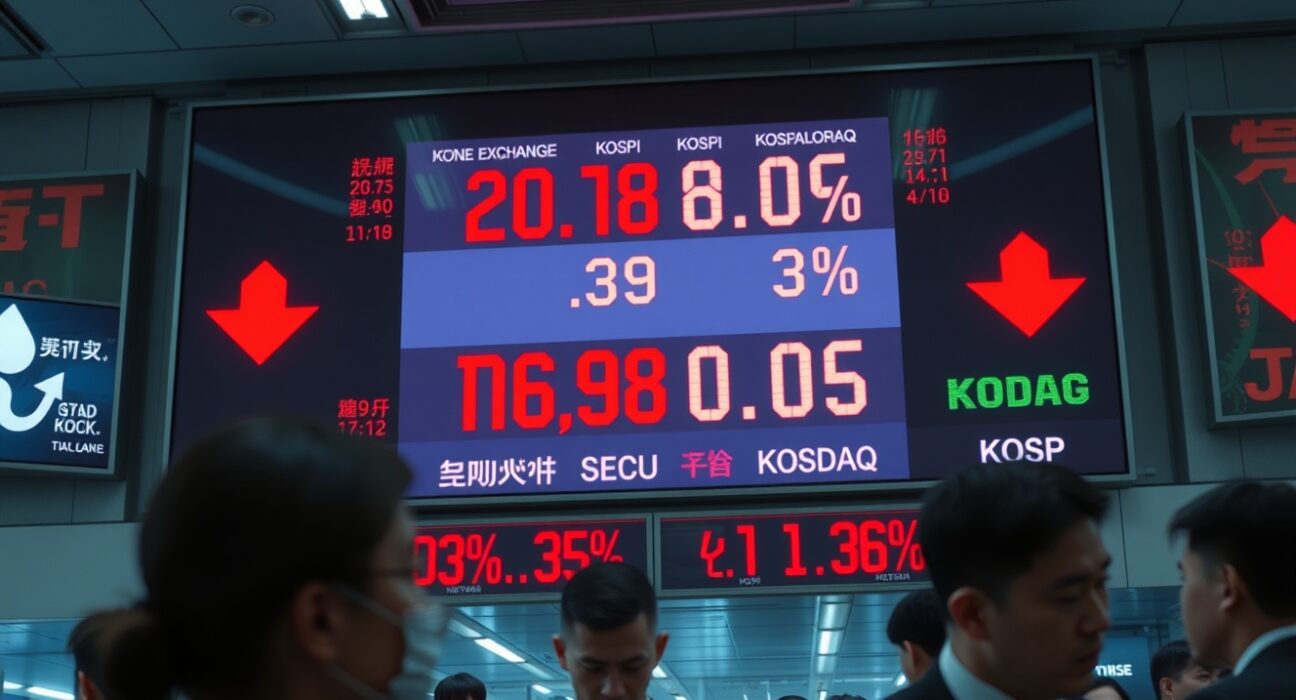
South Korea’s stock markets faced a second consecutive day of severe turbulence on [insert date], as the Korea Exchange activated a circuit breaker after the KOSPI and KOSDAQ indices each fell more than 8%. The move temporarily halted trading to prevent further panic selling and to give investors time to assess rapidly deteriorating market conditions.
How the Circuit Breaker System Works
The Korea Exchange’s circuit breaker system is designed to stabilize markets during extreme volatility. It operates in three stages, with the first stage triggered when the KOSPI or KOSDAQ drops 8% or more from the previous day’s close, and that decline persists for at least one minute. Once activated, trading is suspended for approximately 20 minutes, allowing market participants to digest information and place orders without the pressure of continuous price declines.
If selling pressure continues after trading resumes, a second-stage halt can be triggered at a 15% decline, and a third at 20%. The system aims to prevent cascading losses and give regulators time to respond to extraordinary events.
Market Context and Implications
This marks the second straight day the circuit breaker has been activated, underscoring the depth of selling pressure in South Korean equities. The KOSPI, South Korea’s main benchmark index, has been under pressure from global macroeconomic headwinds, including rising interest rates, geopolitical tensions, and concerns over export demand in key sectors like semiconductors and automobiles.
The KOSDAQ, which tracks smaller, technology-oriented companies, has been hit even harder, reflecting investor flight from riskier assets. The simultaneous decline in both indices suggests broad-based selling rather than sector-specific weakness.
Why This Matters to Investors
For retail and institutional investors, the repeated activation of circuit breakers signals extreme market stress. Historically, such events can lead to increased volatility in the short term but may also present buying opportunities if fundamentals remain intact. However, regulators and market analysts are closely watching for signs of systemic risk, including margin calls and liquidity crunches.
The broader Asian market context is also relevant. South Korea’s downturn mirrors similar declines in other regional markets, raising questions about contagion risk and the effectiveness of coordinated policy responses.
Conclusion
The activation of South Korea’s circuit breaker for a second consecutive day highlights the severity of current market conditions. While the mechanism provides a temporary pause for reflection, the underlying causes of the sell-off remain unresolved. Investors should monitor upcoming policy announcements from the Bank of Korea and the Financial Services Commission, as well as global market trends, for further direction.
FAQs
Q1: What is a circuit breaker in stock markets?
A circuit breaker is a regulatory mechanism that temporarily halts trading when a major index falls by a predetermined percentage within a short period. It is designed to prevent panic selling and give investors time to assess information.
Q2: How does South Korea’s circuit breaker differ from other countries?
South Korea’s system has three stages (8%, 15%, and 20% declines), with a 20-minute halt at the first stage. In contrast, the U.S. market uses a single 7% decline trigger for a 15-minute halt at the market-wide level.
Q3: What should investors do during a circuit breaker event?
Investors should avoid making impulsive decisions. The pause allows time to review holdings, check news, and assess whether the sell-off is based on fundamentals or panic. It is advisable to consult a financial advisor before making significant portfolio changes.
Disclaimer: The information provided is not trading advice, Bitcoinworld.co.in holds no liability for any investments made based on the information provided on this page. We strongly recommend independent research and/or consultation with a qualified professional before making any investment decisions.
