

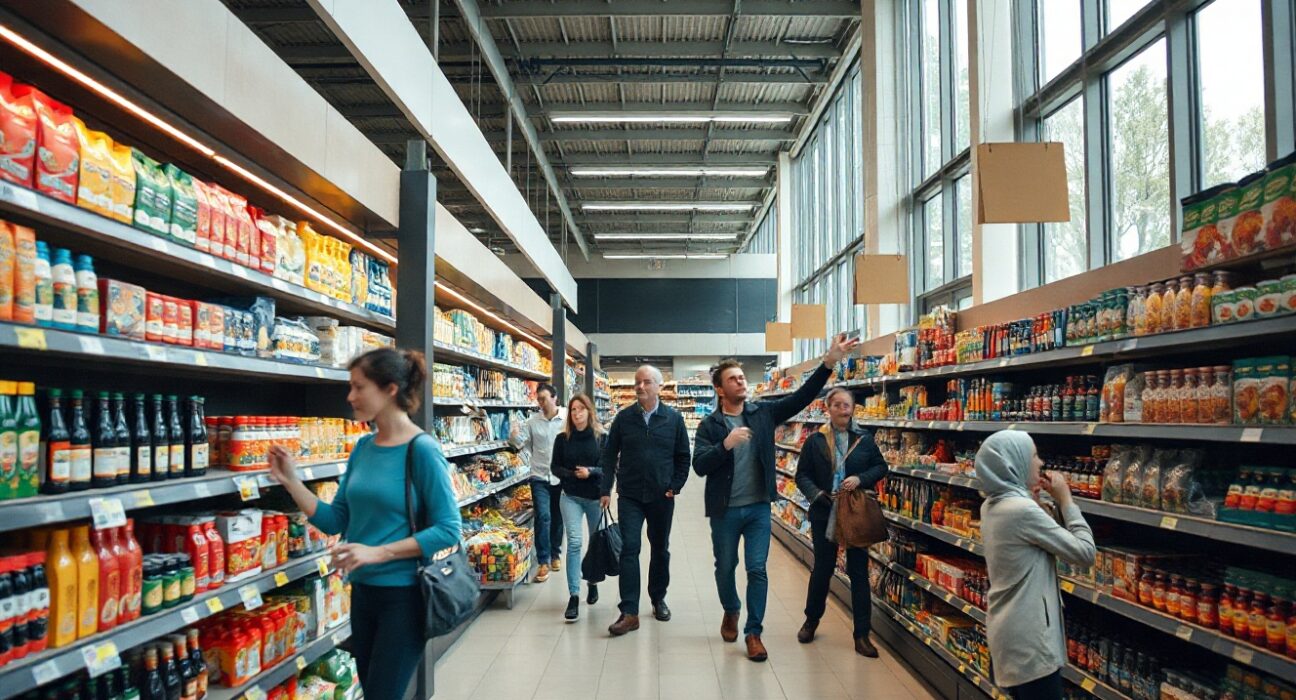
Switzerland’s real retail sales increased by 1.5% year-on-year in June, falling well short of market expectations of 3.2%, according to data released by the Federal Statistical Office. The figure, which adjusts for inflation, signals a marked slowdown from the previous month’s revised growth and raises questions about the resilience of consumer spending in the Alpine nation.
What the June Data Shows
The 1.5% annual growth in June represents a significant deceleration compared to May’s revised 2.8% increase. On a seasonally adjusted monthly basis, retail sales declined by 0.7% in June, reversing the 0.5% gain recorded in May. The slowdown was broad-based, with declines in food, beverages, and tobacco, as well as in non-food sectors such as clothing and household goods.
While the year-on-year figure remains positive, the sharp miss against the consensus forecast highlights growing caution among Swiss consumers. Inflation, though moderate, continues to erode purchasing power, and consumer sentiment has softened in recent months amid global economic uncertainty.
Why It Matters for the Swiss Economy
Retail sales are a key indicator of domestic demand, which is a crucial driver of Switzerland’s economic growth. The weaker-than-expected reading could prompt economists to revise down their GDP forecasts for the second quarter. It also adds to the case for the Swiss National Bank to maintain its accommodative monetary policy stance, as subdued consumer spending may keep inflationary pressures in check.
For businesses, the data suggests that the retail sector faces headwinds, potentially leading to tighter inventory management and more cautious hiring. The slowdown could also impact the tourism and hospitality sectors indirectly, as consumers may cut back on discretionary spending.
Regional and Sectoral Variations
The national average masks regional differences. Urban centers like Zurich and Geneva have shown more resilience, supported by higher incomes and tourism, while rural areas have experienced weaker sales. By sector, online retail continued to grow, albeit at a slower pace, while brick-and-mortar stores faced declining foot traffic. The food sector, which had been a stabilizer, also saw a dip, suggesting that even essential spending is being scrutinized.
Conclusion
Switzerland’s June retail sales data underscores a cooling in consumer activity, with the 1.5% year-on-year increase missing expectations by a wide margin. The monthly decline points to a softening trend that may influence economic policy and business strategy in the coming months. As the SNB monitors these developments, the retail sector’s performance will remain a critical barometer of domestic economic health.
FAQs
Q1: What does ‘real retail sales’ mean?
Real retail sales are adjusted for inflation, providing a more accurate picture of actual volume sold. The 1.5% year-on-year increase means that the quantity of goods sold in June 2025 was 1.5% higher than in June 2024, after accounting for price changes.
Q2: Why did the actual figure miss expectations so significantly?
Market expectations of 3.2% were based on stronger consumer confidence and prior month momentum. The miss suggests that consumers are becoming more cautious, possibly due to persistent inflation, higher interest rates, or global economic uncertainty, leading to reduced discretionary spending.
Q3: How might this affect the Swiss National Bank’s monetary policy?
Weaker retail sales could signal subdued inflationary pressures, giving the SNB room to maintain or even cut interest rates. However, the central bank also considers other factors like the exchange rate and global conditions, so the retail data alone won’t dictate policy, but it will be a contributing factor.
Disclaimer: The information provided is not trading advice, Bitcoinworld.co.in holds no liability for any investments made based on the information provided on this page. We strongly recommend independent research and/or consultation with a qualified professional before making any investment decisions.
