

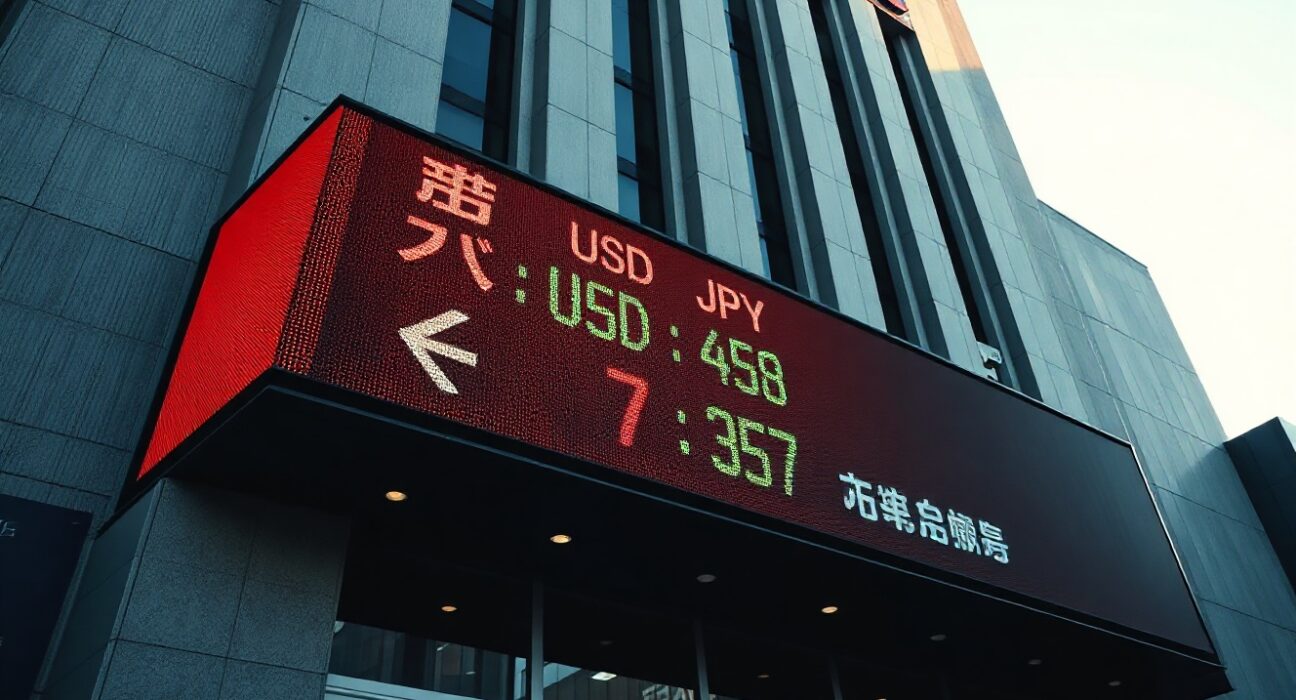
Japan’s Ministry of Finance confirmed on Monday that it conducted a rare currency intervention to stem the yen’s rapid depreciation, marking the first such action since 2022 as the currency hovered near a 34-year low against the U.S. dollar.
Why the Intervention Happened Now
The yen has been under sustained pressure as the Bank of Japan maintains ultra-low interest rates while the U.S. Federal Reserve keeps rates elevated. The gap has made dollar-denominated assets more attractive, driving investors away from the yen.
In recent weeks, the currency weakened past 160 to the dollar, a level that Japanese officials had repeatedly flagged as excessive and speculative. The intervention, which involves selling dollar reserves to buy yen, is designed to inject volatility into the market and deter further speculative selling.
Market Reaction and Immediate Impact
Following the intervention, the yen strengthened sharply, moving from around 160.2 to the dollar to roughly 155 in a matter of hours, according to data from the Tokyo foreign exchange market. However, traders remain cautious, noting that previous interventions in 2022 had only a temporary effect.
The intervention comes ahead of the Bank of Japan’s policy meeting later this week, where market participants expect the central bank to signal a more aggressive approach to normalizing monetary policy. Some analysts believe the government’s action is a precursor to a policy shift, though the BOJ has so far given no clear indication.
Impact on Global Markets and Investors
For international investors, the intervention signals that Japanese authorities are willing to act to protect their economy from the adverse effects of a weak currency. A weaker yen inflates import prices, raising costs for households and businesses, and complicates the BOJ’s inflation targeting.
The move also has implications for carry trades, where investors borrow yen at low rates to invest in higher-yielding assets elsewhere. A sudden yen appreciation can trigger unwinding of such trades, causing volatility in global equity and bond markets.
Conclusion
Japan’s intervention to halt the yen’s slide is a significant policy action with near-term market impact, but its long-term effectiveness remains uncertain. The government and central bank face a delicate balancing act between supporting the currency and maintaining economic growth. Investors should monitor the BOJ’s upcoming meeting for further signals on policy direction.
FAQs
Q1: What is a currency intervention?
Currency intervention is when a country’s central bank or finance ministry actively buys or sells its own currency in the foreign exchange market to influence its value. Japan sold U.S. dollars and bought yen to strengthen the yen.
Q2: How often does Japan intervene in the currency market?
Japan rarely intervenes, typically only when it deems currency moves as excessive and harmful to the economy. The last intervention before this was in 2022, when the yen weakened past 150 to the dollar.
Q3: Will the intervention permanently stop the yen’s decline?
Not necessarily. Interventions can provide temporary relief, but sustained changes depend on underlying economic factors, such as interest rate differentials. The Bank of Japan’s policy decisions are crucial in determining the yen’s long-term trajectory.
Disclaimer: The information provided is not trading advice, Bitcoinworld.co.in holds no liability for any investments made based on the information provided on this page. We strongly recommend independent research and/or consultation with a qualified professional before making any investment decisions.
