

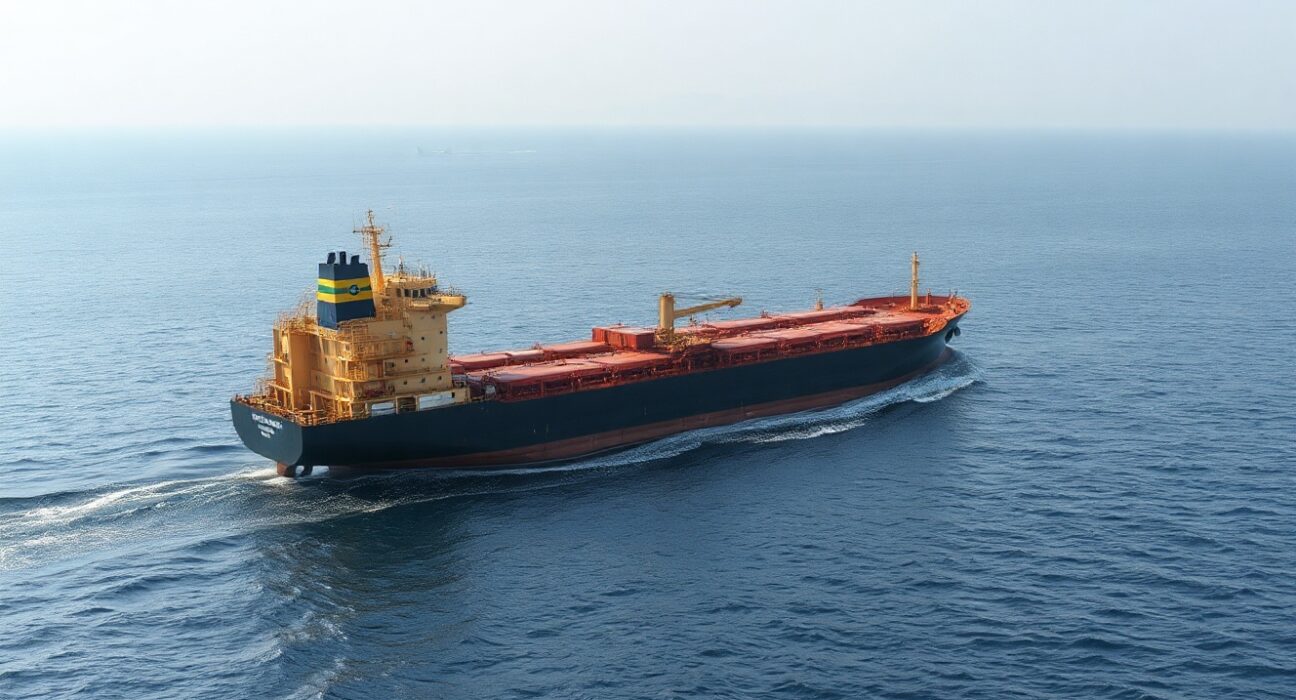
Iran has announced that it has agreed with Oman on the coordinates of a route through the strategic Strait of Hormuz, a critical passage for global oil shipments. The agreement, reported on [date of report if available, otherwise ‘this week’], aims to enhance navigational safety and coordination in one of the world’s most vital maritime chokepoints.
What does the agreement entail?
The agreement establishes specific coordinates for a designated route through the Strait of Hormuz, which is used for about one-fifth of the world’s oil consumption. According to Iranian officials, the coordinates were finalized after consultations with Omani authorities, though the exact route details have not been publicly disclosed. This move is seen as a step toward formalizing navigation procedures in a waterway that has seen periodic tensions between Iran and the United States.
Why is the Strait of Hormuz strategically important?
The Strait of Hormuz, connecting the Persian Gulf with the Gulf of Oman and the Arabian Sea, is a narrow waterway bordered by Iran to the north and Oman and the United Arab Emirates to the south. It is a critical artery for crude oil and liquefied natural gas shipments, with an estimated 21 million barrels of oil passing through daily, according to the U.S. Energy Information Administration. Any disruption to this route can have immediate impacts on global energy prices and supply chains.
Regional and international implications
This agreement could be interpreted as an effort to reduce the risk of accidental collisions or miscalculations in a heavily trafficked and geopolitically sensitive area. It also reflects ongoing diplomatic engagement between Iran and Oman, which has historically maintained neutral relations. While the agreement is primarily operational, it may contribute to broader stability in the region, though it does not address underlying security tensions that have led to past incidents, such as the 2019 attacks on oil tankers.
Conclusion
The Iran-Oman agreement on route coordinates in the Strait of Hormuz is a practical step toward improving maritime safety in a critical global shipping lane. While it does not resolve the deeper geopolitical rivalries in the region, it demonstrates a shared interest in maintaining the free flow of traffic. The coming months will reveal how effectively the new route is implemented and whether it leads to further cooperative measures.
FAQs
Q1: What is the Strait of Hormuz?
The Strait of Hormuz is a narrow waterway between Iran and Oman that connects the Persian Gulf with the Gulf of Oman and the Arabian Sea. It is a vital passage for global oil and gas shipments.
Q2: Why is the agreement between Iran and Oman significant?
The agreement establishes specific coordinates for a route, potentially reducing the risk of maritime incidents and improving navigational safety in a strategically critical area.
Q3: Has there been any international reaction to the agreement?
As of now, there has been no formal international reaction. The agreement is primarily bilateral and focuses on operational coordination rather than broader geopolitical issues.
Disclaimer: The information provided is not trading advice, Bitcoinworld.co.in holds no liability for any investments made based on the information provided on this page. We strongly recommend independent research and/or consultation with a qualified professional before making any investment decisions.
