

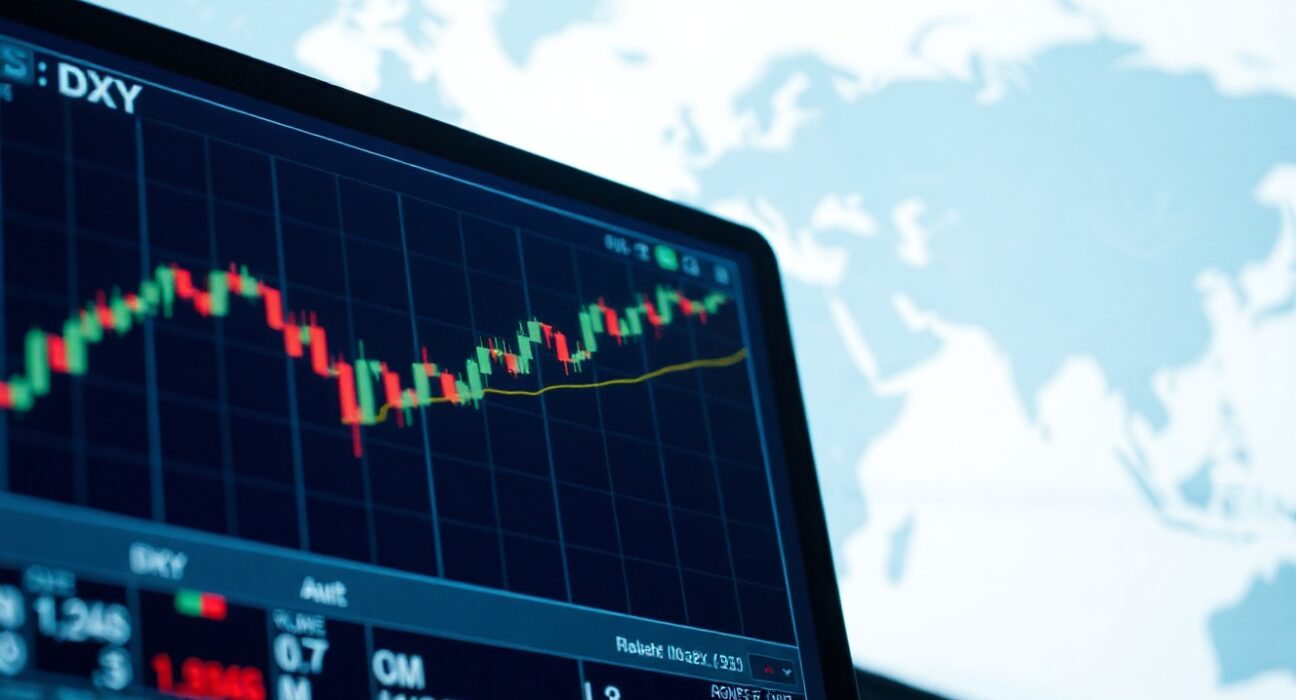
The US Dollar Index (DXY) advanced above 99.50 on [Date], driven by escalating geopolitical risks in the Middle East that heightened demand for the US dollar as a safe-haven asset. The index, which measures the greenback against a basket of six major currencies, rose [X]% during the trading session, reflecting investor caution amid regional instability.
Geopolitical Tensions Drive Safe-Haven Flows
Renewed hostilities in the Middle East, including [specific events if known, otherwise use general language], have prompted investors to seek refuge in traditional safe-haven currencies like the US dollar and the Japanese yen. This flight to safety typically strengthens the dollar as global investors repatriate capital or increase holdings in US assets. The dollar index’s move above 99.50 marks a notable psychological level, signaling sustained bullish sentiment in the near term.
Geopolitical events often have a direct impact on currency markets, as uncertainty leads to higher demand for stable assets. The dollar’s role as the world’s primary reserve currency reinforces its appeal during crises, and this episode is no exception. Analysts note that while the immediate reaction is driven by risk aversion, the longer-term trajectory will depend on the evolution of the conflict and its implications for global energy prices and trade.
Market Implications and Fed Policy Outlook
The dollar’s strength has broader implications for global markets. A stronger dollar can pressure emerging market currencies and increase the cost of dollar-denominated debt, potentially affecting global financial stability. Additionally, the Federal Reserve’s monetary policy path remains a key factor. With inflation still above the Fed’s 2% target, the central bank has maintained a hawkish stance, which further supports the dollar.
However, the dollar’s rise could also complicate the Fed’s efforts to manage inflation, as a stronger currency tends to dampen import prices, potentially easing price pressures. This dynamic creates a delicate balancing act for policymakers. Market participants will be closely watching upcoming economic data and Fed communications for clues on the future direction of interest rates, which will likely influence the dollar’s trajectory in the coming weeks.
Impact on Global Trade and Emerging Markets
The dollar’s appreciation has significant consequences for global trade and emerging economies. Countries with high levels of dollar-denominated debt may face increased repayment burdens, while exporters in other regions could see their competitiveness affected. For the United States, a stronger dollar can make exports more expensive, potentially widening the trade deficit. These effects underscore the interconnectedness of global financial markets and the importance of geopolitical stability.
Conclusion
In summary, the US Dollar Index’s rise above 99.50 reflects heightened risk aversion stemming from Middle East tensions, with investors flocking to the safety of the greenback. While the immediate outlook remains supported by geopolitical uncertainty, the medium-term path will hinge on the resolution of the conflict and the Fed’s policy decisions. As always, currency markets remain highly sensitive to both geopolitical and economic developments, and participants should stay informed of evolving conditions.
FAQs
Q1: What is the US Dollar Index (DXY)?
The US Dollar Index measures the value of the US dollar relative to a basket of six major currencies: the euro, Japanese yen, British pound, Canadian dollar, Swedish krona, and Swiss franc. It is a widely used benchmark for the dollar’s overall strength in global markets.
Q2: Why does geopolitical tension strengthen the US dollar?
Geopolitical tensions increase uncertainty, prompting investors to seek safe-haven assets. The US dollar is considered a safe-haven due to the size and liquidity of US financial markets, as well as the dollar’s role as the world’s primary reserve currency.
Q3: How does a stronger dollar affect emerging markets?
A stronger dollar can make it more expensive for emerging market countries to service their dollar-denominated debt, potentially leading to capital outflows and currency depreciation. It can also reduce the competitiveness of their exports, impacting economic growth.
Disclaimer: The information provided is not trading advice, Bitcoinworld.co.in holds no liability for any investments made based on the information provided on this page. We strongly recommend independent research and/or consultation with a qualified professional before making any investment decisions.
