

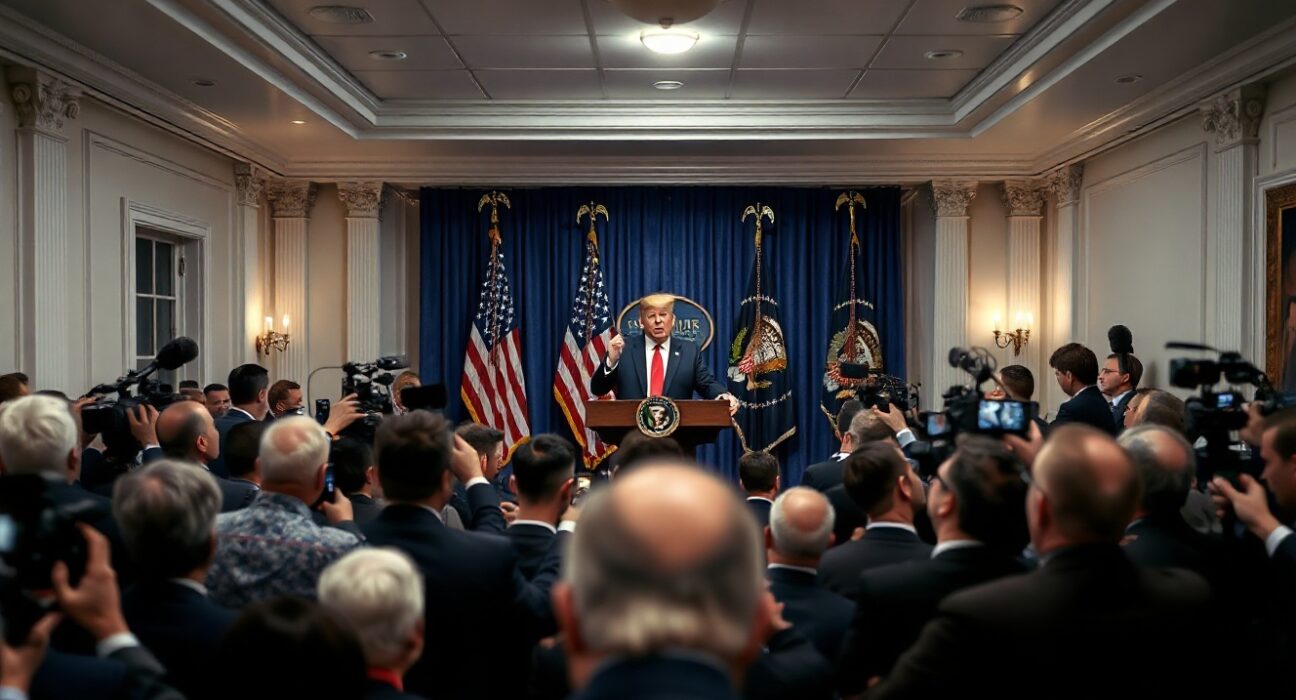
President Donald Trump said the ongoing U.S. military operation against Iran is intended to prevent the country from acquiring nuclear weapons, arguing that Tehran would inevitably develop them if Washington held back. Speaking to reporters, Trump expressed disappointment with Iran’s approach to negotiations, accusing Tehran of agreeing to terms in private discussions only to reject them through public statements. He also pointed to Iran’s struggling economy as a sign of the pressure the country faces.
Background: A Long-Standing Standoff
The U.S. and Iran have been locked in a confrontation over Tehran’s nuclear program for decades. The 2015 Joint Comprehensive Plan of Action (JCPOA) placed limits on Iran’s enrichment activities in exchange for sanctions relief, but the U.S. withdrew from the deal in 2018 under Trump’s first administration, re-imposing crippling sanctions. Iran subsequently scaled back its commitments, enriching uranium to higher levels and limiting international inspections. Diplomatic efforts to revive the agreement have repeatedly stalled, with Iran demanding guarantees that the U.S. will not withdraw again.
Trump’s comments come amid reports of U.S. military strikes on Iranian targets, which the administration has framed as a defensive measure to neutralize an imminent nuclear threat. While the White House has not provided specific intelligence, officials have pointed to Iran’s recent advances in enrichment technology and its refusal to cooperate with the International Atomic Energy Agency (IAEA) as evidence of a determined weapons drive.
Diplomacy vs. Pressure
The president’s remarks highlight a central tension in U.S. policy: whether to rely on military force or economic coercion to change Iran’s behavior. Trump said he was “disappointed” with Iran’s negotiating stance, claiming that Iranian officials had agreed to certain conditions in talks only to later disavow them through media statements. He added that Iran’s economy is “in turmoil,” suggesting that sanctions and internal mismanagement have left Tehran vulnerable.
Iran, for its part, has denied seeking nuclear weapons, insisting that its program is for peaceful purposes. Iranian leaders have also dismissed U.S. pressure, vowing to continue enrichment and warning of retaliation against any attack. The standoff has drawn international concern, with European and Asian powers urging restraint and calling for a return to diplomacy.
Oil Market Implications
Trump also noted that oil prices are lower now than during the Biden administration, a statement that reflects current market trends. Brent crude has traded below $70 per barrel in recent months, down from peaks above $90 in 2022. Analysts attribute the decline to weaker global demand, increased U.S. production, and expectations of a supply surplus. However, any sustained conflict in the Middle East could disrupt shipping routes and tighten supply, potentially reversing the downward trend. The Strait of Hormuz, through which about 20% of global oil passes, remains a key risk point.
For consumers, lower oil prices could ease inflation pressures, but the broader economic impact of a war with Iran is uncertain. Energy markets are sensitive to geopolitical shocks, and even the threat of escalation can trigger volatility.
Why This Matters
The stakes of the U.S.-Iran confrontation extend far beyond nuclear proliferation. A military conflict would have humanitarian, economic, and geopolitical consequences, potentially drawing in regional proxies and affecting global energy security. For readers, understanding the administration’s stated rationale and the underlying tensions helps clarify what may come next, whether that involves further strikes, renewed negotiations, or a prolonged standoff.
Trump’s remarks also underscore a recurring pattern in U.S. policy: the use of maximum pressure to force a change in Iran’s behavior. Critics argue that such tactics have not worked, while supporters say they have weakened Iran’s economy and military capabilities. The coming weeks will reveal whether this latest escalation brings Iran back to the table or pushes the region closer to a wider war.
Conclusion
President Trump has justified U.S. military action against Iran as a necessary step to prevent it from obtaining nuclear weapons, while expressing frustration with Tehran’s negotiating tactics. The situation remains fluid, with no clear resolution in sight. As the world watches, the interplay of diplomacy, sanctions, and military force will determine whether the standoff can be resolved peacefully or spirals into a broader conflict.
FAQs
Q1: Why is the U.S. striking Iran?
The Trump administration says the strikes are aimed at preventing Iran from developing nuclear weapons, citing Tehran’s enrichment activities and refusal to cooperate with international inspectors.
Q2: What is Iran’s position on its nuclear program?
Iran insists its nuclear program is peaceful and denies seeking weapons. It has, however, enriched uranium to levels beyond the limits set by the 2015 nuclear deal, raising concerns among Western nations.
Q3: How could the conflict affect oil prices?
While prices are currently lower than during the Biden era, a prolonged conflict could disrupt oil supplies from the Middle East, especially if the Strait of Hormuz is affected, potentially driving prices higher.
Disclaimer: The information provided is not trading advice, Bitcoinworld.co.in holds no liability for any investments made based on the information provided on this page. We strongly recommend independent research and/or consultation with a qualified professional before making any investment decisions.
