

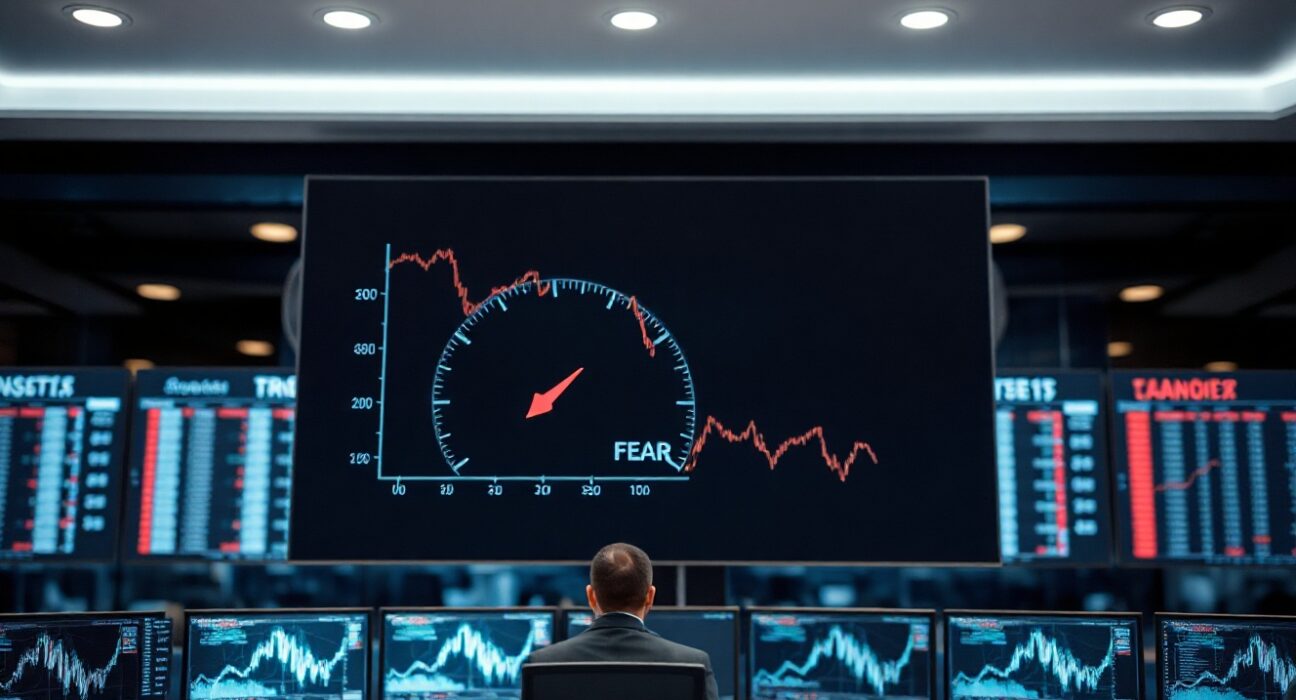
The Crypto Fear and Greed Index, a widely watched sentiment gauge, remained at 37 on [date], unchanged from the previous day, indicating that market participants continue to exhibit caution. The index, which ranges from 0 (extreme fear) to 100 (extreme greed), has been hovering in the fear zone for the past several sessions, reflecting persistent uncertainty among investors.
Understanding the Fear and Greed Index
CoinMarketCap’s in-house index aggregates multiple data points to measure the emotional state of the cryptocurrency market. The calculation includes price momentum of the top 10 cryptocurrencies by market capitalization, market volatility, derivatives data such as the put/call ratio, the stablecoin supply ratio (SSR), and proprietary search data from CoinMarketCap. A reading below 50 typically signals fear, while values above 50 suggest greed.
The current level of 37 indicates that fear is prevailing, but not at extreme levels. Historically, readings in this range have often preceded market stabilization or even rebounds, as overly pessimistic sentiment can create buying opportunities for contrarian investors. However, it also suggests that the market lacks the confidence to push prices higher in the near term.
Market Context and Implications
The persistent fear comes amid a backdrop of macroeconomic uncertainty, regulatory headlines, and volatile price action in major cryptocurrencies. Bitcoin, the largest digital asset, has been trading in a range, failing to break above key resistance levels. Meanwhile, altcoins have shown mixed performance, with some outperforming while others lag.
Derivatives markets are also reflecting caution. The put/call ratio, which measures the volume of bearish options relative to bullish ones, has been elevated, indicating that traders are hedging against downside risk. The stablecoin supply ratio, which compares the market cap of stablecoins to that of Bitcoin, suggests that investors are holding cash rather than deploying capital into riskier assets.
Why This Matters to Investors
For traders and investors, the Fear and Greed Index serves as a contrarian indicator. Extreme fear readings (below 20) have historically been associated with market bottoms, while extreme greed (above 80) often precedes corrections. At 37, the market is not in panic mode, but the lack of enthusiasm suggests that a catalyst may be needed to shift sentiment.
Moreover, the index can be a useful tool for portfolio management. Investors who are considering entry points may view the current level as an opportunity to accumulate, while those who are risk-averse might prefer to wait for more favorable conditions.
Conclusion
The Crypto Fear and Greed Index holding at 37 underscores the cautious mood in the cryptocurrency market. While the reading is not extreme, it reflects a lack of conviction among participants. As always, investors should consider multiple indicators and conduct their own research before making decisions. The index is a snapshot of sentiment, not a predictive tool, and market conditions can change rapidly.
FAQs
Q1: What does the Crypto Fear and Greed Index measure?
The index measures market sentiment by analyzing price momentum, volatility, derivatives data, stablecoin supply, and search trends. A score below 50 indicates fear, while above 50 indicates greed.
Q2: Is a reading of 37 a buy signal?
Not necessarily. While lower readings can indicate potential buying opportunities for contrarian investors, the index should be used alongside other technical and fundamental analysis. A score of 37 suggests caution but not extreme pessimism.
Q3: How often is the index updated?
CoinMarketCap updates the index daily, providing a real-time snapshot of market sentiment. However, the underlying data can shift throughout the day, so the daily reading is a point-in-time assessment.
Disclaimer: The information provided is not trading advice, Bitcoinworld.co.in holds no liability for any investments made based on the information provided on this page. We strongly recommend independent research and/or consultation with a qualified professional before making any investment decisions.
