

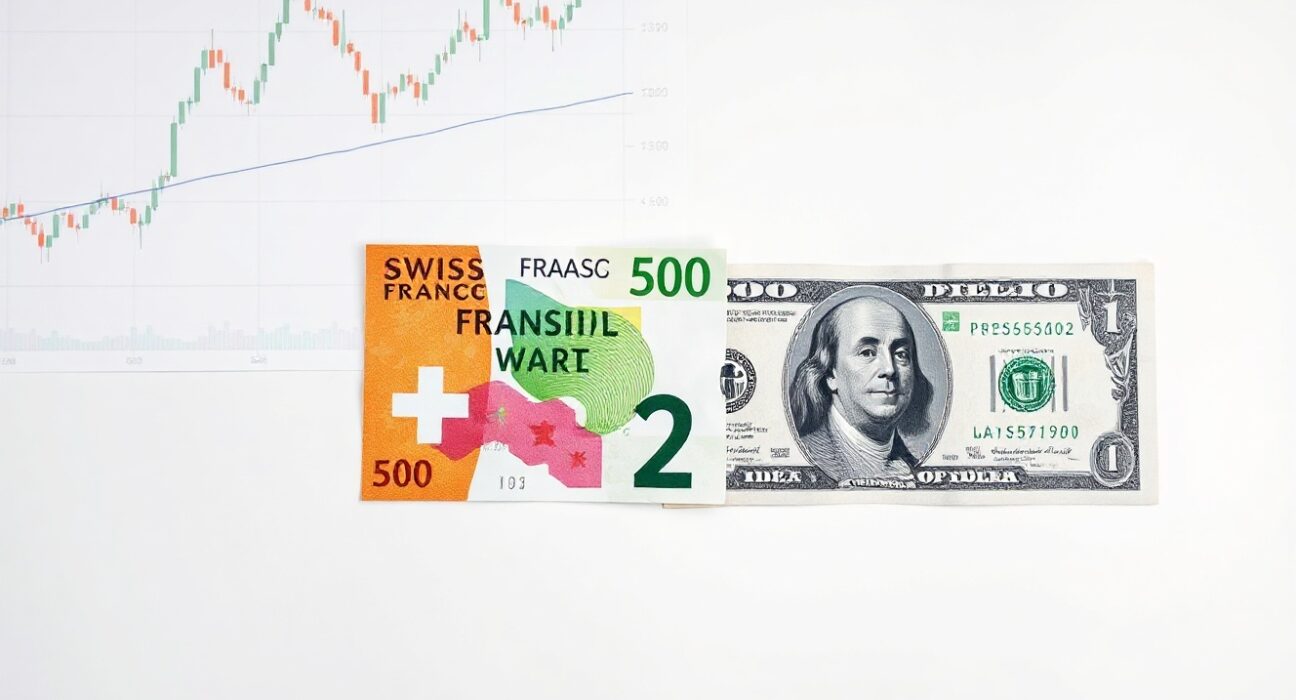
The Swiss Franc strengthened against the US Dollar on Tuesday, as softer-than-expected US inflation data pressured the greenback and boosted demand for safe-haven currencies.
Market Reaction to US Inflation Data
Fresh US inflation figures released earlier in the session came in below market expectations, prompting traders to trim bets on further Federal Reserve rate hikes. This shift in sentiment weighed on the US Dollar, allowing the Swiss Franc to gain ground. As of the latest data, USD/CHF traded lower, reflecting the dollar’s broad weakness across major currencies.
Why the Swiss Franc Benefits
The Swiss Franc is traditionally viewed as a safe-haven asset, attracting investors during periods of economic uncertainty or when the dollar weakens. Softer inflation reduces the likelihood of aggressive monetary tightening by the Fed, which typically undermines the dollar’s yield advantage. Consequently, capital flows shifted toward the franc, which is also supported by Switzerland’s stable economic fundamentals and low debt levels.
Implications for Traders and Investors
For currency traders, the move highlights the sensitivity of USD/CHF to US economic data. A sustained trend of cooling inflation could lead to further dollar depreciation, potentially pushing USD/CHF toward key support levels. Conversely, any upward surprise in inflation or hawkish Fed commentary could reverse the pair’s direction. Investors with exposure to Swiss assets may also see currency gains amplify returns, while those holding dollar-denominated assets face currency headwinds.
Broader Market Context
The dollar’s decline is part of a larger trend observed over recent weeks, as markets reassess the Fed’s policy path. While the US economy remains resilient, inflation data is increasingly pointing to a slowdown, which could prompt the Fed to pause or even cut rates later this year. In contrast, the Swiss National Bank has maintained a cautious stance, but the franc’s strength may prompt officials to monitor export competitiveness.
Conclusion
In summary, the Swiss Franc’s appreciation against the dollar is a direct response to softer US inflation, which reduces the appeal of the greenback. While the immediate market reaction is clear, the longer-term trajectory will depend on upcoming economic data and central bank communications. Traders should stay attuned to inflation trends and policy signals to navigate the evolving currency landscape.
FAQs
Q1: What does softer US inflation mean for the Swiss Franc?
Softer inflation reduces the likelihood of aggressive Federal Reserve rate hikes, which typically weakens the US Dollar. As a result, the Swiss Franc, a safe-haven currency, tends to strengthen against the dollar.
Q2: How does the USD/CHF pair react to inflation data?
USD/CHF is highly sensitive to US inflation releases. Lower-than-expected inflation usually leads to a decline in the pair, as traders adjust their expectations for Fed policy and the dollar’s yield advantage narrows.
Q3: Is the Swiss Franc a good investment during times of dollar weakness?
The Swiss Franc is often considered a safe-haven asset, and during periods of dollar weakness or global uncertainty, it can attract capital flows. However, currency investments carry risks, and investors should consider broader economic factors and their own risk tolerance.
Disclaimer: The information provided is not trading advice, Bitcoinworld.co.in holds no liability for any investments made based on the information provided on this page. We strongly recommend independent research and/or consultation with a qualified professional before making any investment decisions.
