

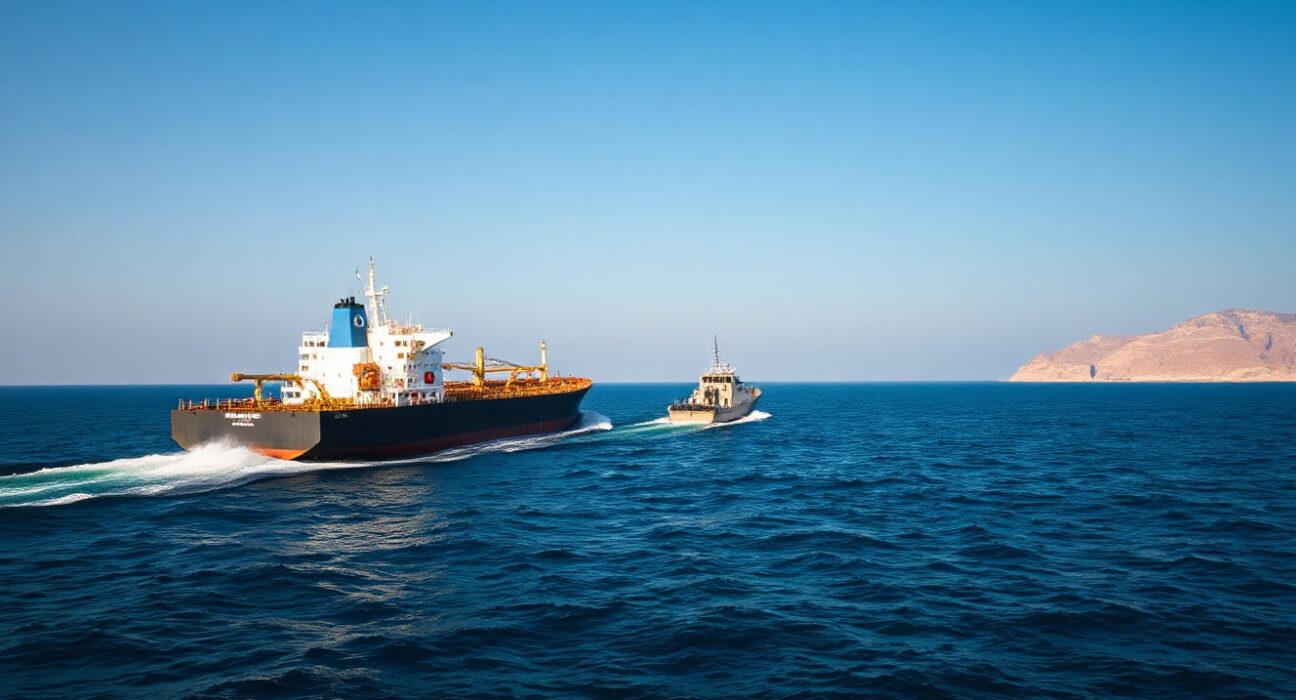
Iran’s Foreign Ministry spokesperson, Esmail Baghaei, announced on August 15 that Tehran and Muscat have reached an agreement on a maritime passage plan through the Strait of Hormuz. The deal, which aims to regulate and secure the transit of vessels in one of the world’s most critical oil chokepoints, comes amid ongoing diplomatic talks between the two nations, which continue despite reported U.S. interference.
Strategic Importance of the Strait of Hormuz
The Strait of Hormuz, located between Oman and Iran, connects the Persian Gulf with the Gulf of Oman and the Arabian Sea. Roughly one-fifth of global oil consumption passes through this narrow waterway, making it a vital artery for international energy supplies. The strait is also a key route for liquefied natural gas (LNG) exports from Qatar, the world’s largest LNG producer.
Any disruption to shipping in the strait could have immediate and severe consequences for global oil prices and energy security. The agreement between Iran and Oman, therefore, holds significant implications not only for regional stability but also for the broader international economy.
Diplomatic Context and U.S. Interference
Baghaei emphasized that the talks between Tehran and Muscat are progressing, despite what he described as “U.S. interference.” The United States has long maintained a military presence in the region and has repeatedly warned against any Iranian actions that could threaten freedom of navigation. In recent years, there have been several incidents involving tankers and naval vessels in the strait, heightening tensions between Iran and Western powers.
Oman has historically played a mediating role in regional conflicts, maintaining diplomatic ties with both Iran and Western nations. This new agreement could be seen as part of Oman’s broader efforts to foster dialogue and reduce tensions in the Persian Gulf.
Implications for Shipping and Energy Markets
The details of the passage plan have not been fully disclosed, but it is expected to establish clear protocols for vessel transit, potentially reducing the risk of accidental confrontations or misunderstandings. For shipping companies and insurers, such a formal agreement could bring a measure of predictability to an otherwise volatile region.
Energy markets will be watching closely. Any sign of instability in the Strait of Hormuz tends to trigger speculative trading and price volatility. A stable passage agreement, if implemented effectively, could help reassure markets and support the steady flow of oil and gas.
Conclusion
The Iran-Oman agreement on maritime passage through the Strait of Hormuz represents a diplomatic step forward in a strategically vital region. While the full scope of the plan remains unclear, its successful implementation could enhance maritime security and contribute to regional stability. The continued talks between Tehran and Muscat, despite external pressures, signal a commitment to bilateral cooperation on shared interests.
FAQs
Q1: What is the Strait of Hormuz and why is it important?
The Strait of Hormuz is a narrow waterway between Iran and Oman that connects the Persian Gulf to the open ocean. It is the world’s most important oil transit chokepoint, with about 20% of global oil consumption passing through it daily.
Q2: What does the Iran-Oman passage deal involve?
The deal establishes a plan for maritime passage through the Strait of Hormuz, likely setting protocols for vessel transit to improve safety and coordination. Specific operational details have not been publicly disclosed.
Q3: How might this agreement affect oil prices?
If the agreement leads to greater stability and fewer incidents in the strait, it could reduce risk premiums in oil markets, potentially moderating price volatility. However, the impact will depend on implementation and broader regional security dynamics.
Disclaimer: The information provided is not trading advice, Bitcoinworld.co.in holds no liability for any investments made based on the information provided on this page. We strongly recommend independent research and/or consultation with a qualified professional before making any investment decisions.
