

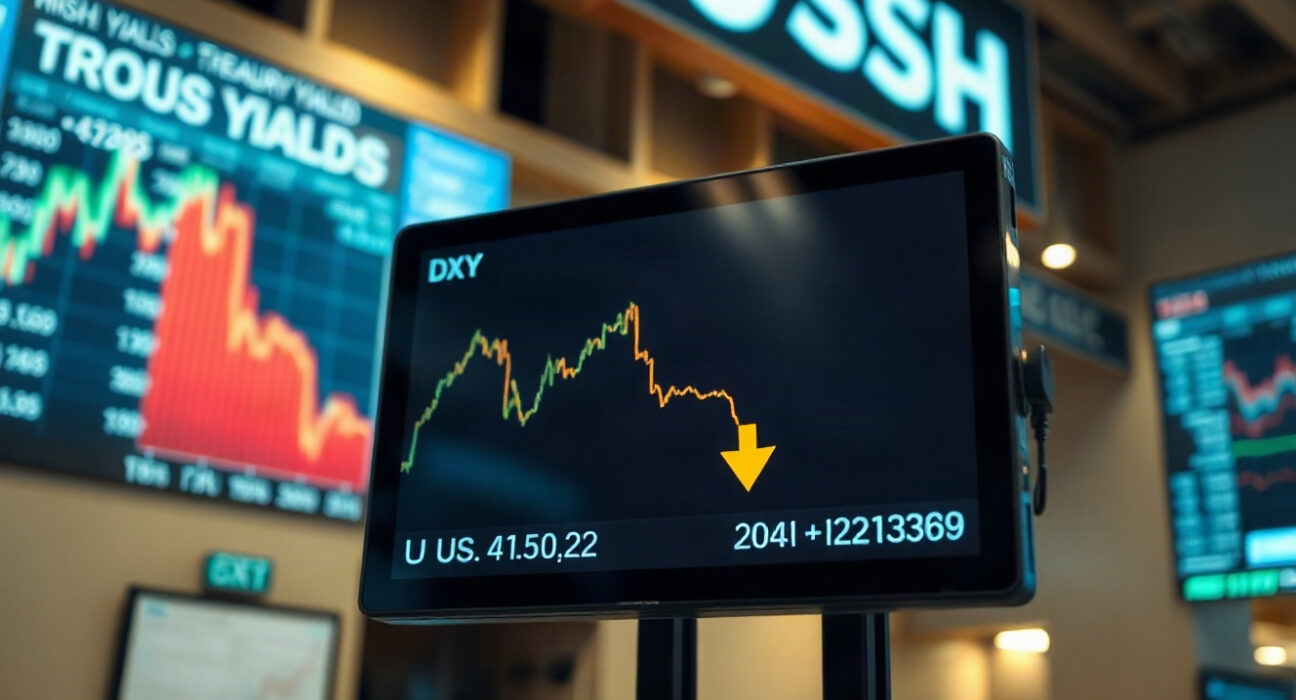
The US Dollar Index (DXY) has failed to gain traction even as 10-year Treasury yields hit a two-decade high in October 2025, a divergence that is puzzling many market participants and challenging traditional currency dynamics.
What’s Driving the Unusual Divergence?
Typically, higher yields attract foreign capital, boosting the dollar. However, the current environment is different. The rise in yields is driven not by strong growth expectations but by concerns over rising government debt and sticky inflation. Investors are demanding higher compensation for holding US debt, but this is not translating into dollar strength because the yield surge is also raising fears about the cost of servicing that debt and the potential for fiscal strain.
Global Factors at Play
Central banks outside the US, particularly in Europe and Japan, are also adjusting policies. The European Central Bank and the Bank of Japan have signaled they may keep rates higher for longer, narrowing the interest rate differential that previously favored the dollar. Additionally, some central banks are diversifying their reserves away from the dollar, a long-term trend that reduces the greenback’s support.
What This Means for Investors
For investors, the disconnect between yields and the dollar suggests that traditional carry-trade strategies may be less effective. It also implies that the dollar’s strength may be more tied to global risk sentiment and fiscal sustainability than to simple yield differentials. The dollar could remain under pressure if the market continues to view the US fiscal trajectory as unsustainable, even with high yields.
Conclusion
The two-decade high in yields not lifting the Dollar Index underscores a fundamental shift in how currency markets assess the US economy. As of late 2025, the dollar’s fate appears increasingly linked to fiscal credibility and global capital flows rather than just yield advantages. This is a critical development for anyone trading or investing in currencies, as it may signal a new paradigm in the months ahead.
FAQs
Q1: Why does the dollar typically rise with yields?
Higher yields offer better returns on dollar-denominated assets, attracting foreign investment, which increases demand for the dollar and pushes its value up.
Q2: What is causing the current divergence?
This time, yields are rising due to concerns about government debt and inflation, not strong economic growth. That fear offsets the investment appeal, and other central banks are also keeping rates high, narrowing the advantage.
Q3: Will the dollar recover?
It depends on whether the market sees improvement in the US fiscal outlook or a clearer policy direction from the Federal Reserve. If global risk sentiment improves, the dollar could find support, but the current trend suggests a period of weakness may persist.
Disclaimer: The information provided is not trading advice, Bitcoinworld.co.in holds no liability for any investments made based on the information provided on this page. We strongly recommend independent research and/or consultation with a qualified professional before making any investment decisions.
