

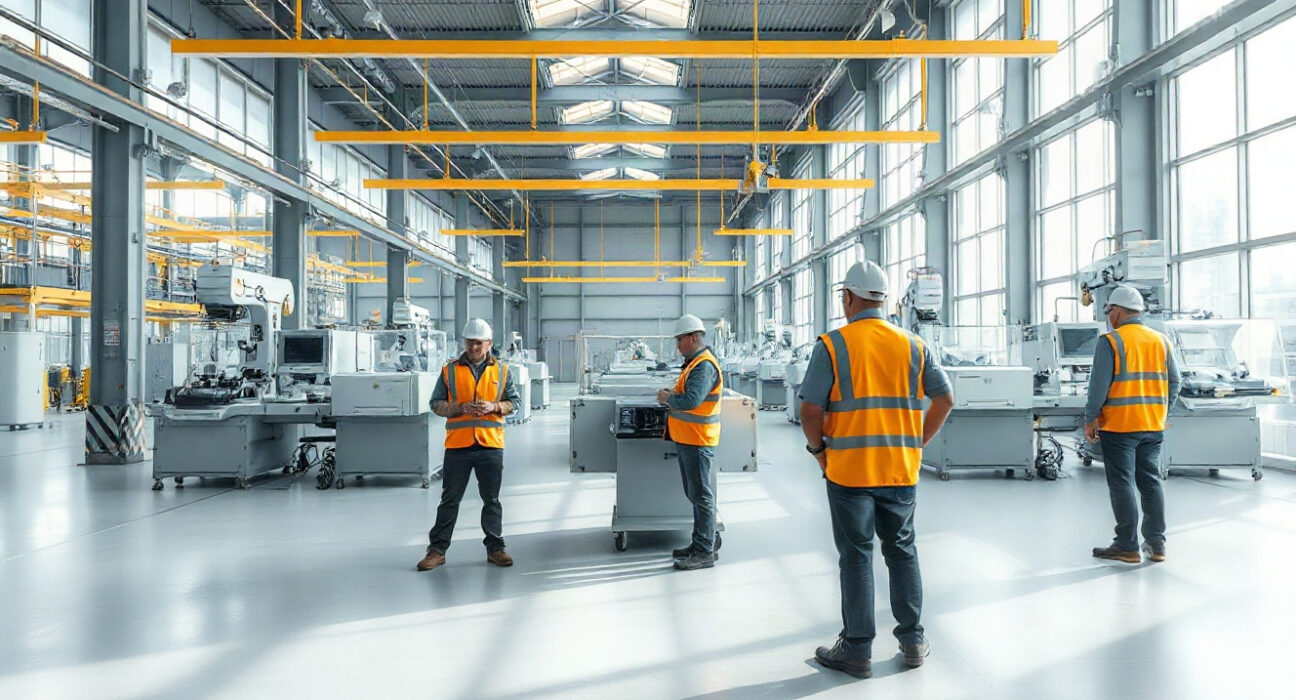
Australia’s manufacturing sector maintained its expansionary trajectory in August, with the S&P Global Manufacturing Purchasing Managers’ Index (PMI) holding steady at 52.0, according to data released today. A reading above 50 indicates growth, and this stable figure suggests that the sector continues to contribute positively to the broader economy, despite lingering global headwinds.
What the PMI Reading Indicates
The PMI is a composite indicator derived from surveys of manufacturing firms, providing an early signal of business conditions. The August reading of 52.0 matches the previous month’s figure, indicating that the pace of expansion remained consistent. This stability is notable given the recent volatility in global supply chains and fluctuating demand patterns.
Key sub-indices, such as new orders, production, and employment, generally remained in expansion territory, though the pace varied. The steady headline number suggests that manufacturers are navigating cost pressures and logistical challenges with relative resilience.
Broader Economic Context
The manufacturing PMI data arrives as Australia’s economy shows mixed signals. While the services sector has been a key driver of growth, manufacturing has been a stabilizing force. The Reserve Bank of Australia (RBA) has maintained a cautious stance on interest rates, and a stable manufacturing sector provides some reassurance that the economy is not losing momentum.
Global factors, including China’s economic slowdown and geopolitical tensions, continue to pose risks. However, the domestic manufacturing sector appears to be benefiting from robust demand in areas such as construction, infrastructure, and defense-related projects.
Why This Matters to Readers
For businesses and investors, the PMI is a forward-looking gauge of economic health. A stable reading above 50 suggests that manufacturing firms are likely to maintain hiring and investment plans, which supports job creation and supply chain activity. For consumers, it can signal stable prices and availability of domestically produced goods.
Policymakers also watch the PMI closely as it provides timely insight into the real economy, complementing official statistics that are released with a lag.
Conclusion
Australia’s manufacturing sector remains on a steady growth path, as evidenced by the August PMI holding at 52.0. While challenges persist, the consistent expansion provides a positive backdrop for the broader economy. As global conditions evolve, the sector’s resilience will be key to sustaining momentum.
FAQs
Q1: What is the S&P Global Manufacturing PMI?
The S&P Global Manufacturing PMI is a monthly survey-based index that measures the health of the manufacturing sector. A reading above 50 indicates expansion, while below 50 signals contraction.
Q2: Why is a PMI of 52.0 significant?
A reading of 52.0 indicates that the manufacturing sector is growing at a moderate pace. It suggests that new orders, production, and employment are increasing, which is generally positive for the economy.
Q3: How does the PMI affect the Australian dollar and financial markets?
A stronger-than-expected PMI can boost confidence in the economy, potentially supporting the Australian dollar. Financial markets may also react positively, as a healthy manufacturing sector is often associated with broader economic stability.
Disclaimer: The information provided is not trading advice, Bitcoinworld.co.in holds no liability for any investments made based on the information provided on this page. We strongly recommend independent research and/or consultation with a qualified professional before making any investment decisions.
