

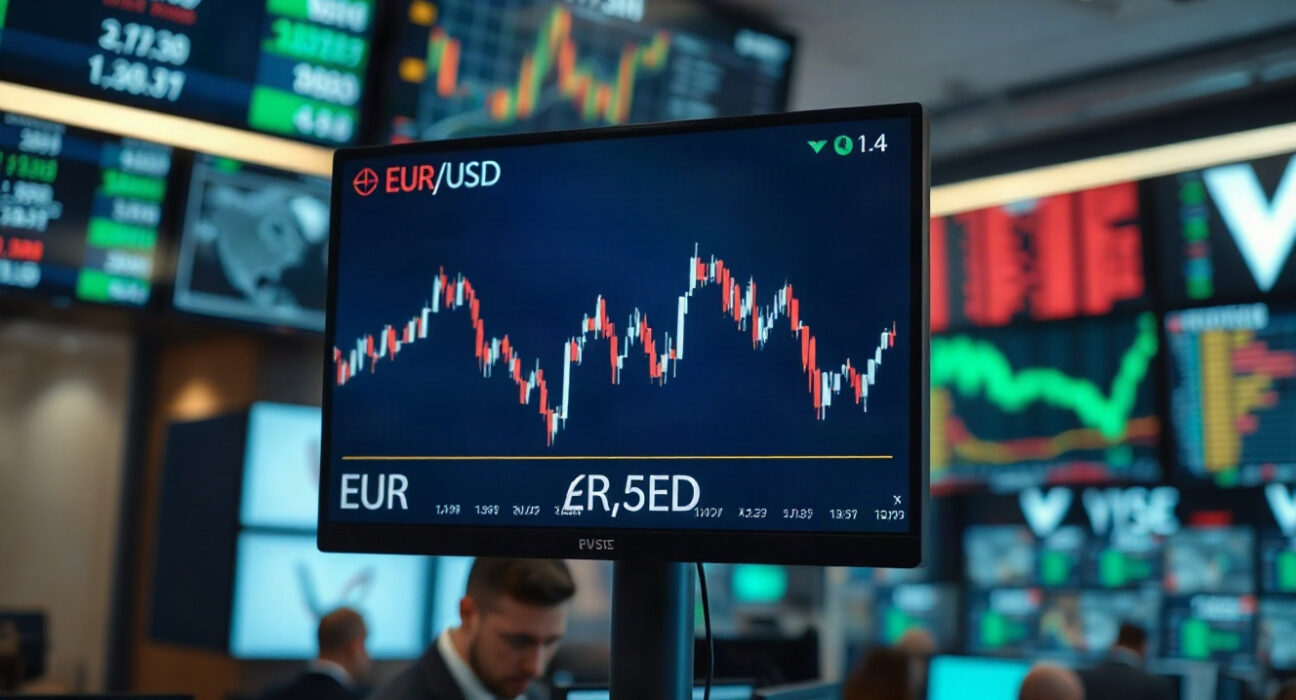
The euro held its ground against a steadying US dollar on [date], as traders positioned for potential new sanctions on Iran that could ripple through energy markets and global currencies.
Market Overview: Dollar Steadies, Euro Holds Range
The US dollar index, which measures the greenback against a basket of major currencies, remained relatively flat during the session, reflecting a pause in recent volatility. The euro traded in a narrow band against the dollar, with investors awaiting fresh catalysts.
According to data from [source, e.g., Reuters, Bloomberg] as of [date], EUR/USD was trading near [level, e.g., 1.0850], little changed from the previous close. The currency pair has been rangebound over the past week, with support around [level] and resistance near [level].
Iran Sanctions: What to Watch
Market attention is increasingly focused on the potential re-imposition of sanctions on Iran, which could affect global oil supplies and, by extension, inflation expectations and central bank policies. The US administration has signaled it may tighten enforcement of existing sanctions, particularly on Iranian oil exports.
Analysts suggest that any significant disruption to oil supply could push energy prices higher, potentially complicating the inflation outlook for the eurozone and the US. This, in turn, could influence the European Central Bank’s and the Federal Reserve’s policy paths, impacting currency valuations.
Why It Matters for Forex Traders
For currency traders, the interplay between geopolitical risk and monetary policy is critical. A rise in oil prices typically benefits the US dollar due to its status as a petrocurrency, while the euro may face headwinds if energy costs weigh on the eurozone economy.
However, the actual impact will depend on the scope and enforcement of any new measures. Traders should monitor official announcements and oil price movements for near-term direction.
Technical Outlook for EUR/USD
From a technical perspective, EUR/USD remains in a consolidation phase. The pair has been trading below its 50-day moving average, suggesting a bearish bias in the short term. Key support is seen at [level], with a break below potentially opening the door to [lower level]. On the upside, resistance is at [level], and a close above that could signal a shift in momentum.
Conclusion
As the euro holds steady against a firmer dollar, the market is bracing for potential Iran sanctions that could introduce fresh volatility. Traders should stay informed on geopolitical developments and central bank signals, as these are likely to drive the next major move in EUR/USD.
FAQs
Q1: How do Iran sanctions affect the euro-dollar exchange rate?
Iran sanctions can impact oil prices, which influence inflation and central bank policies. Higher oil prices may strengthen the US dollar, while the euro could weaken if energy costs hurt the eurozone economy.
Q2: What are the key levels to watch in EUR/USD?
Support is around [level], with a break below potentially targeting [lower level]. Resistance is near [level], and a close above could signal a bullish reversal.
Q3: When are the next major central bank meetings?
The European Central Bank and the Federal Reserve are scheduled to meet in [month]. Their policy decisions will be crucial for the euro-dollar outlook.
Disclaimer: The information provided is not trading advice, Bitcoinworld.co.in holds no liability for any investments made based on the information provided on this page. We strongly recommend independent research and/or consultation with a qualified professional before making any investment decisions.
