

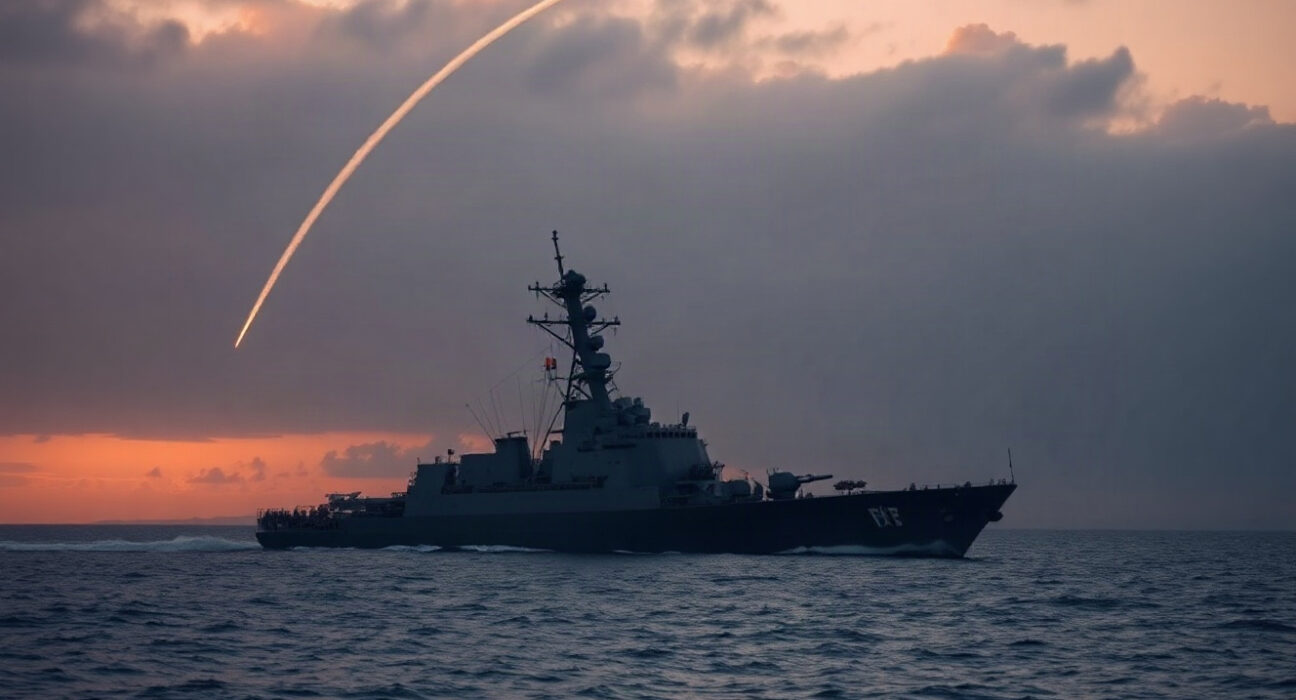
Iran launched missile attacks on U.S. Navy ships in the Strait of Hormuz and two U.S. military bases in Jordan on Aug. 31, according to Iran’s Press TV and a statement from the Islamic Revolutionary Guard Corps (IRGC). The strikes were described as retaliation for a U.S. airstrike on IRGC missile launch sites on Larak Island, an island in the Strait of Hormuz.
Background: U.S. Strike on Larak Island
Reuters and other outlets reported that the U.S. military struck two IRGC missile launch sites on Larak Island a day earlier, on Aug. 30. This action came roughly a month after U.S. strikes on Iran were halted on July 24 under the direction of President Donald Trump. The IRGC had previously warned that the attack on Larak Island was an act of terror and that the aggressor would face a strong response.
Details of the Retaliatory Attacks
According to IRGC statements, missiles were fired at U.S. Navy ships in the Strait of Hormuz, a critical waterway for global oil shipments. Additionally, two U.S. bases in Jordan—King Hussein Base and Al Azraq Base—were targeted. The IRGC characterized these strikes as a direct response to the U.S. attack on Larak Island, signaling a significant escalation in the ongoing military tensions between Iran and the United States.
Strategic Significance of the Strait of Hormuz
The Strait of Hormuz is a vital chokepoint through which about 20% of global oil consumption passes. Any military confrontation in this area has immediate implications for global energy markets and maritime security. The U.S. Navy maintains a significant presence in the region to ensure freedom of navigation, and attacks on its vessels are considered a serious provocation.
Regional Implications and International Response
The attacks on U.S. bases in Jordan, a key ally in the region, further broaden the scope of the conflict. Jordan hosts U.S. military personnel as part of counterterrorism and regional security efforts. This development could draw Jordan more directly into the conflict and strain its relations with Iran. International reactions have been cautious, with calls for restraint and de-escalation from various global leaders. The United Nations has urged both sides to avoid further military actions that could lead to a wider regional war.
Conclusion
The missile attacks by Iran on U.S. assets mark a dangerous escalation in the already tense relations between the two countries. The situation remains fluid, with the potential for further military exchanges. The international community is closely monitoring the events, as the stability of the Middle East and global energy security hang in the balance. This story is developing, and more details are expected to emerge.
FAQs
Q1: What triggered Iran’s missile attacks on U.S. ships and bases?
Iran’s missile attacks were in retaliation for a U.S. airstrike on IRGC missile launch sites on Larak Island in the Strait of Hormuz, which occurred a day earlier.
Q2: Which U.S. bases in Jordan were targeted?
The IRGC stated that King Hussein Base and Al Azraq Base in Jordan were targeted in the missile attacks.
Q3: Why is the Strait of Hormuz strategically important?
The Strait of Hormuz is a vital maritime chokepoint through which approximately 20% of global oil consumption passes, making it critical for global energy supplies and maritime security.
Disclaimer: The information provided is not trading advice, Bitcoinworld.co.in holds no liability for any investments made based on the information provided on this page. We strongly recommend independent research and/or consultation with a qualified professional before making any investment decisions.
