

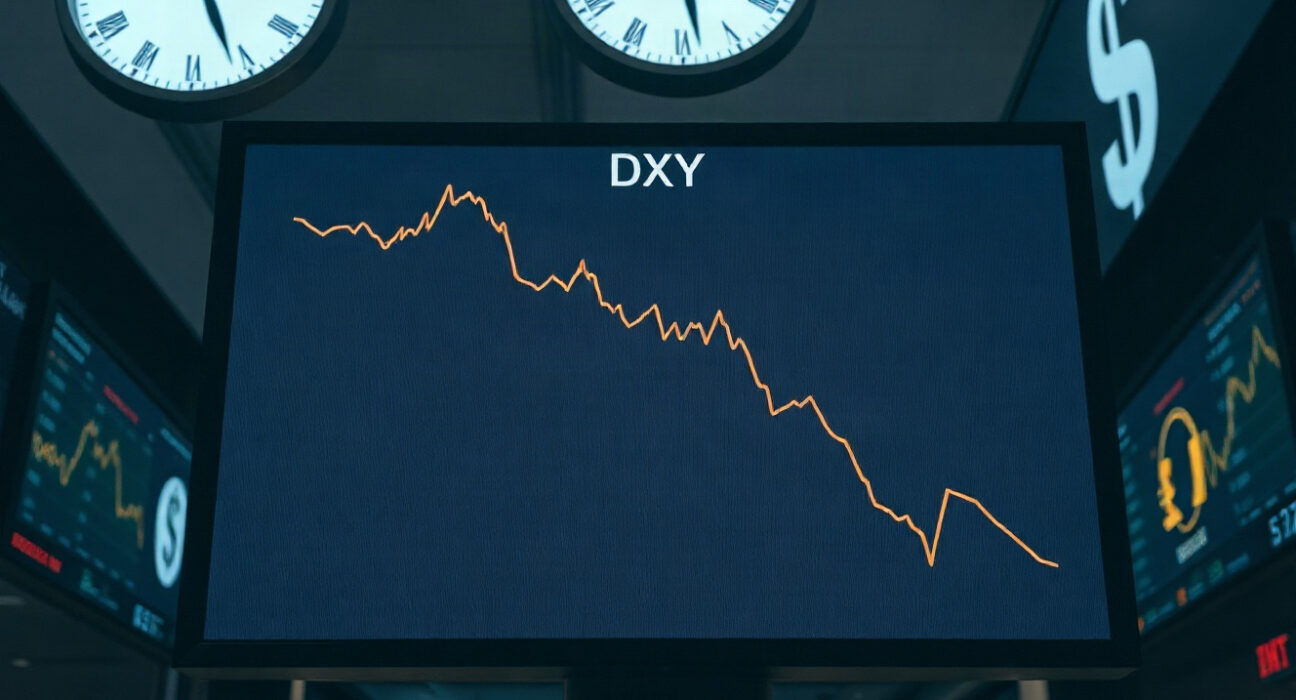
The U.S. dollar index (DXY) has fallen despite escalating geopolitical tensions and a market repricing toward more hawkish Federal Reserve policy, a divergence that has caught many traders off guard. As of mid-February 2026, the index—which measures the greenback against a basket of six major currencies—has dropped approximately 2.3% from its January peak, even as safe-haven demand typically bolsters the dollar during periods of conflict.
Why Is the Dollar Falling Despite Geopolitical Turmoil?
The conventional playbook suggests that war and uncertainty drive investors into the dollar as a safe haven. However, the current decline indicates that other forces are outweighing that dynamic. One key factor is the growing perception that the U.S. economy is slowing more sharply than previously estimated, undercutting the dollar’s yield advantage even as the Fed signals it will keep rates higher for longer.
Another factor is the improving economic outlook in Europe and Asia, which has reduced the dollar’s relative appeal. The euro and yen have both strengthened against the dollar in recent weeks, reflecting better-than-expected growth data and a shift in capital flows toward non-U.S. assets. This has occurred even as the Fed’s hawkish repricing—where markets now expect fewer rate cuts in 2026—would normally support the dollar.
Hawkish Repricing: Why the Dollar Isn’t Responding as Expected
The Federal Reserve’s stance has indeed turned more hawkish, with several officials emphasizing the need to keep interest rates elevated to combat persistent inflation. According to CME FedWatch data as of February 17, 2026, the probability of a rate cut by June has fallen to 35%, down from 58% a month earlier. Yet, this shift has not translated into dollar strength, suggesting that markets are focusing more on the growth implications of prolonged tight policy.
Historically, a hawkish Fed tends to attract foreign capital, boosting the dollar. However, when the global economy is also strengthening, investors may seek higher returns elsewhere. This is particularly true if the Fed’s tight policy is seen as a risk to U.S. growth, potentially leading to a policy mistake. The dollar’s decline in the face of hawkish signals may therefore reflect a market that is skeptical about the sustainability of U.S. economic outperformance.
Impact on Global Markets and Trade
The dollar’s slide has significant implications for global trade and emerging markets. A weaker dollar reduces the burden of dollar-denominated debt for emerging economies, potentially easing financial conditions. It also boosts the competitiveness of U.S. exports, which could help narrow the trade deficit. However, it also makes imports more expensive, adding to inflationary pressures at a time when the Fed is already fighting price increases.
For multinational corporations, a softer dollar translates into stronger overseas earnings when converted back to dollars. This has provided a tailwind for U.S. equities, with the S&P 500 hitting a record high earlier this week. Yet, the divergence between the dollar and risk assets remains a source of uncertainty, as it challenges the traditional correlation patterns that many portfolio managers rely on.
Conclusion
The dollar index’s decline amid war and hawkish Fed repricing underscores the complexity of current market dynamics. While geopolitical risk and Fed policy are typically dollar-positive, they are being offset by concerns over U.S. growth and improving conditions abroad. As of now, the dollar’s trajectory will likely depend on upcoming economic data, particularly inflation and employment figures, which will shape both Fed decisions and investor sentiment. The situation warrants close monitoring, as the divergence could either correct sharply or signal a broader shift in global capital flows.
FAQs
Q1: What is the Dollar Index (DXY)?
The Dollar Index (DXY) measures the value of the U.S. dollar relative to a basket of six foreign currencies: the euro, Japanese yen, British pound, Canadian dollar, Swedish krona, and Swiss franc. It is a widely used benchmark for the dollar’s overall strength in global markets.
Q2: Why does the dollar typically rise during geopolitical conflicts?
During times of geopolitical uncertainty, investors often seek safe-haven assets, and the U.S. dollar has historically been a primary choice due to the size and liquidity of U.S. financial markets. This demand can push the dollar higher even when the conflict involves the U.S. or its allies.
Q3: How does a weaker dollar affect inflation?
A weaker dollar makes imports more expensive, which can contribute to higher consumer prices. This can complicate the Federal Reserve’s efforts to bring inflation down, as it may need to maintain higher interest rates for longer to counteract the inflationary impact of a softer currency.
Disclaimer: The information provided is not trading advice, Bitcoinworld.co.in holds no liability for any investments made based on the information provided on this page. We strongly recommend independent research and/or consultation with a qualified professional before making any investment decisions.
