

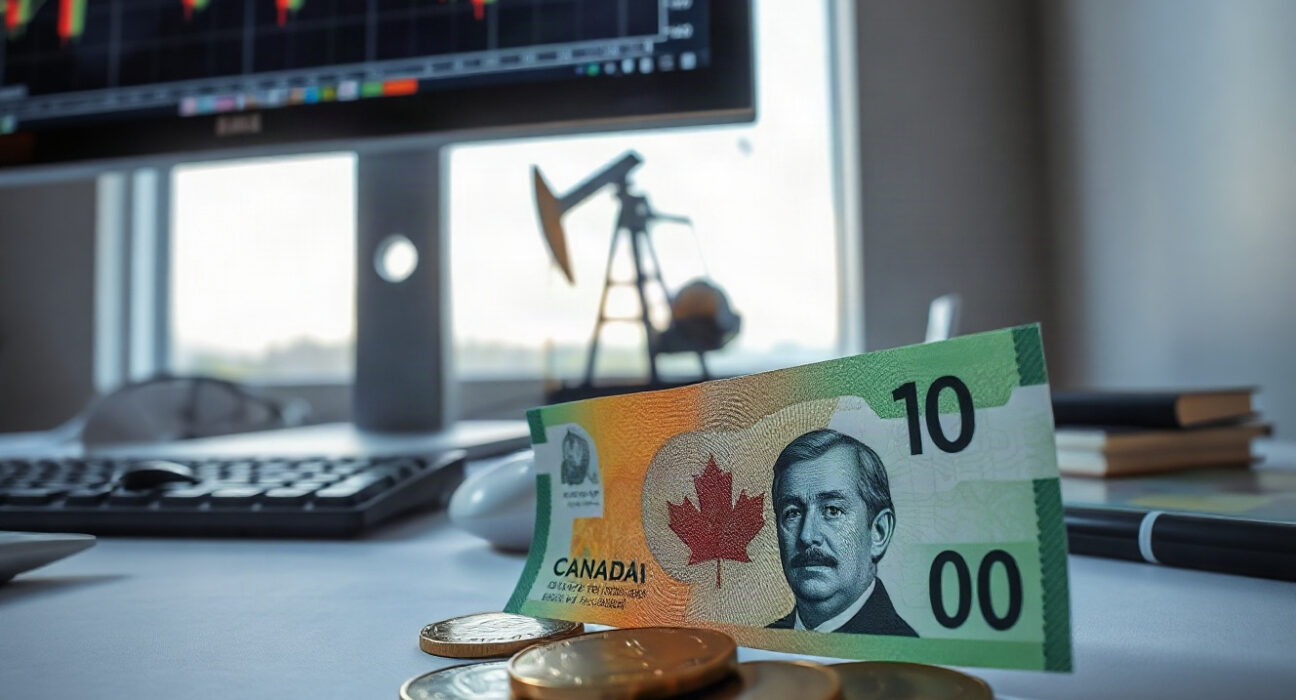
The Canadian dollar rebounded from a two-week low against its U.S. counterpart on Tuesday, supported by rising crude oil prices as investors positioned ahead of the Bank of Canada’s (BoC) upcoming interest rate decision. The currency’s recovery reflects a mix of firming commodity prices and cautious optimism about the domestic economic outlook.
What’s Driving the Loonie’s Recovery?
Oil prices, a key driver of the Canadian dollar, have climbed on supply concerns and improving demand forecasts. West Texas Intermediate (WTI) crude, the benchmark for Canadian oil exports, traded higher in recent sessions, providing a direct lift to the loonie. As of this week, WTI futures are up roughly 2% from last week’s lows, helped by OPEC+ production cuts and geopolitical tensions affecting supply routes.
Additionally, market sentiment has stabilized after a period of risk aversion, with investors awaiting the BoC’s policy announcement scheduled for Wednesday. The central bank is widely expected to hold its key interest rate steady at 5.0%, but any hint of future easing or tightening could trigger significant moves in the currency.
BoC Decision in Focus
The Bank of Canada’s decision comes amid mixed economic data. Inflation has cooled from its 2022 peak but remains above the bank’s 2% target, while the labor market shows signs of softening. Recent GDP figures indicate the economy is slowing, raising expectations that the BoC may begin cutting rates later this year.
However, analysts caution that the central bank will likely maintain a data-dependent stance, emphasizing the need for sustained evidence that inflation is under control. “The BoC is walking a tightrope,” said a currency strategist at a major Toronto bank. “They need to balance inflation risks against a weakening economy, and the market will be watching their language closely.”
Impact on Consumers and Businesses
For Canadian consumers, a stronger dollar helps reduce the cost of imported goods, potentially easing inflationary pressures. For exporters, however, a firmer loonie can make Canadian products more expensive abroad, potentially affecting competitiveness. Businesses with cross-border operations will also be watching the BoC’s signals to plan for currency hedging and investment decisions.
Market Expectations and Analyst Views
Interest rate futures currently price in a high probability of a hold this month, with a modest chance of a cut by the summer. The loonie’s recent weakness was partly attributed to expectations that the U.S. Federal Reserve would keep rates higher for longer, widening the interest rate differential between the two countries.
Analysts note that the Canadian dollar’s path will depend on both the BoC’s tone and external factors, including global oil demand and U.S. economic data. “If oil prices continue to firm and the BoC sounds less dovish than expected, we could see further upside for the loonie,” said a senior forex analyst. “But the overall trend remains range-bound until clearer signals emerge.”
Conclusion
The Canadian dollar’s rebound reflects a confluence of higher oil prices and pre-decision positioning. While the near-term outlook remains uncertain, the BoC’s statement and press conference will likely provide crucial direction for the currency. Investors and businesses should stay attuned to both domestic policy signals and global commodity trends in the coming days.
FAQs
Q1: What is the Bank of Canada’s current interest rate?
The Bank of Canada’s key interest rate stands at 5.0%, a level it has maintained since July 2023. The bank has held rates steady in recent meetings to assess the impact of previous hikes on inflation and economic growth.
Q2: How do oil prices affect the Canadian dollar?
Canada is a major oil exporter, so higher crude prices increase export revenues and improve the country’s terms of trade, which typically strengthens the Canadian dollar. Conversely, falling oil prices can weigh on the currency.
Q3: What should businesses watch in the BoC’s announcement?
Businesses should focus on the BoC’s forward guidance, particularly any signals about future rate cuts or hikes. The tone of the statement and the governor’s press conference will be key to assessing the likelihood of policy shifts that could impact borrowing costs and currency values.
Disclaimer: The information provided is not trading advice, Bitcoinworld.co.in holds no liability for any investments made based on the information provided on this page. We strongly recommend independent research and/or consultation with a qualified professional before making any investment decisions.
