

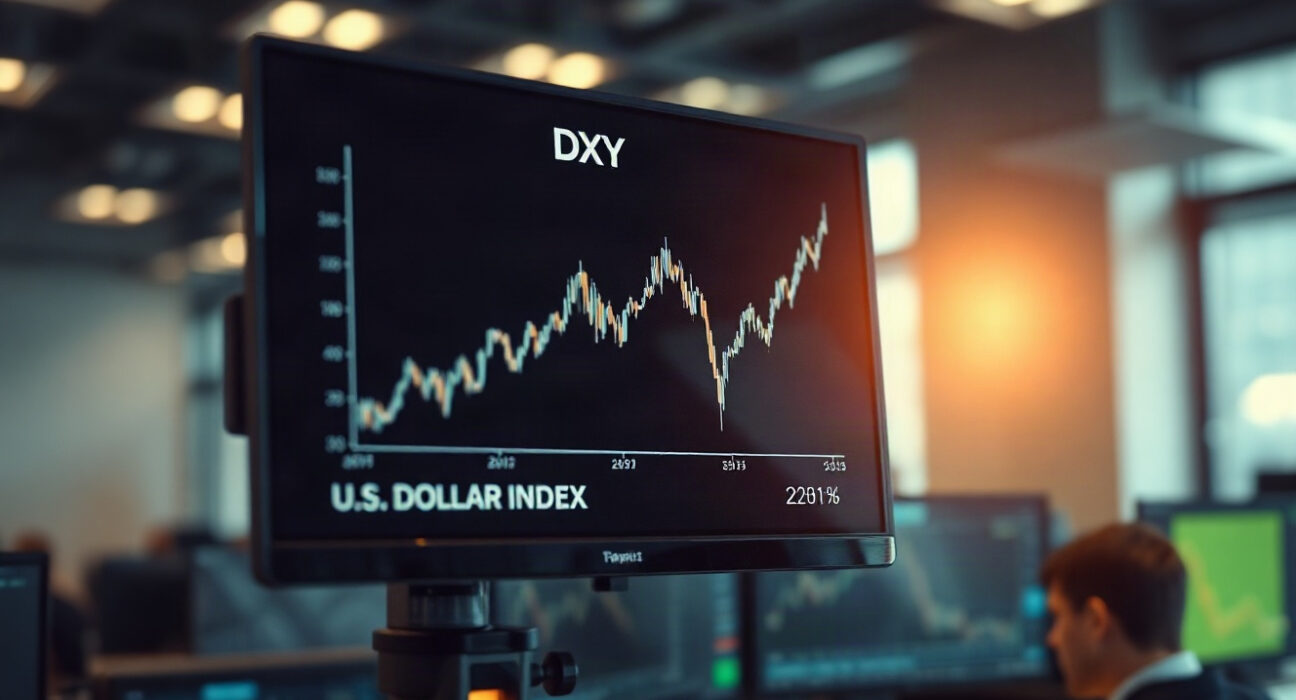
The U.S. Dollar Index is holding gains above 99.50 as Treasury yields reach multi-year highs, reflecting sustained investor demand for dollar-denominated assets and shifting expectations for Federal Reserve policy.
Why Treasury Yields Are Climbing
Treasury yields have surged to levels not seen in several years, driven by a combination of resilient economic data, sticky inflation readings, and growing expectations that the Federal Reserve will keep interest rates higher for longer. The benchmark 10-year Treasury yield has risen sharply, pushing the dollar index—which measures the greenback against a basket of six major currencies—to hold firm above the 99.50 mark.
Investors are recalibrating their portfolios in response to these yield moves, as higher yields make U.S. assets more attractive. This dynamic has supported the dollar even as other global central banks grapple with their own policy challenges.
Market Impact and Investor Positioning
The dollar’s strength has broad implications for global markets. A firmer dollar can pressure emerging market currencies, affect commodity prices, and influence corporate earnings for multinational companies. For traders, the current level of the Dollar Index signals confidence in the U.S. economic outlook, but it also raises concerns about the cost of servicing dollar-denominated debt in other economies.
Analysts note that the move in yields and the dollar is not just a short-term fluctuation. It reflects a structural shift in the interest rate environment that could persist for several quarters, reshaping investment strategies across asset classes.
What This Means for Consumers and Businesses
For consumers, higher Treasury yields often translate into higher borrowing costs, including mortgages and auto loans. Businesses face increased financing expenses, which could slow capital investment. On the positive side, savers benefit from better returns on fixed-income investments, and a stronger dollar can lower the cost of imported goods.
Conclusion
The Dollar Index holding above 99.50 amid multi-year-high Treasury yields underscores a pivotal moment for financial markets. As the Federal Reserve navigates between inflation control and economic stability, the interplay between yields and the dollar will remain a key theme for investors and policymakers alike. Monitoring these trends is essential for anyone with exposure to global markets.
FAQs
Q1: What is the U.S. Dollar Index?
The U.S. Dollar Index (DXY) measures the value of the U.S. dollar relative to a basket of six major currencies: the euro, Japanese yen, British pound, Canadian dollar, Swedish krona, and Swiss franc. It is a widely used benchmark for the dollar’s overall strength in global markets.
Q2: Why do Treasury yields affect the dollar?
Higher Treasury yields increase the return on U.S. assets, attracting foreign investment and boosting demand for the dollar. Conversely, lower yields can reduce the dollar’s appeal. The relationship is closely watched by currency traders.
Q3: How long can the dollar stay strong?
The dollar’s strength depends on economic data, Federal Reserve policy, and global conditions. If inflation remains elevated and the Fed maintains high rates, the dollar could stay firm. However, any shift in policy or unexpected economic downturn could quickly change the outlook.
Disclaimer: The information provided is not trading advice, Bitcoinworld.co.in holds no liability for any investments made based on the information provided on this page. We strongly recommend independent research and/or consultation with a qualified professional before making any investment decisions.
