Tether Faces Senate Scrutiny Over Iran-Linked USDT
In this article
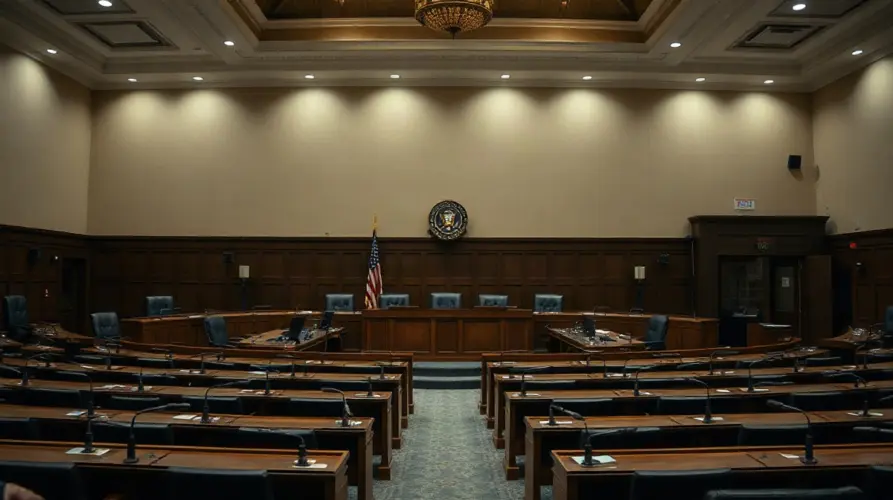
Democratic investigators on the Senate Permanent Subcommittee on Investigations found that 84% of 846 sanctioned or seizure-targeted crypto wallets linked to Iran and regional groups transacted exclusively, or nearly exclusively, in USDT, according to Crypto.news. The preliminary report, released Sept. 28, described the stablecoin as a “significant financial lifeline” inside Iran’s shadow banking network and asked federal authorities to examine Tether‘s sanctions and anti-money-laundering controls.
Key facts
- The minority staff reviewed 846 wallets designated by OFAC or Israel’s National Bureau for Counter Terror Financing between June 2021 and August 2026.
- Among 757 wallets identified by the Israeli agency, investigators said 87% conducted more than 80% of their transaction value in USDT; among 101 OFAC-designated wallets, 57% predominantly used the stablecoin.
- Two Iran-linked wallets held $344.2 million in USDT when OFAC designated them during April 2026, and Chainalysis found four Central Bank of Iran wallets held $131 million when frozen in July.
- Tether said the April and July actions brought Iran-linked freezes during 2026 to nearly $550 million, part of more than $4.9 billion frozen across various cases globally.
- Blumenthal sent the findings to Treasury Secretary Scott Bessent and Attorney General Todd Blanche on Sept. 28, following a June 4 records request that Tether acknowledged but had not answered by the report’s publication, according to Crypto.news.
What the investigators found
The report leaned on more than five years of blockchain records. Within the Israeli-identified sample of 757 wallets, 87% moved more than 80% of their transaction value in USDT, while 57% of the 101 OFAC-designated, Iran-linked wallets predominantly used the stablecoin. Bitcoin ranked behind USDT in both samples.
Investigators traced large flows to specific figures and entities. They said two sanctioned Iranian nationals, Alireza Derakhshan and Arash Estaki Alivand, received $603 million in USDT between 2021 and 2025 through addresses later designated by OFAC. A separate section examined two wallets attributed to Iran’s central bank that received nearly $50 million exclusively in USDT during April and May 2025, while three wallets linked by investigators to Modex Exchange Company received close to $600 million over several months. The report tied the network to Iranian oil sales and financial flows involving entities associated with Hezbollah and the Houthis.
Outside the Senate inquiry, Cointelegraph reported that Tether disclosed its cooperation figures on Monday, including more than $130 million frozen across four wallets this year and more than $344 million tied to the Central Bank of Iran in April. Cointelegraph also reported that Tether said its work with authorities globally resulted in more than $4.9 billion in frozen assets, including more than $2.4 billion connected to US authorities — a breakdown that Crypto.news did not include. Crypto.news, meanwhile, carried the full statistical basis of the subcommittee’s review, including the 757-wallet and 101-wallet splits, which the Cointelegraph account did not.
Where Tether and investigators disagree
The dispute centers less on whether large USDT flows reached Iran-linked addresses than on how quickly Tether acted once governments did.
Investigators alleged some wallets stayed active after counterterrorism designations. One example involved 39 wallets identified by Israel in June 2023 as connected to Hezbollah-linked financier Tawfiq Muhammad Sa’id Al-Law; the report said five were initially blacklisted while another 34 were frozen in March 2024, and it calculated that more than $34.6 million in USDT left the wallets after the Israeli seizure notice.
Tether presents a different record. CEO Paolo Ardoino said USDT “is not a haven for sanctioned actors, terrorist organizations or criminal networks,” and the company said it had supported more than 2,900 investigations globally, including more than 1,600 involving US law enforcement. It also said 40 cases referred by Israel’s counterterrorism financing bureau involved more than 640 addresses and over 22 million USDT.
Independent analytics firms have documented comparable activity from outside the Senate process. Elliptic reported in 2025 that 187 addresses identified by Israeli authorities as IRGC-linked received $1.5 billion in USDT, while cautioning it could not verify whether every transaction was directly connected to the IRGC because some addresses may belong to service providers handling funds for multiple customers. TRM Labs traced more than $6.3 billion through Shelbit between May 2024 and March 2026, roughly 88% over Tron and almost entirely through dollar-linked stablecoins. Chainalysis estimated that sanctioned entities globally received 694% more crypto value in 2025 than a year earlier, while stressing that illicit transactions still represented less than 1% of attributed global cryptocurrency volume.
Why it matters
The report puts the largest dollar-pegged stablecoin at the center of a sanctions-enforcement debate at a moment when US agencies have widened action against Iran-linked digital asset networks. FinCEN warned financial institutions in May that Iranian facilitators could use stablecoins for their liquidity, settlement speed and exchange-rate stability, and OFAC designated BitBank and related parties on Sept. 17 as part of what it described as Iran’s digital asset-based sanctions-evasion infrastructure.
For exchanges, banks and payment firms handling USDT, the practical question is how much due diligence regulators will expect on counterparties. For Tether, a company that markets issuer-level blacklisting as a compliance feature, the Senate letter is the first formal push to have two federal departments decide whether that feature has been applied consistently enough to satisfy sanctions law. The report also lands as a minority staff document rather than a bipartisan finding, which limits its immediate legal weight even as it shapes the political framing.
What to watch
Whether Treasury and the Justice Department respond to Blumenthal’s Sept. 28 referral — and whether Tether answers the June 4 records request the report says went unanswered — will determine whether this becomes an enforcement matter or remains a congressional pressure campaign. Separately, a civil forfeiture complaint filed Sept. 14 by the US Attorney’s Office for the Southern District of New York seeks approximately $61 million in crypto prosecutors allege came from black-market sales of sanctioned Iranian oil.
Frequently Asked Questions
How much USDT did Tether say it helped freeze in Iran-linked cases during 2026?
Tether said its enforcement cooperation supported nearly $550 million in Iran-linked USDT freezes during 2026, including more than $344 million across two wallets in April and roughly $131 million across four Central Bank of Iran-linked Tron wallets in July.
Did the Senate subcommittee’s report represent a bipartisan finding?
No. Crypto.news reported that the Sept. 28 report was released by the Democratic minority staff of the Senate Permanent Subcommittee on Investigations and represented the conclusions of those investigators, not a bipartisan finding by the full Senate.
Who is asking Treasury and the Justice Department to investigate Tether?
Senator Richard Blumenthal, the ranking Democrat on the Permanent Subcommittee on Investigations, sent the findings to Treasury Secretary Scott Bessent and Attorney General Todd Blanche on Sept. 28 and asked both departments to examine Tether’s AML and sanctions compliance.
What has Tether said in response to the allegations?
Tether CEO Paolo Ardoino said USDT “is not a haven for sanctioned actors, terrorist organizations or criminal networks,” and the company said it has supported more than 2,900 investigations globally.
Is a Treasury or DOJ investigation into Tether confirmed?
No. As of Sept. 29, 2026, Blumenthal had requested that both departments examine Tether’s compliance practices and determine whether federal laws were violated; no investigation had been announced based on the reporting summarized here.
Sources: crypto.news, Cointelegraph