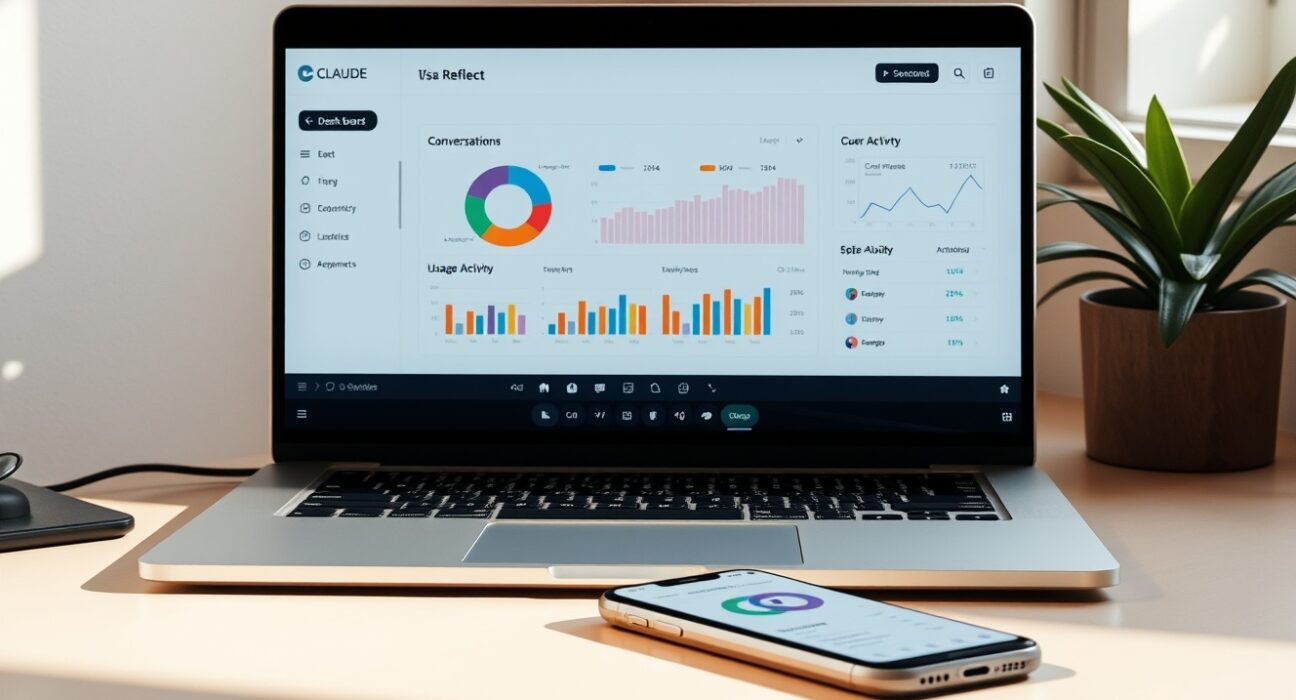
At a time when AI backlash and data center protests are making headlines, Anthropic’s Claude is rolling out a new feature that subtly makes the case for why you should keep using it. On Thursday, the company introduced ‘Reflect,’ a built-in dashboard that lets you track and visualize how you use Claude and your broader AI habits.
What is Claude Reflect?
On the surface, it’s an analytics feature that offers insights into what sort of topics you’ve discussed, your overall usage patterns, and what kinds of tasks you tend to turn to AI for help with. But Reflect’s larger purpose is about shaping how users think about AI itself. It does so by framing Claude as both a highly-utilized productivity tool and a part of your everyday workflow, as well as a technology that can be used mindfully.

While Claude Reflect doesn’t go so far as to quantify how much time you’ve saved on manual tasks by switching your workflows to AI, there’s something about having all the work Claude helped with laid out in front of you that will likely make you see Claude as a tool you’ve come to rely on, and one very much a part of your everyday life.
Designing for mindfulness and retention
Meanwhile, Anthropic will push you to think critically about your AI usage, as Reflect will pop up questions from time to time, like ‘What’s one thing you want to keep doing yourself, even if Claude could do it faster?’ The app additionally offers tools to set quiet hours or schedule nudges to take a break from AI, Anthropic notes in its announcement — a nod to the potentially addictive nature of working with AI chatbots, which never fail to respond to your questions and prompt follow-ups to keep the conversation going.

The idea to add analytics to an app to subtly shape consumer sentiment is not a new one. In 2012, Google promoted a new utility called Gmail Meter, which number-crunched your email inbox, showing you traffic patterns, pie charts of email categories, how much data is in your inbox versus your archive, among other things. While navel-gazing over this type of data is fun for some technical folks, the meter also served as a way to display, in numbers and charts, how Gmail had become central to people’s digital lives. Claude’s Reflect does the same but it then takes things a step further, as it also trains users on how they can better use AI.

How Reflect trains users and locks in loyalty
For instance, Reflect might suggest that instead of re-explaining the context of your work across repeated tasks, you could use Claude’s Projects feature. For Anthropic, this also has the benefit of more deeply integrating your daily workflows with Claude, which helps retain users and discourage them from switching to competitors’ AI tools.
Anthropic notes that more sensitive conversations may show up in Claude Reflect, but only at a high level, and any conversation connected to a health integration tool is left out of your insights entirely. None of the data in your insights is used for other purposes, the company also says.
This Claude Reflect feature is available in beta for Free, Pro, and Max users who have memory turned on. Later, it will expand to include a view of how much time you’ve spent using Claude.
Conclusion
Claude Reflect represents a strategic shift for Anthropic — moving beyond simply offering a capable AI assistant to actively shaping how users perceive and integrate AI into their daily routines. By combining usage analytics with gentle nudges toward mindful consumption, the company is not just building a tool, but cultivating a relationship. For users, the feature offers genuine utility in understanding their own AI habits. For Anthropic, it’s a subtle but effective retention mechanism in an increasingly competitive market.
FAQs
Q1: Is Claude Reflect available to all users?
It is currently in beta for Free, Pro, and Max users who have memory turned on. Broader availability is expected in the future.
Q2: Does Reflect share my conversation data with Anthropic?
Anthropic states that none of the data in your insights is used for other purposes. Health-related conversations are excluded entirely.
Q3: Will Reflect show sensitive conversations?
Sensitive conversations may appear at a high level in the dashboard, but only in an aggregated and non-identifiable format. Health integration data is fully excluded.
Disclaimer: The information provided is not trading advice, Bitcoinworld.co.in holds no liability for any investments made based on the information provided on this page. We strongly recommend independent research and/or consultation with a qualified professional before making any investment decisions.