

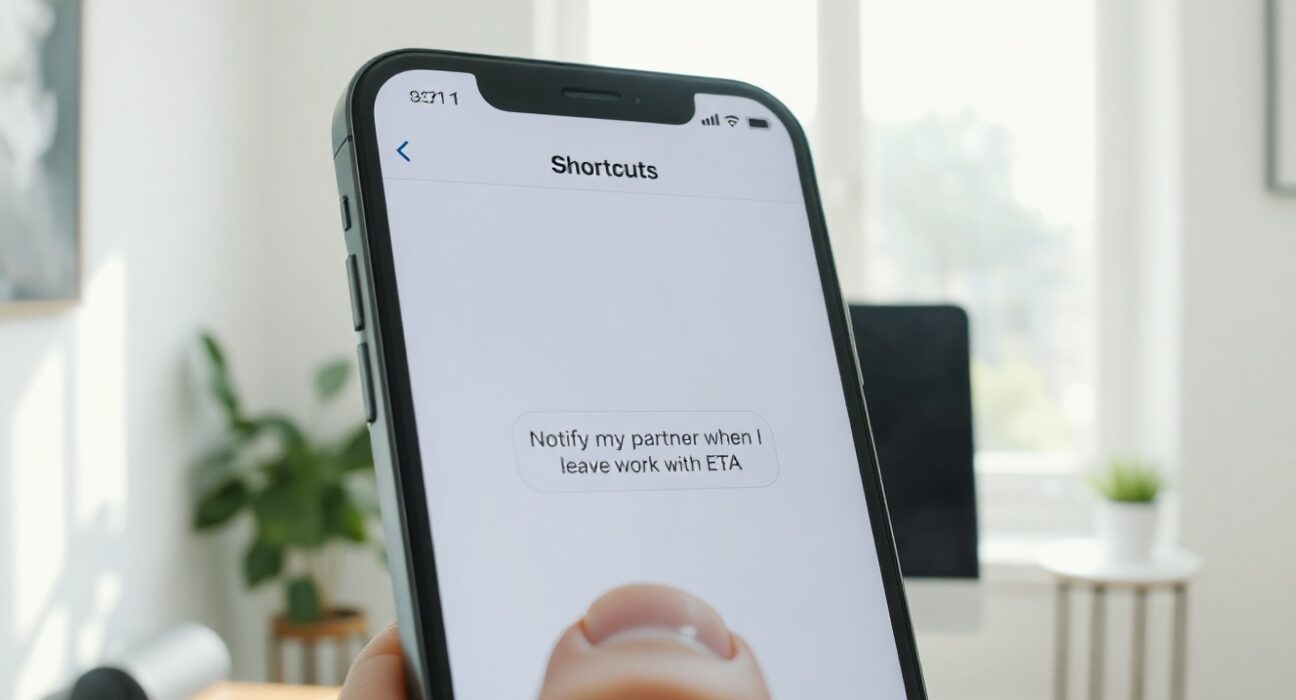
Apple is making its Shortcuts app significantly more accessible by integrating artificial intelligence that lets users create automations simply by describing what they want to do. The update, announced during the WWDC 2026 keynote on Monday, aims to lower the barrier for non-technical users who previously found the visual scripting tool too complex.
How the AI-powered Shortcuts will work
Instead of manually dragging actions, configuring variables, and chaining app integrations, users will be able to type or speak a natural language prompt. Apple Intelligence, the company’s on-device AI system, interprets the request and automatically assembles the necessary steps. For example, a user could write “Notify my partner when I leave work with my ETA” and the system would pull together location triggers, Apple Maps routing, and Messages integration without any manual setup.
“While super powerful, the process of creating these shortcuts can feel, well, complicated,” acknowledged Celcia Dantas, Sr. Manager of Home Software Product Marketing, during the keynote. The new approach is designed to eliminate the need for users to understand app actions, variables, or conditional logic.
Real-world implications for everyday users
The update positions Shortcuts as a tool for a much broader audience. Previously, the app was largely the domain of power users and automation enthusiasts who invested time in learning its interface. By allowing natural language descriptions, Apple is effectively opening up advanced device automation to anyone with a smartphone.
Users can also refine or edit existing shortcuts by describing changes. In the leaving-work example, a user could later add a step to start playing a favorite podcast simply by typing that request. This flexibility could encourage more people to experiment with automation for daily tasks like managing smart home devices, scheduling messages, or organizing files.
Competitive context and market relevance
Apple’s move follows a broader industry trend of integrating AI into productivity tools. Competitors like Microsoft and Google have already introduced natural language capabilities in their own automation platforms. However, Apple’s focus on on-device processing and privacy could be a differentiator, as Apple Intelligence processes requests locally rather than in the cloud. This may appeal to users concerned about data security.
The update also reinforces Apple’s strategy of embedding AI features across its ecosystem rather than launching standalone AI products. By improving existing tools like Shortcuts, the company aims to deliver practical value without requiring users to adopt entirely new workflows.
Availability and rollout
The updated Shortcuts app will be part of iOS 27, which is expected to launch publicly later this fall. Developers will gain access to the new features through the beta program starting this week. It remains to be seen how well the AI handles complex, multi-step automations and whether edge cases will require manual intervention.
Conclusion
Apple’s decision to integrate natural language processing into Shortcuts represents a meaningful step toward democratizing device automation. By reducing complexity, the company is betting that more users will adopt automation for everyday tasks, potentially increasing engagement with the broader iOS ecosystem. The success of this feature will likely depend on the accuracy and reliability of Apple Intelligence in interpreting varied user requests.
FAQs
Q1: Will the AI-powered Shortcuts feature work offline?
Apple Intelligence processes requests on-device, so basic automation creation should work without an internet connection. However, some app integrations may require network access to function.
Q2: Can I still manually edit shortcuts created by the AI?
Yes. Users can view and modify any shortcut generated by the AI, either by manually adjusting actions or by describing additional changes in natural language.
Q3: Which devices will support the new Shortcuts features in iOS 27?
Apple Intelligence features typically require devices with the A17 Pro chip or later, including iPhone 15 Pro models and newer. Apple is expected to confirm the full compatibility list closer to the public release.
Disclaimer: The information provided is not trading advice, Bitcoinworld.co.in holds no liability for any investments made based on the information provided on this page. We strongly recommend independent research and/or consultation with a qualified professional before making any investment decisions.
