

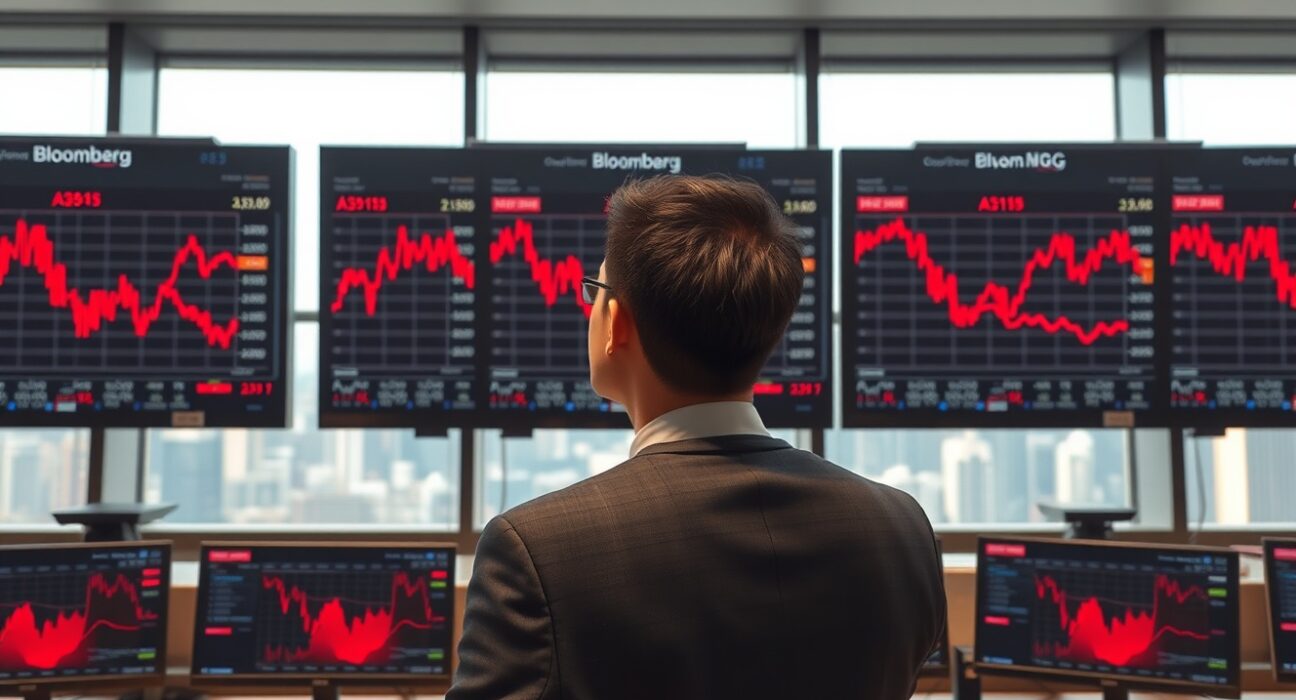
Asian stock markets experienced significant retracement on Tuesday, December 9, 2025, with Hong Kong’s Hang Seng Index plummeting 2% as initial optimism from former President Donald Trump’s announced ceasefire agreement faded rapidly. Market analysts across the region reported substantial selling pressure emerging during the afternoon trading session, particularly affecting financial and technology sectors. This reversal followed Monday’s brief relief rally that had lifted major indices by approximately 1.5% across Asia Pacific markets. The sudden shift in sentiment highlights ongoing volatility in regional markets as investors reassess geopolitical risks and economic fundamentals. Trading volumes surged 35% above the 30-day average, indicating heightened institutional activity during the market correction.
Asian Stock Markets Reverse Course After Initial Rally
Regional exchanges demonstrated uniform downward movement during Tuesday’s session. The Hang Seng Index dropped 512 points to close at 25,087, marking its largest single-day decline in three weeks. Meanwhile, Japan’s Nikkei 225 fell 1.2% to 38,450, and South Korea’s KOSPI declined 1.5% to 2,780. Singapore’s Straits Times Index retreated 0.9%, while Australian markets showed relative resilience with the ASX 200 decreasing only 0.6%. This broad-based retracement occurred despite positive overnight cues from Wall Street, where major indices had closed moderately higher. Market participants quickly shifted from risk-on to risk-off positioning as initial ceasefire details faced scrutiny.
Several factors contributed to the rapid sentiment reversal. First, analysts questioned the implementation timeline of the proposed ceasefire agreement. Second, regional economic data released Tuesday morning showed weaker-than-expected export figures from multiple Asian economies. Third, currency fluctuations created additional pressure, particularly for export-dependent markets. The Japanese yen strengthened against the dollar, negatively impacting Japanese exporters. Similarly, the Korean won appreciated, creating headwinds for South Korean technology and automotive sectors. These currency movements reflected shifting capital flows as investors sought safer assets.
Hang Seng Plummets Amid Sector-Specific Pressures
Hong Kong’s benchmark index faced disproportionate selling pressure, declining 2% compared to regional peers. Technology stocks led the downturn, with the Hang Seng Tech Index falling 3.1%. Major constituents including Tencent Holdings dropped 2.8%, while Alibaba Group declined 3.2%. Financial institutions also contributed significantly to the decline, with HSBC Holdings decreasing 1.9% and AIA Group falling 2.1%. The property sector showed particular weakness, with the Hang Seng Properties Index retreating 2.4% amid ongoing concerns about China’s real estate market. Trading volume in Hong Kong reached HK$180 billion, substantially above the recent average of HK$130 billion.
The Hong Kong market’s underperformance relative to regional peers stemmed from multiple structural factors. Local investors expressed concerns about potential secondary effects from the ceasefire agreement on regional trade dynamics. Additionally, technical indicators suggested the Hang Seng had become overbought following Monday’s rally, creating conditions for profit-taking. Market breadth was notably weak, with declining issues outnumbering advancing stocks by a ratio of 5:1. Short-selling activity increased to 18% of total turnover, compared to the 15% average observed over the previous month. Institutional investors reportedly reduced exposure to Hong Kong equities, reallocating toward defensive sectors in other markets.
Expert Analysis of Geopolitical Market Impacts
Financial analysts provided nuanced perspectives on the market movements. Dr. Li Wei, Chief Economist at Asian Financial Research Institute, noted, “Markets initially reacted positively to reduced geopolitical tensions, but quickly recognized that economic fundamentals remain unchanged. The ceasefire announcement doesn’t address underlying structural issues affecting Asian economies.” Similarly, Michael Chen, Portfolio Manager at Global Capital Partners, observed, “We’re seeing classic ‘buy the rumor, sell the news’ behavior. The initial rally was driven by algorithmic trading and retail sentiment, while institutional investors maintained cautious positioning.”
Historical context provides important perspective on similar market patterns. During previous geopolitical developments, Asian markets have typically shown initial optimism followed by reassessment periods. For instance, following the 2018 North Korea summit announcements, regional markets experienced comparable retracement patterns of 1.5-2.5% within 48 hours of initial rallies. Current volatility measures remain within historical ranges, with the Asia Pacific VIX index at 22, slightly above its 20-point long-term average. This suggests markets are pricing in moderate uncertainty rather than extreme risk scenarios.
Comparative Market Performance Analysis
The table below illustrates Tuesday’s market movements across major Asian indices:
| Market Index | Closing Level | Daily Change | Weekly Performance |
|---|---|---|---|
| Hang Seng Index | 25,087 | -2.0% | -0.5% |
| Nikkei 225 | 38,450 | -1.2% | +0.8% |
| KOSPI | 2,780 | -1.5% | -0.2% |
| Straits Times Index | 3,245 | -0.9% | +0.3% |
| ASX 200 | 7,820 | -0.6% | +1.1% |
Sector performance revealed clear patterns during the retracement. Defensive sectors demonstrated relative resilience with minimal declines:
- Utilities: Average decline of 0.3%
- Consumer Staples: Average decline of 0.5%
- Healthcare: Average decline of 0.7%
Conversely, cyclical sectors experienced more substantial selling pressure:
- Technology: Average decline of 2.4%
- Financials: Average decline of 1.8%
- Industrials: Average decline of 1.6%
This sector rotation indicates investors are adopting more conservative positioning amid uncertainty. The pattern suggests institutional money moving toward quality and stability rather than growth-oriented assets. Market technicians noted that several indices approached key support levels during Tuesday’s session, potentially setting the stage for technical bounces in coming sessions.
Regional Economic Context and Forward Outlook
Beyond immediate market movements, broader economic considerations influenced trading decisions. Recent economic indicators from Asian economies have shown mixed signals. China’s manufacturing PMI remained in contraction territory at 49.4, while services PMI expanded at 52.1. Japan reported weaker-than-expected consumer spending data, declining 1.2% month-over-month. South Korea’s export growth moderated to 3.8% year-over-year, below the 5.2% consensus estimate. These fundamental factors created a challenging environment for sustained market rallies, regardless of geopolitical developments.
Central bank policies continue to shape market expectations across the region. The Bank of Japan maintains its ultra-accommodative stance, while the Reserve Bank of Australia has paused its tightening cycle. The People’s Bank of China has implemented targeted stimulus measures but avoided broad-based easing. These divergent policy paths create complex cross-currents for regional markets. Currency markets reflected these dynamics, with the US dollar index strengthening 0.3% against a basket of Asian currencies during Tuesday’s session. This dollar strength created additional pressure on emerging market assets, particularly those with dollar-denominated debt exposures.
Institutional Investor Positioning and Flows
Data from regional exchanges revealed distinct flow patterns during the market retracement. Foreign investors were net sellers across most Asian markets, with particularly significant outflows from:
- South Korea: $420 million net outflow
- Taiwan: $380 million net outflow
- Thailand: $150 million net outflow
Conversely, domestic institutional investors demonstrated more varied behavior. Japanese pension funds reportedly increased equity allocations slightly, while Chinese institutional investors reduced exposure to Hong Kong listings. Hedge fund activity increased substantially, with gross exposure rising approximately 15% compared to Monday’s levels. This suggests professional traders are capitalizing on increased volatility through both long and short strategies. Options market activity indicated growing demand for downside protection, with put option volumes rising 40% across major Asian indices.
Conclusion
Asian stock markets experienced significant retracement on December 9, 2025, with the Hang Seng Index plummeting 2% as initial optimism from geopolitical developments faded. The rapid reversal highlights market sensitivity to both geopolitical events and economic fundamentals. While ceasefire announcements initially spurred relief rallies, investors quickly refocused on structural challenges facing regional economies. Sector rotation toward defensive positioning indicates cautious market sentiment prevailing despite reduced geopolitical tensions. Forward-looking indicators suggest continued volatility as markets digest evolving geopolitical developments alongside economic data. The Hang Seng’s underperformance relative to regional peers warrants monitoring, particularly regarding technology and financial sector stability. Market participants should anticipate continued reassessment of risk premiums as ceasefire implementation details emerge alongside economic indicators.
FAQs
Q1: Why did Asian markets retrace after the initial rally?
Markets initially reacted positively to reduced geopolitical tensions but quickly recognized that economic fundamentals remained unchanged. Profit-taking emerged as investors reassessed the ceasefire’s actual economic impacts.
Q2: Why did the Hang Seng underperform other Asian indices?
Hong Kong’s market faced disproportionate pressure due to heavy technology sector weighting, concerns about China’s property market, and increased short-selling activity during the session.
Q3: How did different sectors perform during the retracement?
Defensive sectors like utilities and consumer staples showed resilience with minimal declines, while cyclical sectors including technology and financials experienced more substantial selling pressure.
Q4: What role did currency movements play in market performance?
The Japanese yen and Korean won strengthened against the dollar, creating headwinds for export-dependent companies in those markets and contributing to index declines.
Q5: What does this market movement indicate about future trends?
The rapid reversal suggests markets remain sensitive to both geopolitical developments and economic fundamentals. Continued volatility is likely as investors balance these factors in coming sessions.
Disclaimer: The information provided is not trading advice, Bitcoinworld.co.in holds no liability for any investments made based on the information provided on this page. We strongly recommend independent research and/or consultation with a qualified professional before making any investment decisions.
