

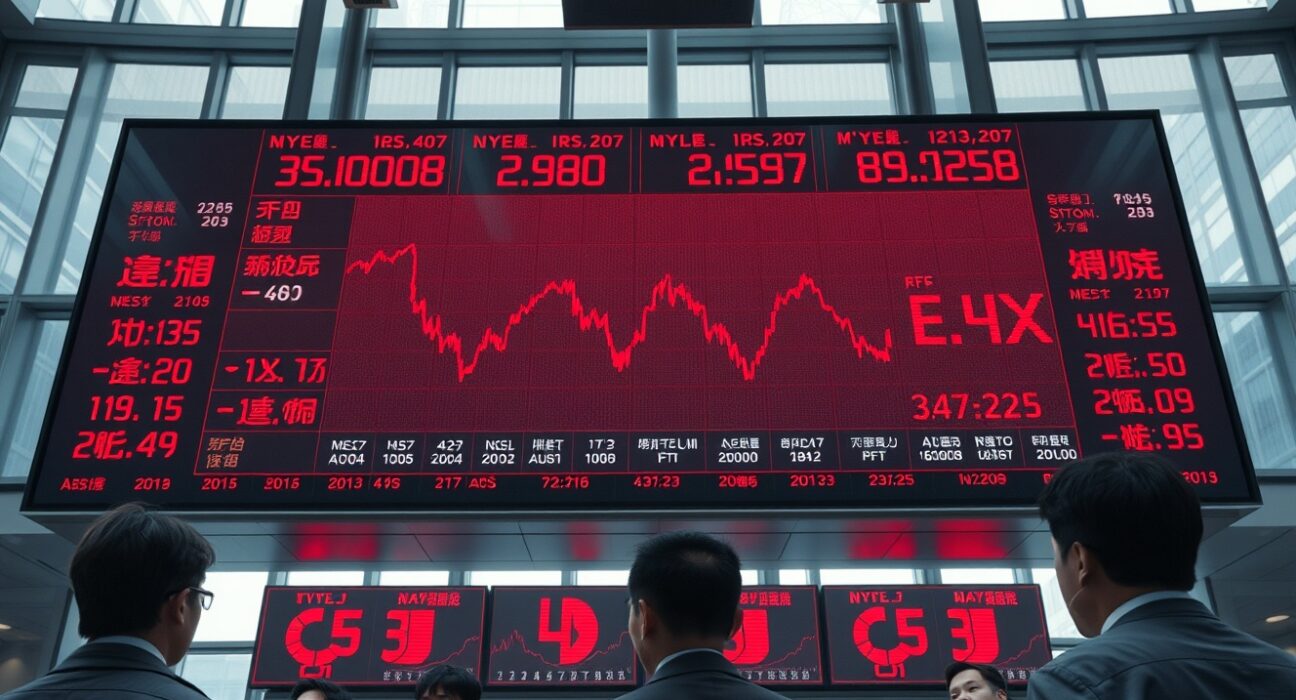
Asian stock markets declined sharply on Monday, led by a broad technology sector selloff that sent South Korea’s KOSPI index to its lowest level in weeks. The downturn mirrored losses on Wall Street, where rising bond yields and renewed concerns over global economic growth dampened investor appetite for risk assets.
KOSPI Leads Regional Losses
South Korea’s benchmark KOSPI index fell more than 2% in early trading, with heavyweight technology and semiconductor stocks bearing the brunt of the selling. Chipmaker Samsung Electronics and SK Hynix both dropped sharply, reflecting ongoing weakness in the global semiconductor cycle and export demand concerns.
The selloff extended across the region. Japan’s Nikkei 225 slid over 1.5%, while Hong Kong’s Hang Seng index dropped nearly 1.8%. China’s Shanghai Composite also declined, though losses were more contained as domestic stimulus expectations provided some support.
Tech Selloff Triggers Broader Market Weakness
The rout in technology stocks follows a sharp decline in U.S. tech shares last week, driven by higher-than-expected inflation data and hawkish commentary from Federal Reserve officials. Investors are now pricing in a slower pace of interest rate cuts, which has pressured high-valuation growth stocks globally.
South Korea’s export-dependent economy is particularly sensitive to shifts in global demand for semiconductors and electronics. The KOSPI’s heavy weighting in tech stocks amplifies the impact of sector-specific downturns on the broader index.
What This Means for Investors
For retail and institutional investors, the current selloff underscores the fragility of the recent rally in Asian equities. While expectations of a soft landing for the global economy had buoyed markets earlier this year, persistent inflation and tighter monetary policy are now testing that narrative.
Analysts suggest that further downside may be limited if corporate earnings remain resilient, but caution that volatility is likely to persist until clearer signals emerge on the direction of interest rates and global trade.
Conclusion
The sharp decline in Asian stocks, particularly the KOSPI, reflects a market recalibrating expectations for economic growth and monetary policy. While the tech sector faces headwinds, the broader picture depends on upcoming economic data and central bank signals. Investors should brace for continued volatility in the near term.
FAQs
Q1: Why did Asian stocks fall today?
The decline was driven by a selloff in technology stocks, following losses on Wall Street. Rising bond yields and concerns over global economic growth also weighed on investor sentiment.
Q2: Which index was hit hardest?
South Korea’s KOSPI index fell more than 2%, making it the worst-performing major index in the region, due to its heavy weighting in semiconductor and tech stocks.
Q3: Is this the start of a longer downturn?
While volatility is expected to continue, many analysts believe the selloff may be temporary if corporate earnings remain strong and central banks signal a measured approach to rate policy.
Disclaimer: The information provided is not trading advice, Bitcoinworld.co.in holds no liability for any investments made based on the information provided on this page. We strongly recommend independent research and/or consultation with a qualified professional before making any investment decisions.
