
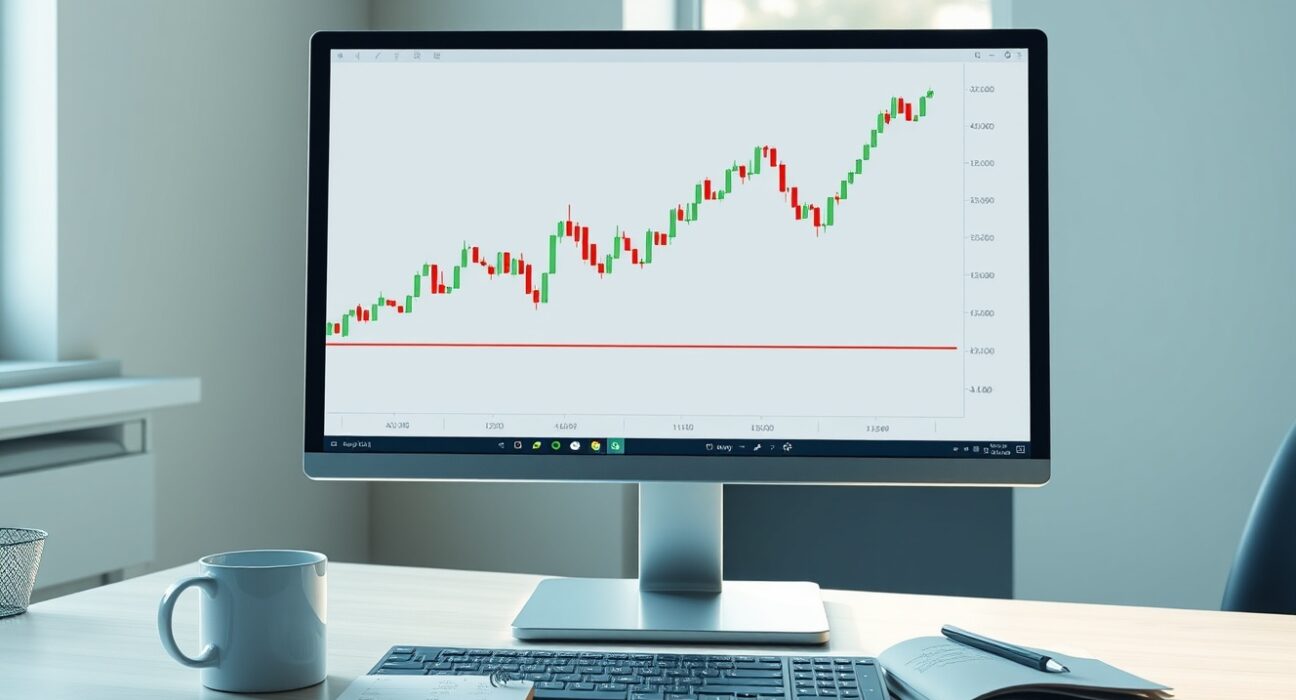
The AUD/USD currency pair, a cornerstone of Asia-Pacific forex trading, has entered a critical consolidation phase according to recent technical analysis from United Overseas Bank (UOB) Group. Following a significant rally, market dynamics now suggest a shift toward range-bound trading, a development with substantial implications for global currency traders and institutional investors monitoring Pacific Rim economies.
AUD/USD Technical Analysis and the Overdone Rally
United Overseas Bank’s Foreign Exchange Strategy team published detailed chart analysis indicating the Australian dollar’s advance against the US dollar had become overextended. Consequently, the momentum that characterized recent weeks has demonstrably dissipated. The pair now faces strong technical resistance near the 0.6800 handle, a level that has historically acted as a major psychological and technical barrier. Meanwhile, initial support appears firm around the 0.6650 region, establishing clear boundaries for the new trading range. This formation typically signals a period of market indecision, often preceding the next major directional move.
Several key technical indicators support this assessment. Firstly, the Relative Strength Index (RSI) retreated from overbought territory above 70, a classic signal of exhausted bullish momentum. Secondly, moving average convergence divergence (MACD) shows fading bullish histogram bars. Finally, trading volume during the rally’s peak phases showed divergence, failing to confirm the price highs with proportional buying interest. These factors collectively build a case for consolidation rather than continued trending behavior.
Fundamental Drivers Behind the AUD/USD Movement
The Australian dollar’s previous rally stemmed from a confluence of fundamental factors. Primarily, shifting expectations for US Federal Reserve interest rate policy provided tailwinds. As markets priced in potential rate cuts from the Fed, the US dollar broadly weakened, lifting commodity-linked currencies like the AUD. Simultaneously, stronger-than-expected Chinese economic data buoyed sentiment, given Australia’s significant export relationship with China. Iron ore prices, a key Australian export, remained resilient, supporting terms of trade. However, these supportive factors have now been largely absorbed by the market, leading to equilibrium.
UOB’s Market Interpretation and Forecast Context
UOB analysts emphasize that range-bound phases serve essential market functions. They allow for the digestion of previous price moves and the reassessment of fundamental valuations. For AUD/USD, this period lets traders evaluate upcoming economic data releases from both nations. Critical data points include Australian employment figures, consumer price index (CPI) inflation prints, and US non-farm payrolls and CPI data. The bank’s research suggests the range will persist until a fundamental catalyst provides enough impetus for a decisive breakout.
The table below outlines key technical levels identified in the analysis:
| Level Type | Price | Significance |
|---|---|---|
| Resistance | 0.6800 | Major psychological barrier & previous swing high |
| Primary Support | 0.6650 | Confluence of 50-day MA and prior resistance-turned-support |
| Secondary Support | 0.6580 | 200-day moving average and key trendline |
Market participants should monitor these levels closely. A sustained break above 0.6800 would invalidate the range-phase thesis and suggest a resumption of the bullish trend. Conversely, a breakdown below 0.6650 could signal a deeper corrective phase toward the 0.6580 support zone. UOB’s assessment remains data-dependent, advising clients to watch for shifts in central bank rhetoric and commodity price trajectories.
Broader Market Impact and Trader Implications
This shift from rally to range has tangible effects across financial markets. For instance, forex option volatility for AUD/USD has compressed, reflecting lower expected near-term price movement. Additionally, correlation trades with other risk assets, like equity indices, may see reduced sensitivity. Traders often adjust strategies during such phases, employing mean-reversion tactics near range boundaries rather than trend-following systems. Importantly, this behavior can influence cross-currency pairs, such as AUD/JPY and EUR/AUD, which often correlate with AUD/USD momentum.
Key considerations for traders during this phase include:
- Reduced Position Sizing: Lower volatility and directional clarity warrant smaller, more tactical trades.
- Focus on Boundaries: Setting alerts for tests of the 0.6800 resistance and 0.6650 support levels is crucial.
- Economic Calendar: High-impact data events become potential breakout triggers.
Historical Precedents and Cycle Analysis
Historical chart analysis reveals that AUD/USD frequently enters prolonged consolidation phases after strong directional moves. For example, similar range-bound behavior occurred in late 2023 following a rally from 0.6300. These periods often last several weeks, allowing fundamental narratives to catch up with price action. The current macroeconomic cycle, characterized by divergent central bank policies and global growth concerns, provides a fitting backdrop for such a pause. Analysts compare the present structure to classic technical patterns like rectangles or flags, which are continuation patterns but require confirmation.
Conclusion
The AUD/USD pair has transitioned from an overdone rally into a defined range-trading phase, as highlighted by UOB Group’s technical analysis. This shift reflects market equilibrium after pricing in major fundamental drivers. Traders and investors should now monitor key support and resistance levels for breakout signals, while adjusting strategies for lower volatility conditions. The pair’s next major move will likely depend on fresh catalysts from central bank policy or macroeconomic data, making the coming weeks critical for determining the medium-term trajectory of the Australian dollar against the US dollar.
FAQs
Q1: What does an ‘overdone rally’ mean in forex trading?
An overdone rally describes a price advance that has moved too far, too fast, often deviating from its underlying fundamental value. Technical indicators like the RSI becoming overbought typically signal this condition, suggesting a high probability of a pause or pullback.
Q2: Why is the 0.6800 level so significant for AUD/USD?
The 0.6800 level represents a major psychological round number and has acted as a key technical resistance point multiple times in recent years. It often aligns with Fibonacci retracement levels and previous price swing highs, attracting concentrated trading activity.
Q3: How long might this range-bound phase last for AUD/USD?
Range phases can vary in duration from several days to multiple months. Their conclusion typically requires a significant fundamental catalyst, such as a surprise central bank decision, a major shift in commodity prices, or a substantial deviation in key economic data from expectations.
Q4: What is the main difference between trading a trend and trading a range?
Trend trading involves following the dominant price direction (buying in uptrends, selling in downtrends). Range trading involves selling near identified resistance levels and buying near identified support levels, profiting from price oscillations within a horizontal channel.
Q5: Does UOB’s analysis suggest being bullish or bearish on AUD/USD?
UOB’s analysis is neutral in the near term, identifying a range phase rather than advocating a directional bias. Their outlook suggests waiting for a confirmed breakout above resistance or below support before establishing a strong directional view.
Disclaimer: The information provided is not trading advice, Bitcoinworld.co.in holds no liability for any investments made based on the information provided on this page. We strongly recommend independent research and/or consultation with a qualified professional before making any investment decisions.