
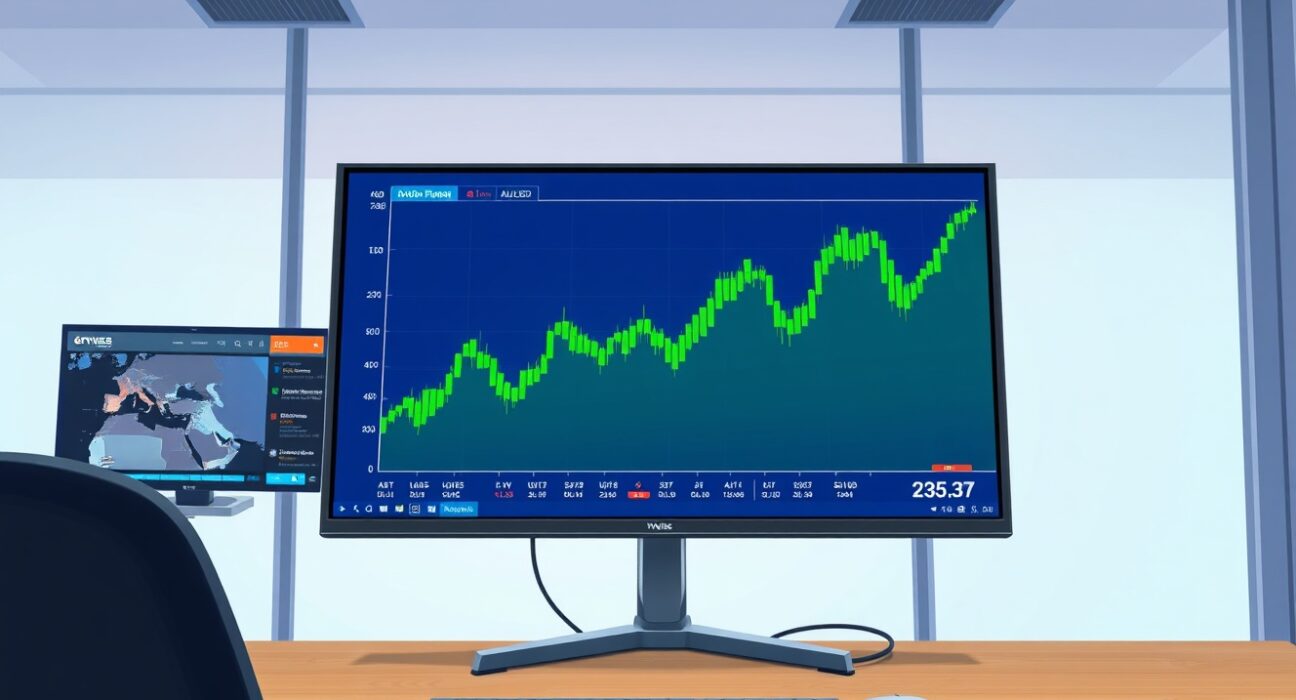
The AUD/USD currency pair experienced a significant uplift in early 2025 trading sessions, as renewed hopes for diplomatic de-escalation between the United States and Iran catalyzed a broad improvement in global risk sentiment. Market analysts observed a clear pivot away from safe-haven assets, with the Australian dollar capitalizing on its status as a classic risk-sensitive currency. This movement underscores the profound and immediate connection between geopolitical developments and foreign exchange valuations in the modern financial landscape.
AUD/USD Rises on Shifting Geopolitical Winds
Forex markets reacted swiftly to emerging reports from diplomatic channels in Geneva and Doha. Consequently, the Australian dollar gained over 0.8% against the US dollar during the Asian and European sessions. This rally marked one of the pair’s strongest single-day performances in the first quarter of 2025. The price action reflected a classic risk-on flow, where investors reduce exposure to perceived safety and seek higher-yielding opportunities. Furthermore, the move provided a clear technical breakout above a key resistance level that had capped gains for the preceding fortnight.
Market mechanics showed distinct patterns during this shift. Trading volume for the AUD/USD pair spiked approximately 40% above its 30-day average. Simultaneously, implied volatility, as measured by options pricing, contracted noticeably. This combination of higher prices on lower expected volatility is a textbook signal of easing market anxiety. The Australian dollar’s performance notably outpaced other commodity-linked currencies during the session, suggesting specific regional confidence factors were also at play.
The Core Drivers Behind the Risk Sentiment Shift
The primary catalyst was a joint statement from intermediary nations, confirming a scheduled high-level meeting between US and Iranian officials. This development followed months of heightened tensions in the Strait of Hormuz, a critical chokepoint for global energy shipments. Historically, stability in this region directly influences commodity prices and, by extension, currencies like the Australian dollar that are tied to resource exports. The prospect of reduced conflict risk immediately lowered the geopolitical premium baked into oil prices.
Expert Analysis on Market Linkages
Dr. Anya Sharma, Chief Strategist at Global Macro Advisors, contextualized the move. “Forex markets are discounting mechanisms,” she explained. “The AUD/USD reaction isn’t just about today’s headlines. It’s pricing in a future with fewer supply chain disruptions, steadier demand for industrial metals, and a more predictable cost environment for Australia’s major trading partners in Asia.” This analysis highlights the multi-layered transmission mechanism from geopolitics to currency values. Sharma’s team pointed to copper futures and iron ore swaps, which also rallied, as confirming evidence of a broad-based commodity channel supporting the Aussie dollar.
The reaction also intersected with prevailing monetary policy expectations. The Reserve Bank of Australia (RBA) has maintained a relatively hawkish stance compared to other developed market central banks. An improved global growth outlook, fueled by geopolitical calm, reduces the likelihood of near-term RBA rate cuts. This interest rate differential dynamic provides fundamental support for the AUD/USD pair beyond short-term sentiment flows. Data from futures markets showed a rapid repricing of RBA policy expectations following the news.
Historical Context and Comparative Market Movements
This event follows a recognizable pattern in financial history. Periods of geopolitical de-escalation frequently trigger rallies in cyclical assets and currencies. For instance, similar risk-on surges occurred following the initial US-China trade truce announcements in 2019 and the post-Brexit deal clarity in late 2020. The magnitude of the AUD/USD move, however, was particularly pronounced due to the currency’s high beta to global growth narratives.
Other asset classes displayed correlated behavior, validating the risk sentiment thesis:
- Equities: The ASX 200 and S&P 500 both opened higher, with materials and energy sectors leading gains.
- Commodities: Industrial metals like copper and aluminum rose, while gold prices retreated slightly.
- Fixed Income: Yields on Australian 10-year government bonds rose 5 basis points, reflecting a sell-off in safe-haven bonds.
- Volatility Index: The global FX volatility index (CVIX) declined by 1.5 points.
This synchronized movement across disparate asset classes confirms the development was a macro-driven, systemic shift in investor positioning rather than an isolated currency fluctuation.
Economic Impacts and Forward-Looking Scenarios
The sustained strength of the Australian dollar carries direct implications for the national economy. A higher AUD makes exports relatively more expensive for foreign buyers, potentially impacting key sectors like education, tourism, and agriculture. Conversely, it reduces the cost of imported goods and overseas travel for Australian consumers. The Treasury and RBA models typically incorporate currency valuations into their growth and inflation forecasts, meaning this move could influence future policy communications.
Analysts are now modeling several forward-looking scenarios based on the durability of the diplomatic progress:
| Scenario | Diplomatic Outcome | Projected AUD/USD Range | Key Risk |
|---|---|---|---|
| Baseline | Continued dialogue, minor confidence-building measures | 0.6800 – 0.7000 | Intermittent rhetorical flare-ups |
| Optimistic | Formal agreement on maritime security & nuclear safeguards | 0.7000 – 0.7200 | Domestic political opposition in the US or Iran |
| Cautious | Talks stall without breakdown, status quo maintained | 0.6600 – 0.6800 | Regional proxy conflicts continue |
The market’s immediate reaction prices in a path between the Baseline and Optimistic scenarios. However, currency traders remain attentive to incoming data. Upcoming Australian employment figures and US CPI data will test whether the positive sentiment can override domestic economic fundamentals. The interplay between geopolitics and macro data will define the trend for the coming quarter.
Conclusion
The rise in the AUD/USD pair serves as a powerful real-time indicator of improving global risk sentiment, directly tied to hopes for US-Iran de-escalation. This movement demonstrates the Australian dollar’s acute sensitivity to shifts in the geopolitical landscape, especially those affecting commodity trade and Asian economic stability. While the initial surge reflects optimism, the currency’s trajectory will ultimately depend on the tangible progress of diplomacy and its translation into sustainable economic confidence. For traders and economists alike, the AUD/USD pair remains a critical barometer for measuring the market’s appetite for risk in an interconnected world.
FAQs
Q1: Why does the AUD/USD pair react so strongly to geopolitical news?
The Australian dollar is considered a ‘risk-on’ currency due to Australia’s export-driven economy, which is heavily reliant on global growth and commodity demand. Geopolitical stability reduces risk premiums and supports growth expectations, thereby boosting the AUD.
Q2: What other factors could reverse this AUD/USD gain?
A reversal could be triggered by a breakdown in diplomatic talks, weaker-than-expected Chinese economic data (China is Australia’s largest trade partner), or a sudden shift to a more dovish monetary policy stance by the Reserve Bank of Australia.
Q3: How does US-Iran tension typically affect global markets?
Elevated tensions often increase the ‘geopolitical risk premium’ in oil prices, raise volatility, and spur flows into safe-haven assets like the US dollar, Swiss franc, and gold. De-escalation has the opposite effect, boosting risk assets.
Q4: Is the Australian dollar’s reaction unique compared to other currencies?
While other commodity currencies (like the Canadian dollar) may also benefit, the AUD often shows a magnified response due to its deep liquidity, high yield, and strong correlation with Asian economic health, which is sensitive to Middle East stability.
Q5: What should traders watch next after this initial move?
Traders should monitor official statements from the involved governments, oil price trends, broader equity market performance, and key Australian economic data releases to gauge whether the risk-on momentum is sustainable.
Disclaimer: The information provided is not trading advice, Bitcoinworld.co.in holds no liability for any investments made based on the information provided on this page. We strongly recommend independent research and/or consultation with a qualified professional before making any investment decisions.