

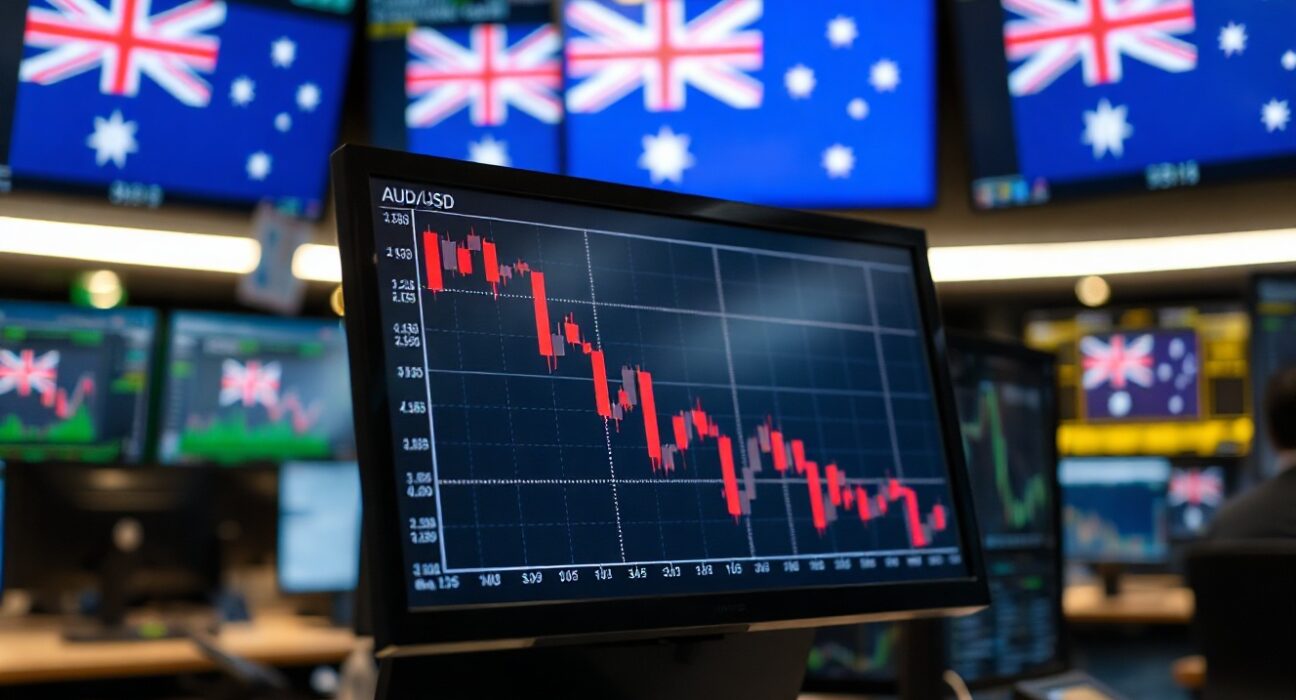
The Australian Dollar continued to trade on the back foot on Thursday, holding losses below the key 0.7200 level against the US Dollar. The currency remained under pressure following weaker-than-expected domestic GDP data, which highlighted a slowing economy, while escalating US-Iran tensions added a layer of geopolitical uncertainty to the outlook.
GDP Data Disappoints, Adding to Economic Concerns
Australia’s economy grew at a slower pace in the fourth quarter, with GDP figures coming in below market forecasts. The data revealed that consumer spending remained subdued and business investment softened, raising questions about the resilience of the economic recovery. The Reserve Bank of Australia (RBA) has already signaled a cautious approach to monetary policy, and the latest GDP print is likely to reinforce expectations that interest rates will remain on hold for an extended period.
Analysts noted that the weaker growth data reduces the likelihood of any hawkish shift from the RBA, which has been balancing stubborn inflation against a fragile economy. The market’s reaction was swift, with the Australian Dollar losing ground as traders adjusted their rate expectations.
US-Iran Tensions Fuel Risk Aversion
Geopolitical developments added another headwind for the Australian Dollar. Rising tensions between the United States and Iran have prompted a flight to safe-haven assets, benefiting the US Dollar and weighing on risk-sensitive currencies like the Aussie. Reports of increased military posturing and diplomatic breakdowns have kept investors on edge, with no immediate resolution in sight.
The Australian Dollar, often used as a proxy for global risk appetite, tends to weaken during periods of geopolitical instability. The combination of domestic economic weakness and external uncertainty has created a challenging environment for the currency.
What This Means for Traders and the Economy
For forex traders, the AUD/USD pair remains vulnerable to further downside if economic data continues to disappoint or if geopolitical risks escalate. The 0.7100 level is now seen as a key support zone, with a break below that potentially opening the door to deeper losses. On the upside, a sustained move above 0.7200 would require a significant improvement in risk sentiment or a positive catalyst from Australian economic data.
From a broader economic perspective, the weaker GDP data underscores the challenges facing the Australian economy. High interest rates and persistent inflation have squeezed household budgets, while global demand for Australian exports remains uneven. The RBA’s next policy meeting will be closely watched for any shift in language or forward guidance.
Conclusion
The Australian Dollar’s inability to reclaim the 0.7200 level reflects a combination of domestic economic headwinds and external geopolitical pressures. With growth slowing and global risks rising, the currency faces an uphill battle in the near term. Traders and investors will be watching for further economic releases and any developments in US-Iran relations that could influence market sentiment.
FAQs
Q1: Why did the Australian Dollar fall after the GDP data?
The GDP data showed weaker-than-expected economic growth, which reduces the likelihood of the RBA raising interest rates. Lower growth expectations typically weigh on a currency as investors seek higher returns elsewhere.
Q2: How do US-Iran tensions affect the Australian Dollar?
Geopolitical tensions tend to drive investors toward safe-haven assets like the US Dollar and gold. The Australian Dollar, being a risk-sensitive currency, often weakens during such periods as global risk appetite declines.
Q3: What is the next key level to watch for AUD/USD?
The next major support level is around 0.7100. If the pair breaks below that, it could signal further downside. On the upside, a move back above 0.7200 would be needed to suggest a recovery in sentiment.
Disclaimer: The information provided is not trading advice, Bitcoinworld.co.in holds no liability for any investments made based on the information provided on this page. We strongly recommend independent research and/or consultation with a qualified professional before making any investment decisions.
