
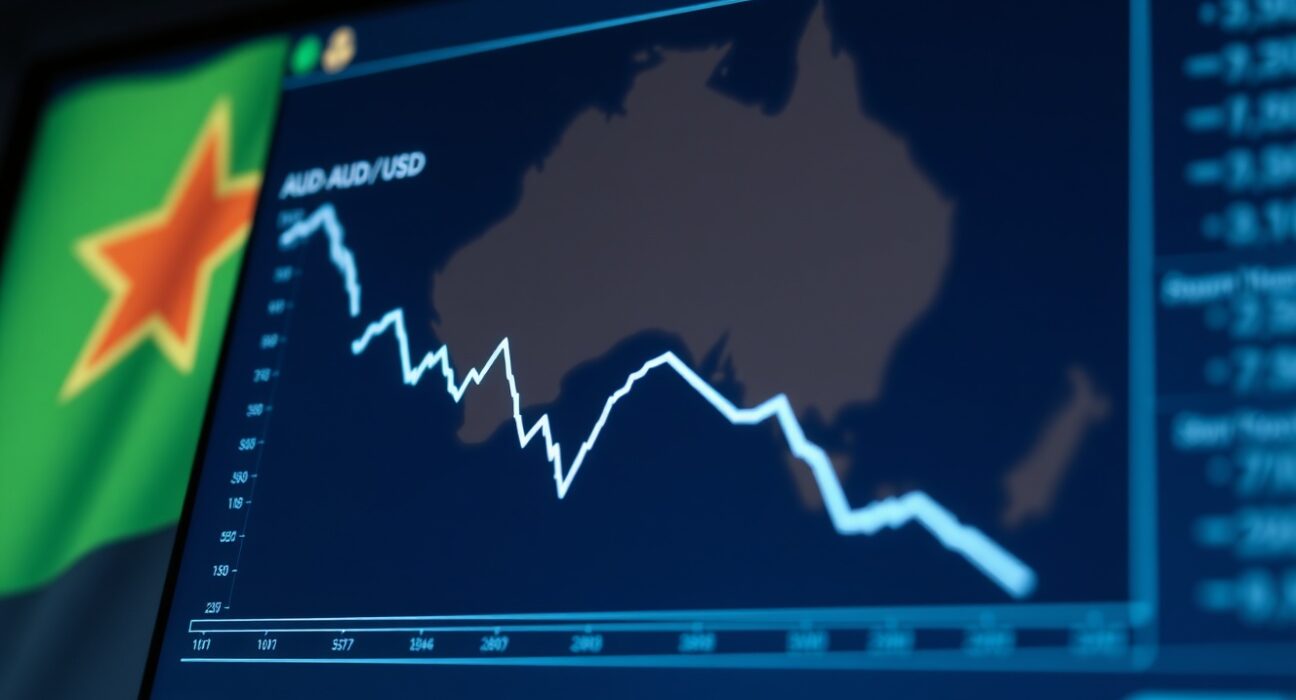
The Australian Dollar faces intense selling pressure this week as escalating military conflicts in the Middle East, particularly involving Iran, trigger a severe global risk-off mood among investors. Market analysts in Sydney and globally note a rapid flight to safety, which traditionally undermines commodity-linked currencies like the AUD. Consequently, the AUD/USD pair has breached key technical support levels, reflecting broader anxieties about global growth and trade stability. This article provides a detailed analysis of the mechanisms connecting geopolitical strife to currency valuation, the specific vulnerabilities of the Australian economy, and the historical context of similar market reactions.
Australian Dollar Under Pressure from Geopolitical Shockwaves
Geopolitical instability, especially in oil-producing regions, consistently triggers a risk-off sentiment in financial markets. Investors, therefore, seek refuge in traditional safe-haven assets like the US Dollar, Japanese Yen, and Swiss Franc. Simultaneously, they exit positions in currencies perceived as higher risk, including the Australian Dollar. The current tensions involving Iran present a multifaceted threat: potential disruption to global oil supply chains, heightened uncertainty for international trade, and the risk of a broader regional conflict. These factors collectively erode confidence in growth-dependent economies.
Australia’s export-oriented economy makes its currency particularly sensitive to these shifts. As a major exporter of iron ore, coal, and liquefied natural gas (LNG), Australia relies heavily on robust global industrial demand and stable trade routes. Geopolitical crises threaten both. For instance, increased shipping insurance premiums and rerouted cargo can immediately impact export profitability. Furthermore, market participants often view the AUD as a proxy for Chinese economic health due to strong trade ties. Any threat to global trade from Middle Eastern instability indirectly pressures the AUD through concerns about Chinese demand.
Historical Context and the Risk-Off Playbook
Financial markets often react to geopolitical events using a recognizable pattern. Historically, events like the 1990 Gulf War, the 2014 Crimea annexation, and the 2020 US-Iran tensions saw the Australian Dollar weaken against the US Dollar. The table below illustrates typical market movements during past risk-off episodes triggered by Middle East conflicts:
| Event | Timeframe | AUD/USD Approx. Move | Primary Driver |
|---|---|---|---|
| Gulf War (Start) | Aug 1990 | -5.2% | Oil Price Spike, Global Uncertainty |
| Iran Nuclear Tensions | Jan 2012 | -3.8% | Safe-Haven Demand, Commodity Volatility |
| US-Iran Strikes (2020) | Jan 2020 | -2.1% | Flight to Safety, Growth Fears |
The current situation shares key characteristics with these historical precedents. However, analysts note the modern financial system’s increased interconnectedness may amplify spillover effects. The immediate channel of impact is typically through:
• Commodity Prices: Oil price volatility affects global inflation and growth expectations.
• Bond Markets: A rush into US Treasuries pushes the USD higher, pressuring the AUD.
• Equity Flows: Sell-offs in global stock markets, particularly in mining and materials sectors, hurt AUD sentiment.
Expert Analysis on AUD’s Fundamental Vulnerabilities
Senior currency strategists point to Australia’s current account balance and terms of trade as critical factors. “The Australian Dollar acts as a barometer for global risk appetite and commodity cycles,” explains a lead analyst from a major financial institution. “An event that threatens to derail global trade or manufacturing activity directly impacts the demand outlook for Australia’s key exports. We are observing not just speculative positioning shifts but also real-money investors adjusting their long-term portfolio allocations away from commodity-linked assets.”
Monetary policy divergence further complicates the outlook. The Reserve Bank of Australia (RBA) may adopt a more cautious stance if global growth fears intensify, potentially delaying rate hikes. Conversely, the US Federal Reserve might maintain a firmer posture due to inflationary pressures from energy markets. This policy divergence could widen the interest rate differential, offering additional support to the USD against the AUD. Data from futures markets already shows a scaling back of bets on aggressive RBA tightening in 2025.
Broader Market Impacts and Future Trajectory
The risk-off mood extends beyond forex markets. Australian equity markets, particularly the ASX 200, have seen significant sector rotation. Defensive sectors like utilities and consumer staples have outperformed, while materials and financials—key index heavyweights—have faced selling pressure. This internal market dynamic reinforces the negative sentiment surrounding the Australian economy. Additionally, credit default swap (CDS) spreads for Australian corporate debt have widened slightly, indicating a marginal increase in perceived credit risk.
The future path for the Australian Dollar largely depends on the duration and scale of the geopolitical conflict. A rapid de-escalation could see a swift, albeit partial, retracement of losses as risk appetite returns. However, a protracted crisis would likely lead to sustained pressure. Key levels to watch include major psychological support levels for AUD/USD and the price action of key Australian export commodities like iron ore. Market participants will also closely monitor statements from the RBA for any acknowledgment of the geopolitical risks to their economic forecasts.
Conclusion
The Australian Dollar remains under significant pressure as the Iran conflict fuels a severe global risk-off mood. Its status as a commodity currency and a proxy for global growth leaves it uniquely exposed to geopolitical shocks that threaten trade and energy markets. While historical patterns provide a framework, the current episode unfolds within a complex global economic landscape marked by inflationary pressures and policy normalization. The AUD’s trajectory will be determined by the conflict’s evolution, subsequent commodity price movements, and the relative policy responses of global central banks, particularly the RBA and the Federal Reserve.
FAQs
Q1: Why does the Australian Dollar fall during geopolitical crises?
The AUD is considered a “risk-on” currency, heavily tied to global growth and commodity exports. During crises, investors flee to safe-haven assets like the US Dollar, selling riskier assets including the AUD.
Q2: How does the Iran conflict specifically affect Australia’s economy?
It threatens global trade routes and stability, potentially raising costs for Australia’s exports (shipping, insurance) and dampening demand from key trading partners like China due to broader economic uncertainty.
Q3: What other assets are impacted by this risk-off move?
Equities (especially mining stocks), industrial commodities like copper, and growth-sensitive bonds typically fall, while gold, the US Dollar, and government bonds from safe-haven nations often rise.
Q4: Could the RBA intervene to support the Australian Dollar?
Direct intervention is rare. The RBA typically focuses on inflation and employment. It might adjust its policy rhetoric, but a weakening AUD can also help exporters, making intervention unlikely barring disorderly market conditions.
Q5: What would signal a recovery for the AUD?
A de-escalation of the conflict, a stabilization or rise in key commodity prices (iron ore, coal), and a return of positive risk sentiment in global equity markets would be primary catalysts for an AUD rebound.
Disclaimer: The information provided is not trading advice, Bitcoinworld.co.in holds no liability for any investments made based on the information provided on this page. We strongly recommend independent research and/or consultation with a qualified professional before making any investment decisions.