

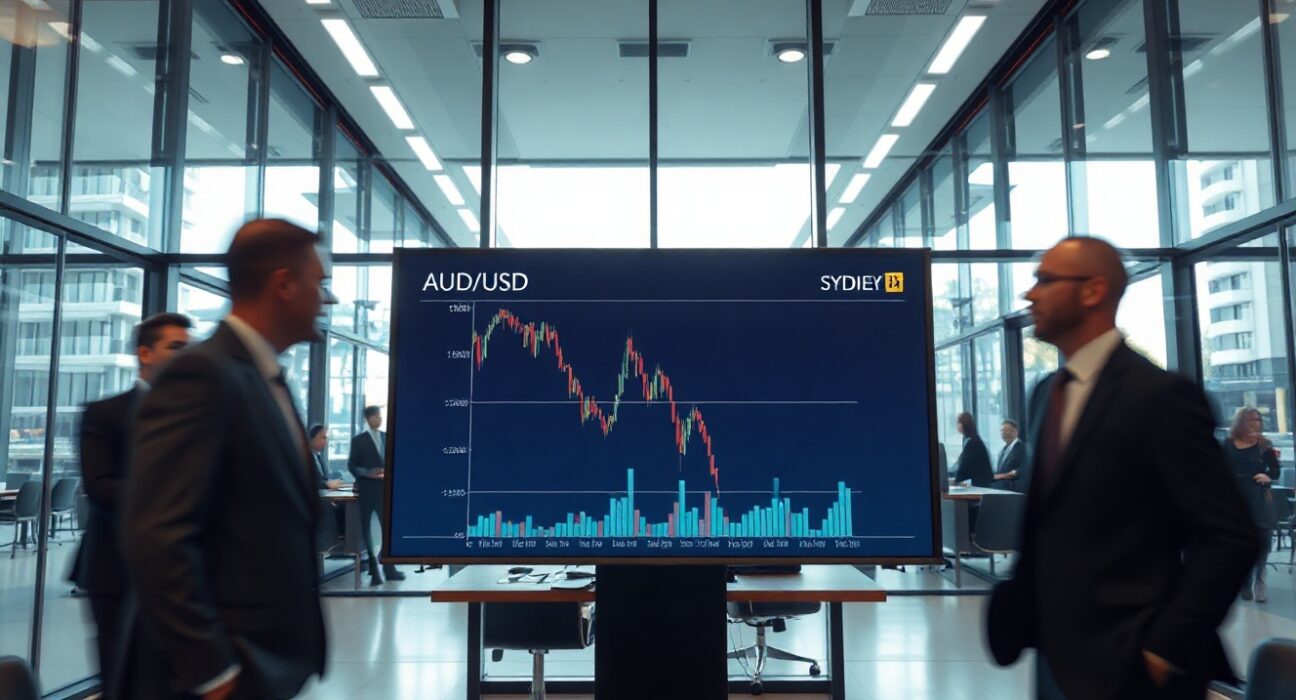
The Australian dollar has failed to gain sustained momentum despite the Reserve Bank of Australia (RBA) adopting a more hawkish tone at its latest policy meeting, according to a note from ING analysts. The currency’s muted reaction suggests that markets are already pricing in the central bank’s tightening bias, leaving little room for further upside surprises.
RBA’s Hawkish Stance: What Changed?
At its April meeting, the RBA held the cash rate steady at 4.10%, as widely expected. However, the accompanying statement carried a notably firmer tone on inflation, with Governor Michele Bullock warning that price pressures remain persistent and that the board is prepared to raise rates again if necessary. This marked a shift from the more balanced language seen in previous months.
Despite this hawkish pivot, the Australian dollar traded in a narrow range, hovering around the $0.6500 level against the US dollar. ING strategists point out that the market had already anticipated a more assertive RBA, limiting the currency’s ability to rally on the news.
Why the Market Remains Unimpressed
ING attributes the lackluster AUD reaction to several factors. First, global risk sentiment remains fragile, with ongoing concerns about China’s economic slowdown weighing on commodity-linked currencies like the Australian dollar. Second, the US dollar has retained its strength on expectations that the Federal Reserve will keep interest rates higher for longer, narrowing the yield advantage that the AUD might otherwise enjoy.
Third, the RBA’s hawkishness is not seen as a game-changer for the broader rate outlook. Markets are pricing in only a modest chance of another hike, and the peak rate is expected to remain below the levels seen in the US and other major economies. This limits the AUD’s appeal as a carry trade destination.
Implications for AUD/USD
ING expects the Australian dollar to remain under pressure in the near term, with AUD/USD likely to trade in a range between $0.6400 and $0.6600. A decisive break above $0.6600 would require a more significant catalyst, such as a sharp improvement in China’s economic data or a dovish shift from the Federal Reserve.
For traders and businesses with exposure to the Australian dollar, the key takeaway is that the RBA’s hawkish stance is already largely priced in. Further AUD gains will depend on external factors, particularly global risk appetite and the trajectory of US interest rates.
Conclusion
The RBA’s hawkish pivot at its April meeting has failed to ignite a sustained rally in the Australian dollar, as markets had already anticipated the central bank’s tightening bias. According to ING, the AUD’s muted reaction reflects headwinds from global risk aversion, a strong US dollar, and limited room for further hawkish surprises. The near-term outlook for AUD/USD remains range-bound, with a downward bias unless external conditions improve significantly.
FAQs
Q1: Why didn’t the Australian dollar rally after the RBA’s hawkish comments?
The market had already priced in the RBA’s tightening bias, leaving little room for a positive surprise. Additionally, global risk sentiment and a strong US dollar are weighing on the AUD.
Q2: What is the RBA’s current cash rate?
The RBA held the cash rate at 4.10% at its April 2025 meeting, maintaining a restrictive stance to combat persistent inflation.
Q3: What is the near-term outlook for AUD/USD according to ING?
ING expects AUD/USD to trade in a $0.6400–$0.6600 range in the near term, with a downside bias unless global risk appetite improves or the Federal Reserve signals a dovish shift.
Disclaimer: The information provided is not trading advice, Bitcoinworld.co.in holds no liability for any investments made based on the information provided on this page. We strongly recommend independent research and/or consultation with a qualified professional before making any investment decisions.
