

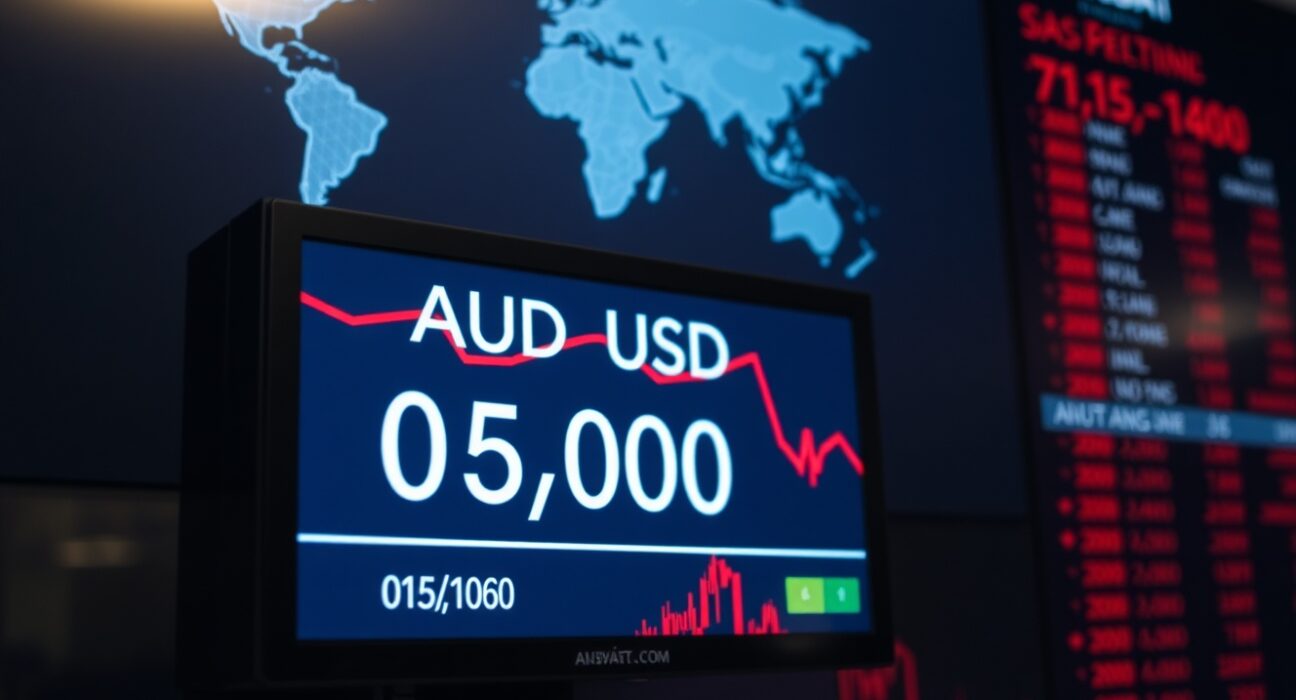
The Australian dollar weakened below the 0.7000 level against the US dollar on Monday, as escalating military conflicts between the United States and Iran weighed on risk-sensitive currencies. The move reflects growing investor caution amid heightened geopolitical uncertainty in the Middle East.
Geopolitical Risk Drives Currency Moves
The AUD/USD pair slipped to intraday lows near 0.6975, breaking below the psychologically significant 0.7000 threshold for the first time in several sessions. The decline was driven by safe-haven demand for the US dollar, which typically strengthens during periods of geopolitical turmoil. The Australian dollar, often considered a proxy for global risk appetite, tends to suffer when investors flee to safer assets.
Context and Implications for Traders
The latest escalation follows a series of retaliatory strikes between US forces and Iranian-backed militias, raising fears of a broader regional conflict. Markets are now pricing in increased uncertainty, which could delay expected interest rate decisions by central banks. For the Reserve Bank of Australia, the geopolitical backdrop adds another layer of complexity to its inflation and growth outlook. Traders should monitor any diplomatic developments or further military actions, as these could trigger sharp volatility in the AUD/USD pair.
What This Means for Australian Dollar Holders
For Australian importers and exporters, a weaker Australian dollar makes imports more expensive but boosts the competitiveness of exports. Travelers holding Australian dollars will find their purchasing power reduced abroad, particularly in US-dollar-denominated destinations. Investors with exposure to Australian assets should consider hedging strategies against further currency depreciation.
Conclusion
The Australian dollar’s decline below 0.7000 underscores the immediate impact of geopolitical events on currency markets. As the US-Iran conflict evolves, the AUD/USD pair is likely to remain sensitive to headlines. Traders and businesses should prepare for continued volatility and stay informed on diplomatic and military developments.
FAQs
Q1: Why does the Australian dollar fall during geopolitical conflicts?
The Australian dollar is considered a risk-sensitive currency. During geopolitical tensions, investors tend to move capital into safe-haven assets like the US dollar and gold, causing the AUD to weaken.
Q2: What is the significance of the 0.7000 level for AUD/USD?
The 0.7000 level is a key psychological and technical support level for the AUD/USD pair. Breaking below it often signals further bearish momentum and increased market uncertainty.
Q3: How can businesses protect themselves from AUD volatility?
Businesses can use hedging instruments such as forward contracts, options, or currency swaps to lock in exchange rates and reduce exposure to sudden currency swings.
Disclaimer: The information provided is not trading advice, Bitcoinworld.co.in holds no liability for any investments made based on the information provided on this page. We strongly recommend independent research and/or consultation with a qualified professional before making any investment decisions.
