
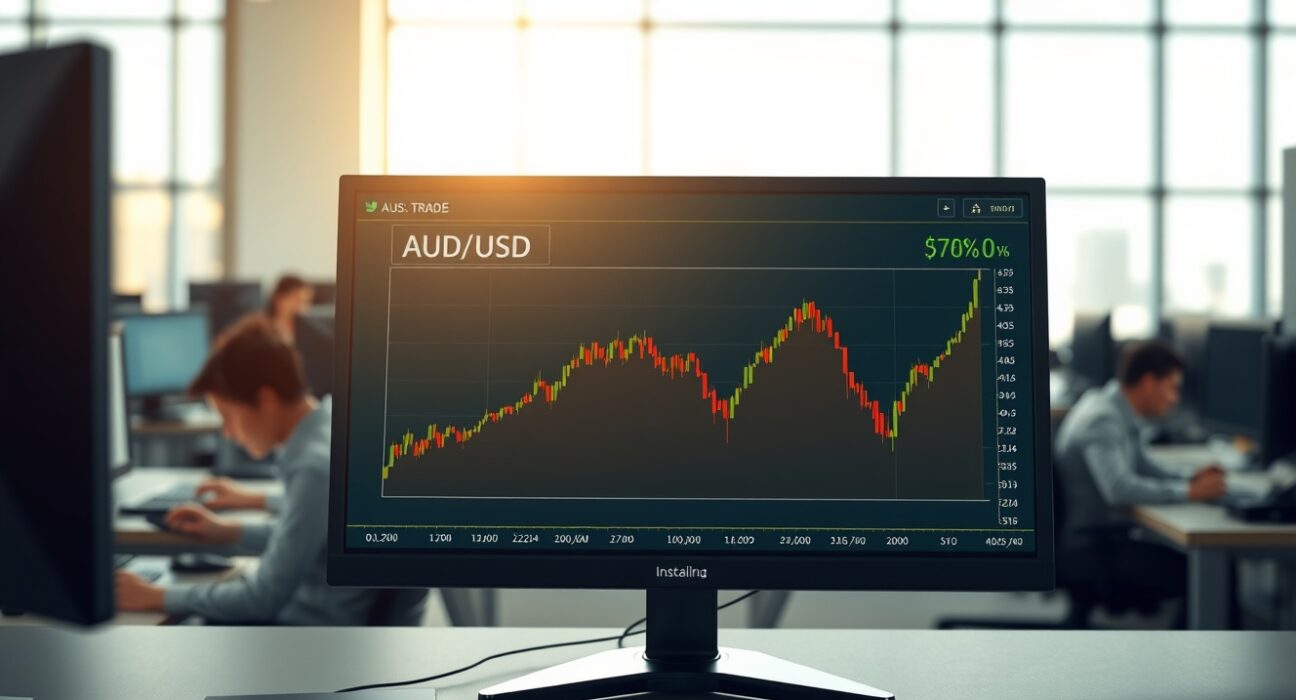
Sydney, Australia – April 15, 2025: The Australian Dollar demonstrates remarkable stability against major counterparts as global financial markets enter a tense holding pattern. Traders worldwide now await a critical geopolitical decision from Washington. President Donald Trump’s impending deadline regarding Iran sanctions enforcement creates substantial uncertainty across currency markets. Consequently, the AUD’s recent steadiness reflects both cautious optimism and defensive positioning by institutional investors.
Australian Dollar Stability Amid Geopolitical Uncertainty
The Australian Dollar maintains a narrow trading range against the US Dollar, currently hovering around 0.6650. This stability emerges despite significant global headwinds. Market analysts attribute this resilience to several structural factors supporting the currency. Australia’s robust commodity exports, particularly iron ore and liquefied natural gas, provide fundamental support. Furthermore, the Reserve Bank of Australia’s current monetary policy stance offers relative predictability compared to other central banks.
Currency traders monitor several key technical levels for the AUD/USD pair. The 100-day moving average currently acts as dynamic support. Meanwhile, resistance sits near the 0.6720 level from February’s high. Trading volumes in Asian sessions show a noticeable increase. However, volatility measures remain surprisingly contained given the external risks. This suggests market participants have largely priced in a range of potential outcomes already.
Trump’s Iran Deadline: A Global Market Catalyst
President Trump faces a self-imposed deadline this week to decide on reinstating comprehensive sanctions against Iran. The original 2015 nuclear deal, formally the Joint Comprehensive Plan of Action (JCPOA), remains a contentious geopolitical flashpoint. The administration must determine whether to continue waivers for certain nations importing Iranian oil. Alternatively, it could enforce maximum pressure tactics abandoned by the previous administration.
Historical market reactions to similar geopolitical events provide important context. For instance, the initial US withdrawal from the JCPOA in 2018 triggered a 3% surge in Brent crude prices within 48 hours. Currency markets experienced significant volatility, particularly for oil-importing nations’ currencies. The current situation presents a more complex scenario. Global energy markets have undergone substantial transformation since 2018, with diversified supply chains and increased renewable adoption.
Key considerations for the upcoming decision include:
- Oil Market Implications: Potential disruption to global crude supplies
- Regional Stability: Impact on Middle Eastern geopolitical alliances
- Inflationary Pressures: Possible effects on global consumer prices
- Trade Route Security: Risks to critical shipping lanes like the Strait of Hormuz
Expert Analysis on Currency Market Reactions
Financial institutions globally prepare contingency plans for various deadline outcomes. Dr. Eleanor Vance, Chief Strategist at Sydney-based Meridian Capital, provides professional insight. “The Australian Dollar often acts as a liquid proxy for global risk sentiment and commodity demand,” Vance explains. “Its current stability suggests markets anticipate a measured response from Washington rather than an immediate escalation.”
Vance further notes the currency’s correlation with Chinese economic performance. “Approximately 35% of Australian exports go to China. Therefore, any geopolitical development affecting global trade flows indirectly impacts AUD valuation. The market currently prices in minimal disruption to major trade corridors.” Historical data supports this analysis. During previous US-Iran tensions in early 2020, the AUD initially dropped 1.8% before recovering fully within two weeks as supply chain fears eased.
Comparative Impact on Major Currency Pairs
Different currencies exhibit varied sensitivity to geopolitical events in the Middle East. The following table illustrates recent movements and typical reaction patterns:
| Currency Pair | Current Level | 24H Change | Typical Risk Profile |
|---|---|---|---|
| AUD/USD | 0.6652 | +0.12% | Moderate risk sensitivity |
| USD/JPY | 152.80 | -0.08% | High safe-haven demand |
| EUR/USD | 1.0875 | +0.05% | Moderate geopolitical sensitivity |
| USD/CAD | 1.3580 | -0.15% | High oil correlation |
The Japanese Yen demonstrates its traditional safe-haven characteristics during uncertainty. Meanwhile, the Canadian Dollar shows sensitivity through its correlation with oil prices. The Euro’s limited movement reflects Europe’s complex energy relationship with the Middle East. European nations previously relied more heavily on Iranian oil exports than other regions.
Broader Economic Context and Market Positioning
Beyond immediate currency fluctuations, the Iran deadline decision carries broader economic implications. Global supply chains, particularly for energy and shipping, face potential disruption. Insurance premiums for vessels traveling through the Persian Gulf may increase substantially. Such developments typically benefit commodity-exporting currencies like the Australian Dollar through higher export prices.
Market positioning data from the Commodity Futures Trading Commission reveals interesting trends. Speculative net long positions on the Australian Dollar increased by 12% in the latest reporting period. This suggests professional traders anticipate relative AUD strength regardless of the specific geopolitical outcome. The reasoning involves Australia’s position as a net energy exporter and its geographic distance from potential conflict zones.
Central bank policies create an additional layer of complexity. The Federal Reserve’s current interest rate trajectory differs significantly from the RBA’s approach. This interest rate differential traditionally influences currency pair movements. However, during geopolitical crises, these fundamental factors sometimes become secondary to risk sentiment and capital flows.
Historical Precedents and Market Memory
Financial markets possess institutional memory regarding similar events. The 2019 attacks on Saudi Arabian oil facilities provide a relevant case study. Following those attacks, the Australian Dollar initially declined 0.9% against the US Dollar as risk aversion spiked. However, it recovered those losses within five trading days as oil prices stabilized and alternative suppliers increased production.
Market participants now operate with this historical context. Consequently, knee-jerk reactions to geopolitical news have become less pronounced in recent years. Algorithmic trading systems incorporate geopolitical risk metrics into their models. Human traders develop more nuanced strategies that consider multiple potential scenarios rather than binary outcomes.
Conclusion
The Australian Dollar’s current steadiness reflects sophisticated market anticipation of multiple geopolitical scenarios. While President Trump’s Iran deadline decision undoubtedly carries significant implications, currency markets demonstrate increased resilience to single-event shocks. Australia’s fundamental economic strengths, including diversified exports and stable institutions, provide underlying support for the AUD. Market participants now await concrete policy announcements before adjusting positions substantially. The coming days will reveal whether this cautious stability represents prudent risk management or premature complacency in global currency markets.
FAQs
Q1: Why is the Australian Dollar sensitive to geopolitical events in the Middle East?
The Australian Dollar functions as a commodity currency and proxy for global risk sentiment. Events affecting oil prices and trade routes indirectly impact Australia’s export economy, particularly through China’s manufacturing sector which relies on Middle Eastern energy.
Q2: What are the potential market outcomes of Trump’s Iran decision?
Markets anticipate three primary scenarios: continuation of current waivers (bullish for risk assets), partial sanctions reinstatement (moderate volatility), or full maximum pressure campaign (initially risk-off, potentially boosting commodities longer-term).
Q3: How does this situation differ from previous US-Iran tensions?
Current global energy markets feature more diversified suppliers, increased US shale production, and greater strategic petroleum reserves. These factors may dampen the oil price spike typically associated with Middle Eastern tensions.
Q4: What technical levels are traders watching for AUD/USD?
Key support resides at the 100-day moving average (approximately 0.6620) and the 0.6580 February low. Resistance sits at 0.6720 (recent high) and 0.6800 (psychological level). A break above 0.6750 would signal renewed bullish momentum.
Q5: How are Australian businesses preparing for potential market volatility?
Major Australian exporters and importers typically employ currency hedging strategies using forward contracts and options. Many corporations increased hedging activity in recent weeks, particularly for USD exposures, according to treasury management reports from leading Australian banks.
Disclaimer: The information provided is not trading advice, Bitcoinworld.co.in holds no liability for any investments made based on the information provided on this page. We strongly recommend independent research and/or consultation with a qualified professional before making any investment decisions.