
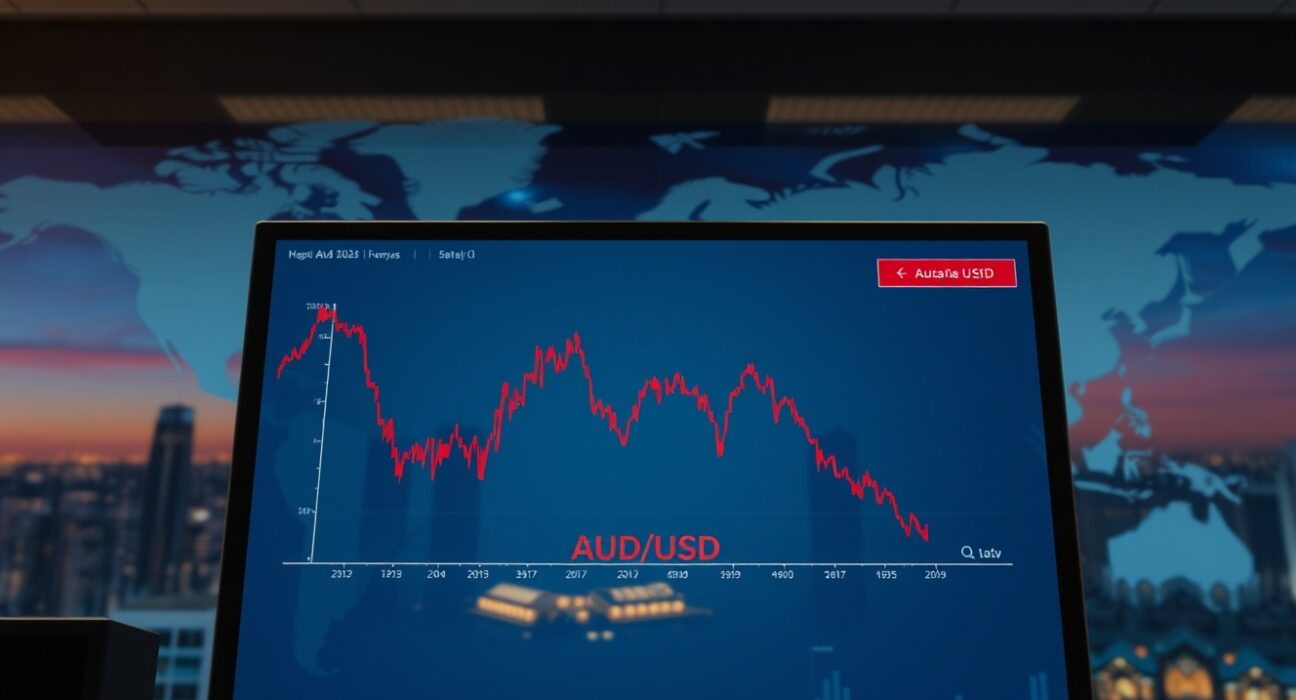
Sydney, Australia – The Australian Dollar faced significant selling pressure in early Asian trading sessions, markedly underperforming its major currency peers as escalating geopolitical tensions in the Middle East triggered a broad-based flight from risk-sensitive assets. Market analysts immediately pointed to renewed conflict reports as the primary catalyst, sending shockwaves through commodity and equity markets that directly influence the commodity-linked Aussie dollar.
Australian Dollar Underperformance in a Risk-Off Climate
Currency traders witnessed a stark divergence in performance. Consequently, the AUD/USD pair breached key technical support levels, while traditional safe-haven assets like the US Dollar, Japanese Yen, and Swiss Franc rallied. This dynamic highlights the Australian Dollar’s status as a classic proxy for global risk sentiment. Furthermore, its close correlation with Chinese economic health and raw material prices amplifies its volatility during geopolitical shocks. Historical data consistently shows the currency suffers disproportionately when investor confidence wanes.
The Geopolitical Spark: Revived Middle East Risks
The immediate trigger was a confirmed military escalation in a key regional conflict zone, disrupting crude oil supply routes. Subsequently, Brent crude futures surged over 4%, injecting fresh inflation fears into the global economic outlook. Central bank watchers noted that such oil price spikes complicate the disinflation narrative, potentially delaying anticipated interest rate cuts from major institutions like the Federal Reserve and the European Central Bank. This environment of higher-for-longer rates traditionally strengthens the US Dollar, thereby applying additional downward pressure on the AUD.
Expert Analysis on Market Mechanics
Senior strategists from major investment banks provided context. “The Australian Dollar operates as a high-beta currency,” explained one markets director. “Its value derives significantly from global growth expectations and capital flows into riskier investments. When geopolitical instability surfaces, capital rapidly exits these positions, seeking safety.” This flight-to-quality phenomenon directly impacts the AUD. Additionally, Australia’s status as a major iron ore and liquefied natural gas exporter ties its currency fate to global industrial demand, which often stalls during periods of uncertainty.
Comparative Impact on Global Risk Assets
The sell-off was not isolated to forex markets. A clear contagion effect rippled through related asset classes, demonstrating the interconnected nature of modern finance.
- Equities: The Australian S&P/ASX 200 index fell sharply, particularly in the materials and financial sectors. Mining giants like BHP and Rio Tinto saw significant share price declines.
- Commodities: While oil rallied, industrial metals like copper and iron ore faced selling pressure on fears of dampened global demand.
- Cryptocurrencies: Major cryptocurrencies like Bitcoin and Ethereum also retreated, reinforcing their current correlation with speculative risk assets rather than their purported safe-haven characteristics.
| Asset | Performance | Primary Driver |
|---|---|---|
| AUD/USD | -1.8% | Risk-Off Sentiment, USD Strength |
| Brent Crude Oil | +4.2% | Supply Disruption Fears |
| S&P/ASX 200 | -2.1% | Material & Bank Stock Sell-Off |
| Gold (XAU/USD) | +1.5% | Traditional Safe-Haven Demand |
Historical Context and Forward Trajectory
Past episodes of Middle East instability, such as the 2019 Gulf tensions or the 2022 energy crisis, provide a roadmap. Typically, the Australian Dollar experiences an initial sharp decline, followed by a period of elevated volatility as markets assess the conflict’s duration and global economic impact. The currency’s recovery often lags behind a broader market stabilization, awaiting clear signs of resumed growth in key trading partner China. Monetary policy differentials will also play a crucial role; if the Reserve Bank of Australia is perceived as more dovish than its peers, the AUD’s underperformance could persist.
Conclusion
The Australian Dollar’s pronounced underperformance serves as a clear barometer of renewed investor anxiety. Revived Middle East risks have catalyzed a classic risk-off rotation, punishing assets tied to global growth and commodity cycles. While short-term volatility is certain, the medium-term path for the AUD will depend on the conflict’s resolution, subsequent energy price stability, and the resilience of the Chinese economy. For now, the currency remains highly susceptible to further geopolitical headlines, underscoring its sensitivity to shifts in global risk appetite.
FAQs
Q1: Why is the Australian Dollar considered a ‘risk asset’?
The Australian Dollar is heavily influenced by global commodity prices and capital flows into growth-oriented investments. Its value often rises with global economic optimism and falls when fear drives investors toward safer assets like the US Dollar or Japanese Yen.
Q2: How do Middle East tensions specifically affect the AUD?
Conflicts in the Middle East typically spike oil prices, raising global inflation fears. This can lead central banks to maintain higher interest rates, strengthening currencies like the USD. Higher oil prices also threaten global growth, reducing demand for Australia’s commodity exports, thereby hurting the AUD.
Q3: What other currencies typically underperform alongside the AUD in a risk-off event?
Other commodity-linked and growth-sensitive currencies like the New Zealand Dollar (NZD), Canadian Dollar (CAD), and emerging market currencies often face similar selling pressure during broad risk aversion.
Q4: Could the AUD recover quickly if tensions ease?
A rapid de-escalation could trigger a swift, partial recovery, especially if it calms oil markets. However, a full recovery to pre-crisis levels would require a sustained return of risk appetite and positive data from China, Australia’s largest trading partner.
Q5: What should traders watch next regarding the AUD?
Key indicators include the evolution of the geopolitical situation, weekly crude oil inventory reports, Chinese economic data releases, and statements from the Reserve Bank of Australia regarding its monetary policy outlook amid the new uncertainty.
Disclaimer: The information provided is not trading advice, Bitcoinworld.co.in holds no liability for any investments made based on the information provided on this page. We strongly recommend independent research and/or consultation with a qualified professional before making any investment decisions.