

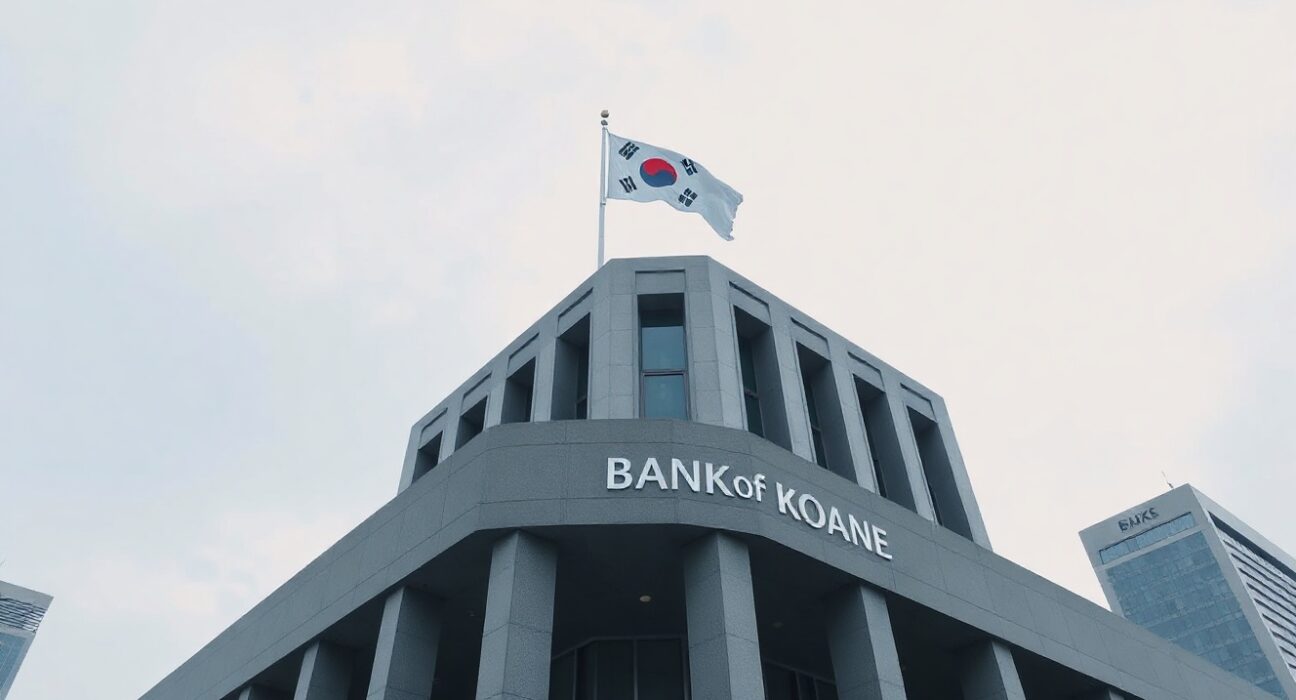
The Bank of Korea is moving forward with its deposit token project with the stated goal of full-scale commercialization, moving beyond what many observers initially assumed would be a limited pilot program. According to a report from Maeil Business Newspaper, the central bank’s ambition has drawn unease from the country’s commercial banking sector, which warns that the next phases of the project would require operational overhauls comparable to launching entirely new business lines.
Deposit token project: From pilot to permanent infrastructure
The Bank of Korea’s deposit token initiative is designed to explore the issuance and circulation of tokenized deposits backed by central bank reserves. Unlike a retail central bank digital currency (CBDC) intended for general public use, deposit tokens are restricted to financial institutions and are meant to improve the efficiency of interbank settlements and wholesale payments. The central bank has indicated that it intends to move toward continuous, uninterrupted operation of the system, signaling a long-term commitment to integrating the technology into South Korea’s financial infrastructure.
Documents submitted by the Korea Federation of Banks to the office of People Power Party lawmaker Lee Heon-seung outline that both the central bank and commercial banks are preparing follow-up tests. These tests are intended to build a technical and regulatory foundation for formal introduction and widespread adoption of the tokens, without planned service interruptions.
Banking sector pushes back on timeline and scope
Commercial banks have expressed concern that the planned expansion of the deposit token system—particularly the inclusion of peer-to-peer transfer capabilities and broader use cases—would require significant adjustments to existing banking infrastructure. The Korea Federation of Banks has formally requested a schedule adjustment, arguing that the subsequent phases of the project demand procedures on par with establishing an entirely new business operation. Banks are concerned about the operational risks, compliance burdens, and potential impacts on their existing deposit and payment systems.
The concerns highlight a broader tension between central bank-led innovation in payment systems and the readiness of commercial institutions to adapt. While the Bank of Korea views deposit tokens as a step toward modernizing the financial system, banks are wary of the costs and complexity involved in integrating new digital instruments into their legacy platforms.
What this means for South Korea’s financial landscape
South Korea has long been a testbed for digital currency innovation, having conducted multiple CBDC pilot programs since 2021. The deposit token project represents a more targeted approach, focusing on institutional use rather than replacing cash or retail payment systems. If successfully commercialized, the system could streamline interbank settlements, reduce transaction costs, and enhance transparency in wholesale financial flows. However, the pushback from commercial banks suggests that the path to adoption will require careful negotiation over timelines, cost-sharing, and regulatory safeguards.
For the broader market, the Bank of Korea’s determination to move beyond pilot phases signals that central banks globally are increasingly viewing tokenized deposits not as experimental projects, but as viable components of future financial infrastructure. The outcome of this initiative could influence similar efforts in other jurisdictions, particularly in Asia, where central banks are actively exploring digital currency applications.
Conclusion
The Bank of Korea’s deposit token project is advancing toward commercialization, but the timeline and scope remain points of contention with the commercial banking sector. As follow-up tests proceed, the central bank and financial institutions will need to reconcile innovation goals with operational readiness. The project’s evolution will be closely watched by policymakers and market participants across the region as a benchmark for institutional digital currency adoption.
FAQs
Q1: What is a deposit token, and how is it different from a CBDC?
A deposit token is a digital representation of a commercial bank deposit that can be transferred on a distributed ledger, typically used for interbank settlements. Unlike a retail CBDC, which is issued directly by the central bank to the public, deposit tokens are issued by commercial banks and backed by central bank reserves, making them a wholesale instrument rather than a general-purpose digital currency.
Q2: Why are commercial banks concerned about the Bank of Korea’s deposit token project?
Banks are concerned that the next phases of the project, including peer-to-peer transfers and expanded use cases, would require significant changes to their existing systems and processes. The Korea Federation of Banks has described these changes as being on par with launching a new business, raising concerns about cost, operational risk, and regulatory compliance.
Q3: Has South Korea tested other digital currency projects before this?
Yes, South Korea has conducted multiple CBDC pilot programs since 2021, including a retail-focused pilot involving 100,000 citizens. The deposit token project is distinct in its focus on institutional and wholesale applications, rather than replacing cash or retail payment systems.
Disclaimer: The information provided is not trading advice, Bitcoinworld.co.in holds no liability for any investments made based on the information provided on this page. We strongly recommend independent research and/or consultation with a qualified professional before making any investment decisions.
