

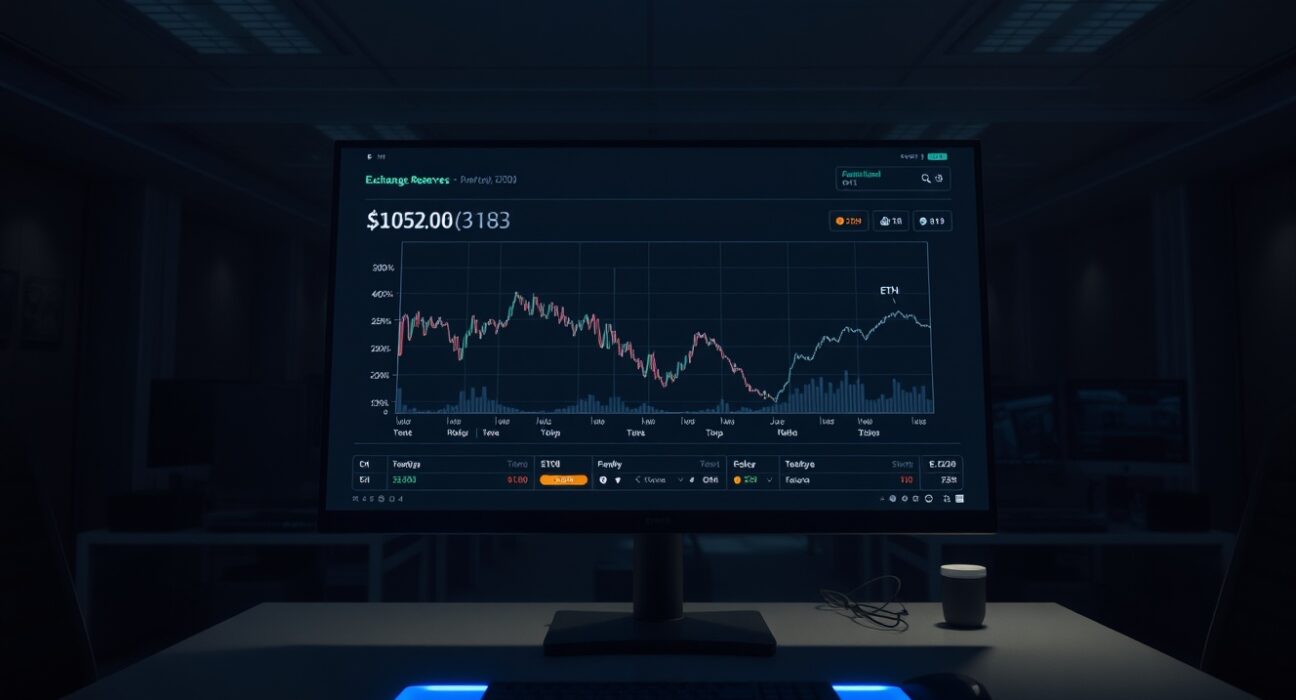
The amount of Bitcoin (BTC) held on cryptocurrency exchanges has fallen to its lowest level since 2018, according to data from on-chain analytics firm Santiment. As of late May, exchange reserves represent approximately 5.6% of the total circulating supply of Bitcoin — a figure not seen in nearly eight years.
Declining Exchange Supply Signals Long-Term Holding
A drop in exchange reserves is widely interpreted by analysts as a signal that investors are moving their coins into private wallets for long-term storage. This behavior typically reduces the available supply for immediate sale, which can ease selling pressure on the market. The current level marks a continuation of a trend observed throughout 2024 and into 2025, where Bitcoin has increasingly been treated as a store of value rather than a trading asset.
Santiment’s data shows that the last time exchange reserves were this low, Bitcoin was trading at a fraction of its current price, and the broader cryptocurrency market was emerging from a prolonged bear cycle. The persistent decline suggests a growing conviction among holders, often referred to as HODLers, who are less inclined to trade their coins amid price volatility.
Ethereum Reserves Buck the Trend
In contrast to Bitcoin, Ethereum (ETH) has seen a slight increase in the share of its supply held on exchanges. Over the past ten days, ETH exchange reserves rose from 4.2% to 4.6% of total circulating supply. While still historically low, this uptick indicates a different market sentiment among Ethereum holders in the short term.
Analysts point to several possible explanations for the divergence. Ethereum’s active role in decentralized finance (DeFi) and staking may encourage some holders to keep coins on exchanges for yield-generating activities or liquidity provision. Additionally, recent network upgrades and shifts in gas fee dynamics could be prompting short-term trading behavior.
What This Means for Market Dynamics
The combination of declining Bitcoin reserves and slightly rising Ethereum reserves creates an interesting dynamic for the broader crypto market. Lower BTC exchange supply is generally viewed as a bullish signal by long-term investors, as it suggests a reduced likelihood of large sell-offs. However, the trend must be viewed alongside other on-chain metrics, such as transaction volume and active addresses, to gauge overall market health.
For Ethereum, the modest increase in exchange holdings does not necessarily indicate bearish sentiment. It may simply reflect a higher velocity of ETH moving through DeFi protocols, staking pools, and layer-2 solutions — activities that often require coins to be held on exchange-connected wallets. The data underscores the growing complexity of on-chain analysis as different cryptocurrencies serve distinct economic functions.
Conclusion
The latest on-chain data from Santiment highlights a clear divergence in how Bitcoin and Ethereum holders are positioning their assets. Bitcoin’s exchange reserves continue to shrink, reinforcing its narrative as a long-term store of value. Meanwhile, Ethereum’s slight uptick in exchange supply reflects its more active role in the ecosystem. For investors, these trends provide useful signals but should be weighed alongside broader market conditions and individual risk tolerance.
FAQs
Q1: Why do low Bitcoin exchange reserves matter?
Low exchange reserves mean fewer coins are available for immediate sale on trading platforms. This can reduce selling pressure and is often interpreted as a sign that investors are holding for the long term, which may support price stability or upward momentum.
Q2: Is a rise in Ethereum exchange reserves bearish?
Not necessarily. Ethereum’s higher exchange supply may be linked to its use in DeFi, staking, and other on-chain activities that require coins to be held on exchanges or exchange-connected wallets. It reflects different utility rather than pure selling intent.
Q3: Where does the data come from?
The data is provided by Santiment, a leading on-chain analytics platform that tracks wallet addresses and exchange flows across multiple blockchains. The figures are based on publicly available blockchain data and are widely used by market analysts.
Disclaimer: The information provided is not trading advice, Bitcoinworld.co.in holds no liability for any investments made based on the information provided on this page. We strongly recommend independent research and/or consultation with a qualified professional before making any investment decisions.
