

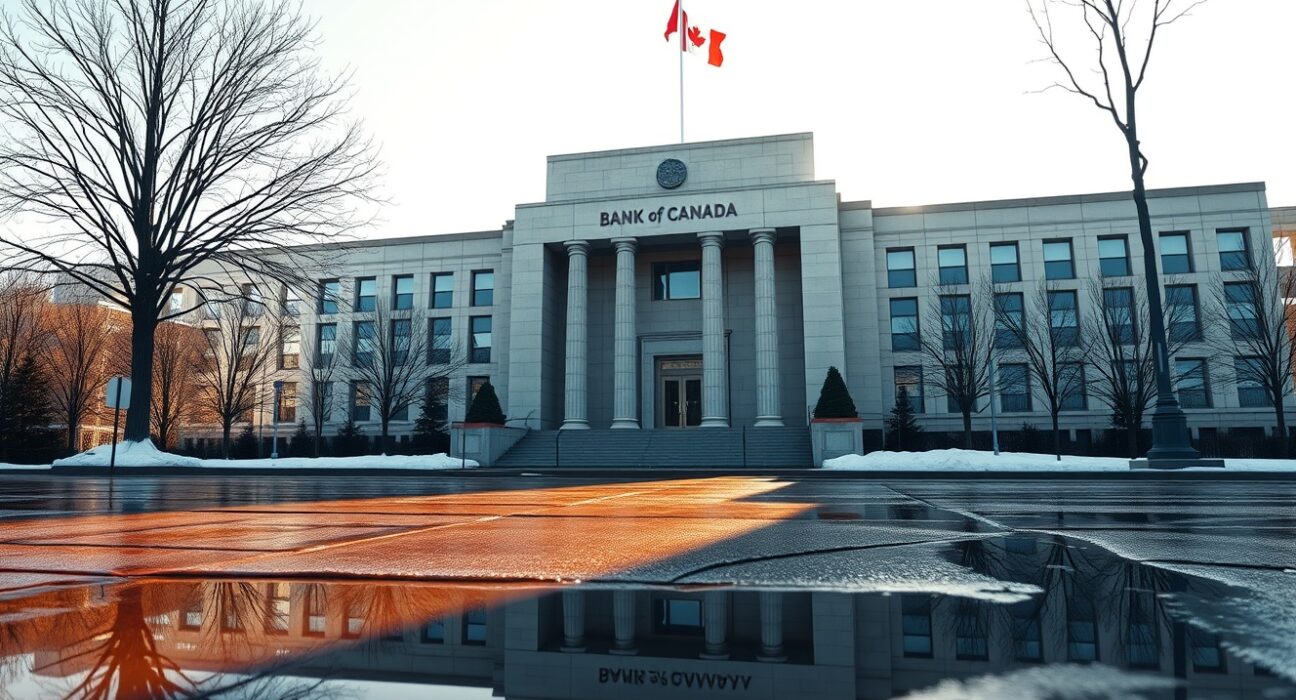
The Bank of Canada (BoC) has decided to keep its benchmark interest rate unchanged at 4.50%, defying expectations of a hike as inflationary pressures continue to mount across the Canadian economy. This decision, announced on [Date], marks a critical moment for homeowners, businesses, and investors who closely watch the BoC interest rate decision for clues about future monetary policy. The central bank cites persistent global uncertainty and domestic economic fragility as key reasons for holding the line, even as consumer prices rise faster than anticipated.
Why the Bank of Canada Holds Rate Amid Rising Inflation
The BoC’s decision to maintain the current rate reflects a delicate balancing act. On one hand, inflation remains stubbornly above the 2% target, driven by higher energy costs and supply chain disruptions. On the other hand, the Canadian economy shows clear signs of slowing down. Consumer spending has weakened, and the housing market is cooling rapidly after previous rate hikes. By keeping the interest rate unchanged, the central bank aims to avoid tipping the economy into a recession while still signaling its commitment to price stability. Governor Tiff Macklem emphasized that the bank is prepared to act if inflation does not moderate in the coming months.
Inflation Trends and Their Impact on the Decision
Recent data shows that Canada’s annual inflation rate climbed to 3.8% in [Month], exceeding the BoC’s forecast. Core inflation measures, which exclude volatile items like food and energy, also remain elevated. This Canadian inflation 2025 scenario puts the central bank in a difficult position. Raising rates could cool demand further, but it also risks crushing economic growth. The BoC’s updated Monetary Policy Report projects that inflation will gradually ease toward 2.5% by late 2025, but only if global supply chains stabilize and energy prices retreat. The decision to hold reflects a bet that current inflation is transitory rather than structural.
Market Reactions and Expert Analysis
Financial markets reacted with mixed signals. The Canadian dollar weakened slightly against the US dollar, while bond yields fell as traders interpreted the hold as a dovish stance. Economists are divided on the BoC’s next move. Some argue that the bank is falling behind the curve by not hiking now, while others praise the cautious approach. “The BoC monetary policy is walking a tightrope,” says Dr. Elena Rodriguez, a senior economist at the University of Toronto. “Holding rates allows more time to assess incoming data without causing unnecessary damage to the economy.” The decision also aligns with the US Federal Reserve’s recent pause, suggesting coordinated caution among central banks.
Impact on the Housing Market and Mortgage Holders
For Canadian homeowners, the hold provides temporary relief. Variable-rate mortgage holders avoid an immediate increase in payments, which would have strained household budgets further. However, the reprieve may be short-lived. With inflation still high, the BoC may resume hikes later this year. Real estate markets in Toronto and Vancouver have already seen price declines of 8% to 12% from peak levels. A prolonged period of high rates could deepen the correction. First-time buyers face particularly tough conditions, as elevated borrowing costs reduce affordability. The interest rate unchanged stance offers no clear path to lower mortgage rates in the near term.
Comparing BoC’s Decision with Global Central Banks
The BoC’s decision stands in contrast to some other central banks. The European Central Bank (ECB) recently raised rates by 25 basis points to combat persistent inflation in the eurozone. Meanwhile, the Bank of Japan maintains its ultra-loose policy, keeping rates near zero. The Federal Reserve held rates steady at its last meeting but signaled potential cuts later in 2025. This divergence creates challenges for currency markets and trade. A weaker Canadian dollar could boost exports but also increase the cost of imported goods, fueling inflation further. The BoC’s cautious approach reflects Canada’s unique economic vulnerabilities, including high household debt and reliance on commodity exports.
What This Means for Businesses and Investors
Businesses face continued uncertainty. The cost of borrowing for expansion or working capital remains high, discouraging investment. Small and medium enterprises (SMEs), which are particularly sensitive to interest rate changes, may delay hiring or capital spending. For investors, the hold supports bond prices but offers limited upside for equities. Sectors like technology and real estate, which are sensitive to interest rates, remain under pressure. The BoC’s next meeting in [Month] will be closely watched for any shift in language or policy direction. Analysts recommend that investors diversify portfolios and prepare for potential rate increases later this year.
Timeline of BoC Rate Decisions in 2024-2025
- January 2024: Rate held at 5.00% after a series of hikes.
- March 2024: First cut of the cycle, reducing rate to 4.75%.
- June 2024: Further cut to 4.50% as economy slowed.
- September 2024: Rate held at 4.50% amid mixed data.
- December 2024: Rate held at 4.50% with cautious tone.
- March 2025: Rate held at 4.50% despite rising inflation.
This timeline shows the BoC’s gradual shift from tightening to holding. The decision to maintain the rate reflects a wait-and-see approach, balancing inflation risks against economic weakness.
Key Factors Influencing Future BoC Decisions
Several variables will determine the BoC’s next move. These include:
- Inflation data: Any further acceleration above 4% could force a hike.
- Employment figures: Rising unemployment would support a hold or cut.
- Global economic conditions: A slowdown in China or the US would reduce demand for Canadian exports.
- Housing market stability: A sharp correction could trigger financial stability concerns.
- Currency movements: A rapidly weakening loonie could import inflation.
The BoC’s forward guidance emphasizes data dependency. This means each decision will be made based on the latest economic indicators, not a predetermined path.
Conclusion
The BoC interest rate decision to hold rates unchanged at 4.50% represents a calculated risk. By pausing amid rising inflationary pressures, the central bank prioritizes economic stability over aggressive inflation fighting. This approach provides temporary relief for borrowers but leaves the door open for future hikes if inflation persists. Canadians should monitor upcoming economic data closely, as the BoC’s next moves will have profound effects on mortgages, savings, and the overall economy. The decision underscores the complexity of modern monetary policy in a world of overlapping crises.
FAQs
Q1: Why did the Bank of Canada keep interest rates unchanged despite high inflation?
The BoC held rates to avoid worsening economic slowdown. High household debt and weak consumer spending made a hike risky. The bank believes inflation will moderate on its own without further tightening.
Q2: How does the BoC interest rate decision affect my mortgage?
If you have a variable-rate mortgage, your payments remain unchanged for now. Fixed-rate mortgages are influenced by bond yields, which fell after the decision, potentially lowering new fixed rates slightly.
Q3: Will the Bank of Canada raise rates later in 2025?
It depends on inflation and economic data. If inflation stays above 3% and the economy improves, a hike is possible. If growth stalls, the BoC may cut rates instead.
Q4: What is the current Bank of Canada interest rate?
The overnight rate is 4.50% as of the March 2025 decision. This rate influences all other borrowing costs in Canada.
Q5: How does Canada’s inflation compare to other countries?
Canada’s inflation at 3.8% is similar to the US (3.5%) but lower than the UK (4.2%) and eurozone (4.0%). The BoC’s cautious stance aligns with global trends.
Q6: What should investors do after the BoC’s decision?
Investors should focus on defensive sectors like utilities and healthcare. Bond prices may rise, while growth stocks could remain volatile. Diversification is key in this uncertain environment.
Disclaimer: The information provided is not trading advice, Bitcoinworld.co.in holds no liability for any investments made based on the information provided on this page. We strongly recommend independent research and/or consultation with a qualified professional before making any investment decisions.
