

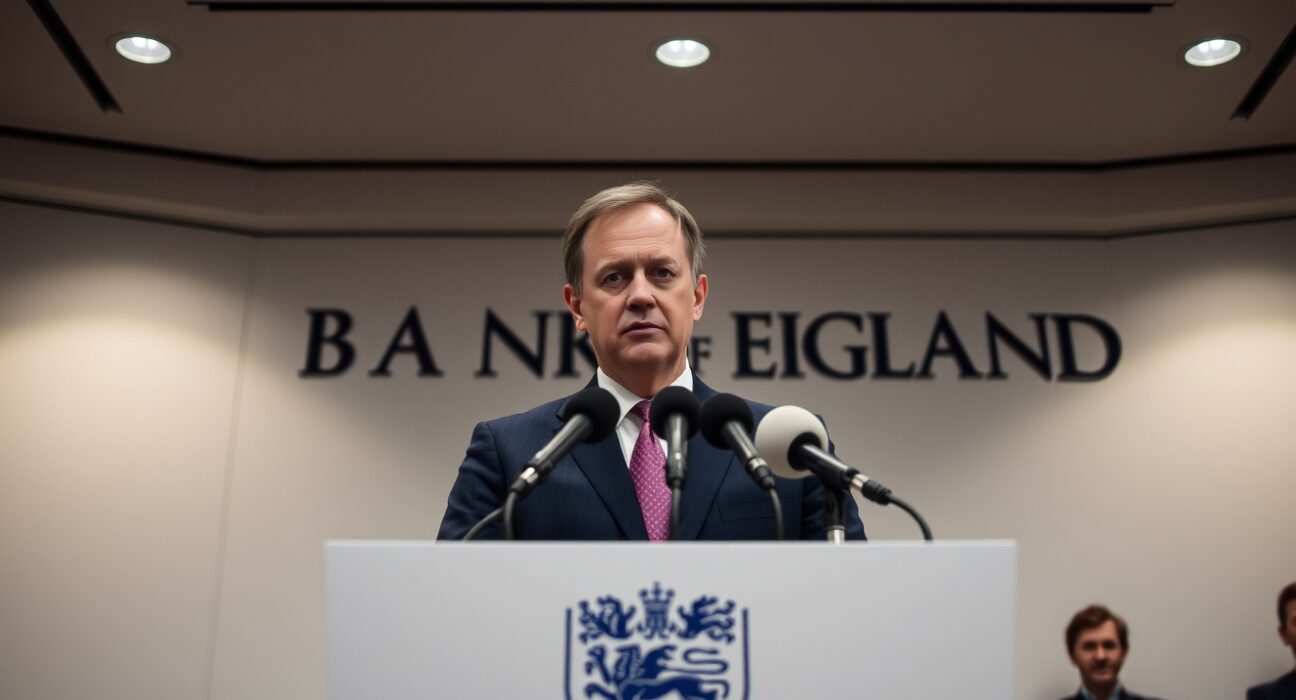
Bank of England Governor Andrew Bailey stated on Tuesday that the central bank has time to evaluate how higher energy prices are filtering through the economy before making any adjustments to monetary policy. Speaking at a press conference, Bailey emphasized that the pass-through of energy costs to consumer prices remains a key variable in the inflation outlook.
Context of the Statement
Bailey’s remarks come amid renewed concerns over energy price volatility, driven by geopolitical tensions and supply constraints. The BoE has maintained a cautious stance, balancing the need to curb inflation against the risk of stifling economic growth. The governor’s comments suggest that policymakers are not rushing to tighten or loosen policy, preferring to wait for clearer data on how businesses and households are absorbing higher energy costs.
Implications for Monetary Policy
The pass-through of energy prices is a critical factor for the BoE’s inflation forecasts. If companies pass on higher costs to consumers, it could sustain inflationary pressure, potentially delaying rate cuts. Conversely, if businesses absorb the costs, inflation may ease more quickly. Bailey’s statement signals that the Monetary Policy Committee (MPC) is in a ‘wait-and-see’ mode, prioritizing data over speculation.
Market Reaction
Financial markets showed limited immediate reaction to Bailey’s comments, as the statement aligned with previous BoE guidance. The pound remained stable against major currencies, while gilt yields edged slightly lower, reflecting expectations of a steady policy path. Analysts noted that the market had already priced in a cautious BoE stance.
Conclusion
Andrew Bailey’s remarks underscore the BoE’s commitment to data-dependent decision-making amid an uncertain energy price environment. The central bank’s patience allows it to gauge the real economic impact before committing to policy changes, a strategy that aims to avoid premature moves that could destabilize the recovery.
FAQs
Q1: What did Andrew Bailey say about energy prices?
Bailey stated that the Bank of England has time to assess how higher energy prices are passing through to the economy before adjusting monetary policy.
Q2: Why is the pass-through of energy prices important?
The pass-through affects inflation: if companies raise prices in response to higher energy costs, it could keep inflation elevated, influencing the BoE’s interest rate decisions.
Q3: How might this affect UK interest rates?
The BoE’s cautious stance suggests no immediate rate changes. Future moves will depend on incoming data, particularly on inflation and economic growth.
Disclaimer: The information provided is not trading advice, Bitcoinworld.co.in holds no liability for any investments made based on the information provided on this page. We strongly recommend independent research and/or consultation with a qualified professional before making any investment decisions.
