
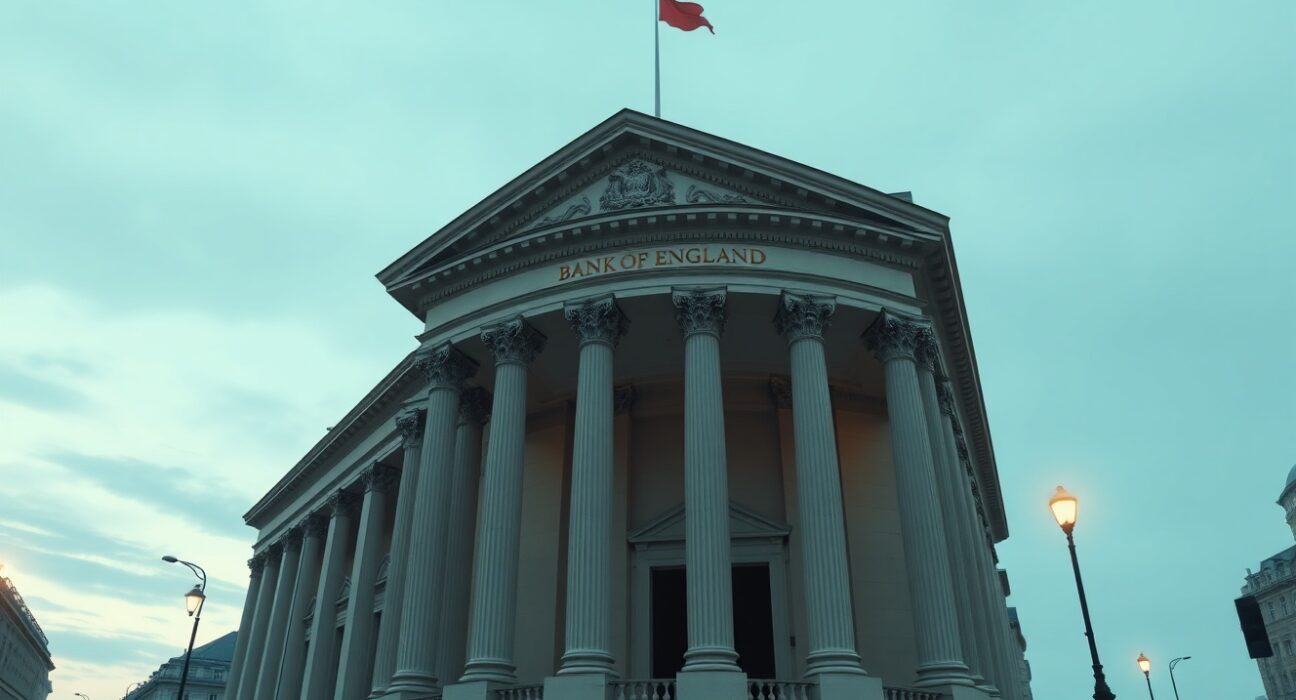
LONDON, April 2025 – The Bank of England (BoE) is poised to maintain its current benchmark interest rate, as escalating geopolitical tensions in the Middle East inject profound uncertainty into the global economic outlook, effectively pushing back the timeline for much-anticipated monetary policy easing. This pivotal decision underscores the delicate balance central banks must strike between domestic inflation targets and volatile external shocks.
Bank of England Set to Maintain Current Interest Rate Path
Market analysts and institutional forecasts overwhelmingly predict the BoE’s Monetary Policy Committee (MPC) will vote to hold the Bank Rate at 5.25%. Consequently, this marks the seventh consecutive meeting without change. The primary driver for this stance is the recent and significant flare-up of conflict involving Iran, which has created a new wave of global risk aversion. Furthermore, this geopolitical event directly threatens key supply chains and energy markets, complicating the inflation disinflation process the Bank has been carefully monitoring.
Previously, consensus pointed towards a potential rate cut in the second quarter of 2025. However, the new reality of Middle Eastern instability has forced a rapid reassessment. “The calculus has fundamentally shifted,” noted a senior economist at a major London-based investment bank, speaking on condition of anonymity ahead of the official announcement. “While domestic wage growth and services inflation are moderating, the external shock from the Iran situation introduces a fresh upside risk to the inflation profile that the MPC cannot ignore.”
The Geopolitical Shock: Iran Conflict Reshapes the Economic Landscape
The conflict, which escalated in late March 2025, has already triggered a sharp repricing in global commodity markets. Brent crude oil futures have surged by over 18% in the past three weeks, breaching the $95 per barrel threshold. Additionally, global shipping insurance premiums for routes through the Strait of Hormuz have skyrocketed, adding cost pressures across manufacturing and retail sectors. This combination of factors presents a direct challenge to the BoE’s 2% inflation target, which had appeared within closer reach just a month prior.
The timeline below illustrates the rapid sequence of events influencing the BoE’s decision:
- Early March 2025: BoE Governor hints at potential for summer rate cuts if data remains supportive.
- March 20, 2025: Escalation of Iran conflict triggers initial market volatility.
- March 25-31, 2025: Oil and gas prices climb steadily; MPC enters pre-meeting quiet period.
- April 1-2, 2025: Major financial institutions revise BoE forecasts, pushing expected first cut to Q3 or Q4.
- April 10, 2025: BoE MPC meeting and rate decision announcement scheduled.
Analyzing the Dual Mandate Under Pressure
The Bank of England’s core mandate is to maintain price stability and support the government’s economic objectives, including growth and employment. The current situation creates a clear tension between these goals. On one hand, holding rates higher for longer helps anchor inflation expectations and prevents a de-anchoring caused by imported energy inflation. On the other hand, it maintains pressure on mortgage holders, businesses seeking credit, and overall economic growth.
Recent data presents a mixed picture for the MPC:
| Metric | Latest Figure | Trend | Implication for Policy |
|---|---|---|---|
| CPI Inflation | 3.1% | Downward, but slowing | Supports future cuts, but pace is key |
| Core Inflation (ex. energy/food) | 4.0% | Sticky, gradual decline | Warrants caution |
| Average Weekly Earnings | +4.8% | Moderating from peaks | Reduces domestic inflationary pressure |
| Q4 2024 GDP Growth | +0.2% | Weak but positive | Limits aggressive hawkish policy |
This data suggests the domestic economy was on a path conducive to easing. However, the external shock acts as a powerful counterforce. The MPC’s communication will therefore be scrutinized for clues on how long this ‘wait-and-see’ posture might last and what specific indicators they will monitor regarding the conflict’s economic pass-through.
Global Central Bank Coordination and Divergence
The BoE’s dilemma is not isolated. The U.S. Federal Reserve has also signaled a more cautious approach in its recent minutes, citing global uncertainty. Meanwhile, the European Central Bank faces similar energy security concerns. However, potential policy divergence is emerging. Some analysts suggest central banks in commodity-exporting nations or those less directly exposed to the affected shipping lanes may proceed with cuts, creating a complex global monetary policy landscape.
This divergence could have significant effects on currency markets. A relatively more hawkish BoE stance compared to peers could provide temporary support for the British Pound. Nevertheless, a stronger currency also makes imports cheaper, which could help offset some of the imported inflation—a subtle dynamic the MPC will consider.
Market Reactions and Forward Guidance
Financial markets have already adjusted. The yield on the 2-year UK government gilt, sensitive to interest rate expectations, has risen approximately 40 basis points since the conflict escalated. Swap markets now price in less than two full 25-basis-point rate cuts for all of 2025, a dramatic reduction from the three or four cuts priced in early March. The focus on announcement day will therefore be less on the rate decision itself—widely expected to be a hold—and almost entirely on the accompanying Monetary Policy Report and the Governor’s press conference.
Key questions for the Governor will involve the MPC’s assessment of the conflict’s duration and economic impact. Furthermore, analysts will seek clarity on whether this is seen as a temporary delay to the easing cycle or a more fundamental reset. The Bank’s updated inflation and growth projections will incorporate new oil price assumptions and will be critical for understanding its revised internal model.
Conclusion
The Bank of England’s impending decision to stand pat on interest rates highlights the profound impact of geopolitics on modern monetary policy. While domestic economic conditions were aligning for a shift towards easing, the uncertainty emanating from the Iran conflict has forced a prudent pause. The MPC’s primary task is now to manage inflation expectations amidst this external shock while avoiding undue damage to a fragile economic recovery. The path forward for Bank of England interest rates remains tightly coupled to global stability, demonstrating that in an interconnected world, the thread of monetary policy is often pulled by events far from Threadneedle Street.
FAQs
Q1: Why would a war affect the Bank of England’s interest rate decision?
A conflict, especially in a key oil-producing region like the Middle East, disrupts global energy supplies and shipping routes. This can cause a rapid increase in oil and gas prices (imported inflation) and raise costs for businesses globally. The BoE must consider this upside risk to inflation before cutting rates, which could otherwise let inflation rise again.
Q2: How long might the rate cuts be delayed?
There is no fixed timeline. The delay depends entirely on how the geopolitical situation evolves and how significantly it impacts global energy prices and supply chains. The BoE will monitor data closely; if the shock proves temporary and oil prices stabilize, cuts could be back on the agenda in a few months. A prolonged conflict would mean a longer delay.
Q3: What does ‘stand pat’ mean?
‘Stand pat’ is a financial term meaning to keep the current policy unchanged. In this context, it means the BoE’s Monetary Policy Committee is expected to vote to maintain the Bank Rate at its current level, rather than raising or lowering it.
Q4: Who decides the Bank of England’s interest rate?
The decision is made by the nine-member Monetary Policy Committee (MPC). The Committee includes the Governor, three Deputy Governors, the Chief Economist, and four external members appointed by the Chancellor of the Exchequer. They meet eight times a year to set the rate.
Q5: How do higher interest rates help control inflation?
Higher interest rates make borrowing more expensive and saving more attractive. This discourages spending and investment in the economy, reducing overall demand for goods and services. When demand cools, price pressures tend to ease, helping bring inflation down towards the target.
Disclaimer: The information provided is not trading advice, Bitcoinworld.co.in holds no liability for any investments made based on the information provided on this page. We strongly recommend independent research and/or consultation with a qualified professional before making any investment decisions.