

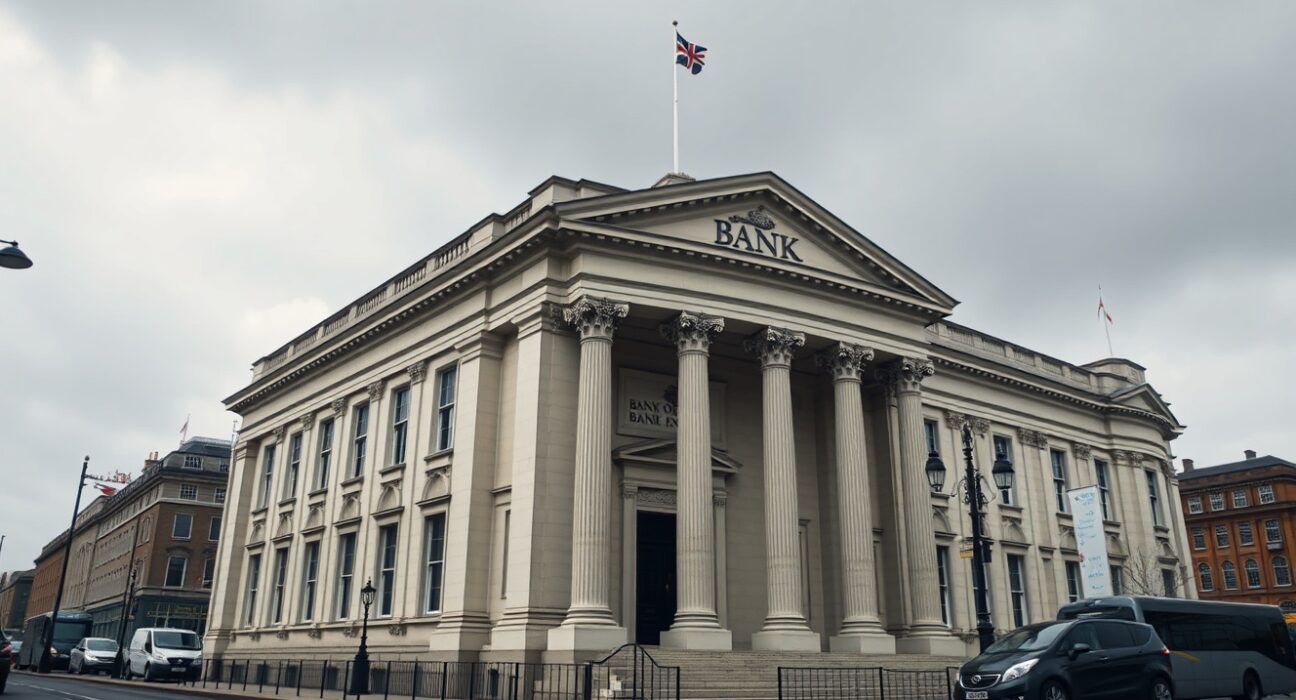
The Bank of England (BoE) has signaled it will hold interest rates steady in its upcoming meeting. This decision comes amid escalating geopolitical tensions from the Iran war. The central bank adopts a cautious, wait-and-see approach. This move aims to balance inflation control with economic stability.
BoE Interest Rate Steady: The Core Decision
Monetary policymakers face a complex landscape. The BoE interest rate steady decision reflects deep uncertainty. The Iran war disrupts global supply chains. It also drives up energy prices. This creates a stagflationary risk for the UK economy. The Monetary Policy Committee (MPC) prioritizes data over action. They need clarity on the conflict’s duration and economic fallout.
Inflation remains above the 2% target. However, the war introduces new price pressures. Holding rates allows the BoE to assess the situation. It prevents premature tightening that could harm growth. This strategy aligns with global central bank trends. The Federal Reserve and ECB also pause their cycles.
Key Factors Behind the Hold
- Geopolitical Risk: The Iran war creates unpredictable energy shocks.
- Inflation Dynamics: Core inflation persists, but war-driven costs may be transitory.
- Economic Growth: UK GDP shows signs of slowing. A rate hike could trigger a recession.
- Labor Market: Wage growth remains strong, but employment data is mixed.
Iran War Impact on UK Monetary Policy
The Iran war directly influences the BoE’s cautious stance. Oil prices have surged by over 15% since the conflict began. This raises transportation and production costs. UK households face higher fuel bills. Businesses struggle with input costs. The BoE must weigh these supply-side shocks against demand-side weakness.
Historical parallels offer context. During the Gulf War in 1990, central banks held rates. They waited for the conflict’s resolution. Today, the situation is more complex. Iran’s role in global energy markets is significant. The war also threatens shipping routes in the Strait of Hormuz. This disrupts global trade, including UK imports.
The BoE’s wait-and-see mode buys time. It allows the central bank to gather real-world data. Policymakers can monitor inflation expectations. They can also assess consumer confidence. This approach minimizes policy errors. It demonstrates the BoE’s commitment to data-driven decisions.
Market Reaction and Expert Views
Financial markets largely expect the BoE to hold rates. The pound sterling remains stable against the dollar. Bond yields show muted movement. Investors appreciate the cautious approach. They see it as a prudent response to an uncertain environment.
Economists offer mixed views. Some argue the BoE should cut rates. They believe the war suppresses demand. Others advocate for a hike. They fear inflation becomes entrenched. The consensus, however, favors a hold. The BoE’s forward guidance will be critical. It will signal future policy direction.
What Experts Say
Dr. Sarah Chen, a macroeconomist at the London School of Economics, states: “The BoE’s decision to hold rates steady is logical. The Iran war creates a fog of uncertainty. Acting prematurely could do more harm than good.” She adds that the central bank must communicate clearly. It needs to explain its data-dependent stance.
Market analyst James Taylor from Fidelity International notes: “The BoE interest rate steady decision reassures markets. It shows the bank is not panicking. It is waiting for the geopolitical dust to settle.” He expects the hold to persist for several months.
Historical Context: Central Banks and Geopolitical Crises
Central banks often pause during major conflicts. The 1973 oil crisis saw the Fed hold rates. The 2003 Iraq war led to a similar pause. These periods highlight the importance of patience. The BoE’s current approach follows this tradition.
However, the Iran war presents unique challenges. It combines a supply shock with a demand slowdown. This is reminiscent of the 1970s stagflation. The BoE must avoid the mistakes of that era. It should not overreact to temporary price spikes. It must also support economic growth.
Table: Central Bank Responses to Major Conflicts
| Conflict | Central Bank Action | Outcome |
|---|---|---|
| Gulf War (1990) | Held rates | Stable inflation post-war |
| Iraq War (2003) | Held rates | Mild recession avoided |
| Iran War (2025) | Expected to hold | Under assessment |
Impact on UK Households and Businesses
The BoE’s steady rate decision has direct effects. Mortgage holders see no immediate change in repayments. This provides relief for variable-rate borrowers. Savers continue to earn modest returns. Business loans remain at current levels. This stability supports investment planning.
However, the uncertainty persists. If the war escalates, the BoE may need to act. A rate cut could stimulate demand. A rate hike could fight inflation. The central bank’s flexibility is key. It must be ready to pivot quickly.
Small businesses face the biggest challenges. Energy costs are rising. Supply chain disruptions are common. The BoE’s hold gives them time to adjust. They can manage cash flow without a rate shock. This is crucial for economic resilience.
Conclusion
The BoE interest rate steady decision reflects a careful balancing act. The Iran war introduces significant economic risks. The central bank adopts a wait-and-see approach. This strategy prioritizes data and stability. It avoids hasty moves that could harm the economy. The BoE’s next moves will depend on the conflict’s evolution. For now, holding rates is the most prudent path. This decision underscores the importance of patience in uncertain times.
FAQs
Q1: Why is the BoE holding interest rates steady?
The BoE holds rates due to uncertainty from the Iran war. The conflict disrupts energy markets and global trade. The central bank needs more data before making a move.
Q2: How does the Iran war affect UK interest rates?
The Iran war drives up oil prices and inflation. It also slows economic growth. This creates a dilemma for the BoE. Holding rates allows it to assess both risks.
Q3: Will the BoE cut rates if the war escalates?
It is possible. If the war severely harms the economy, the BoE may cut rates. However, it will only do so if inflation is under control.
Q4: How long will the BoE keep rates on hold?
The duration depends on the Iran war’s trajectory. The BoE will wait until the geopolitical situation stabilizes. This could take several months.
Q5: What does this mean for my mortgage?
If you have a variable-rate mortgage, your payments stay the same for now. Fixed-rate borrowers are unaffected. Monitor the BoE’s future decisions for changes.
Q6: Is the BoE’s decision good for the economy?
In the short term, yes. It provides stability during uncertainty. It prevents a potential recession. However, prolonged inaction could allow inflation to persist.
Disclaimer: The information provided is not trading advice, Bitcoinworld.co.in holds no liability for any investments made based on the information provided on this page. We strongly recommend independent research and/or consultation with a qualified professional before making any investment decisions.
