

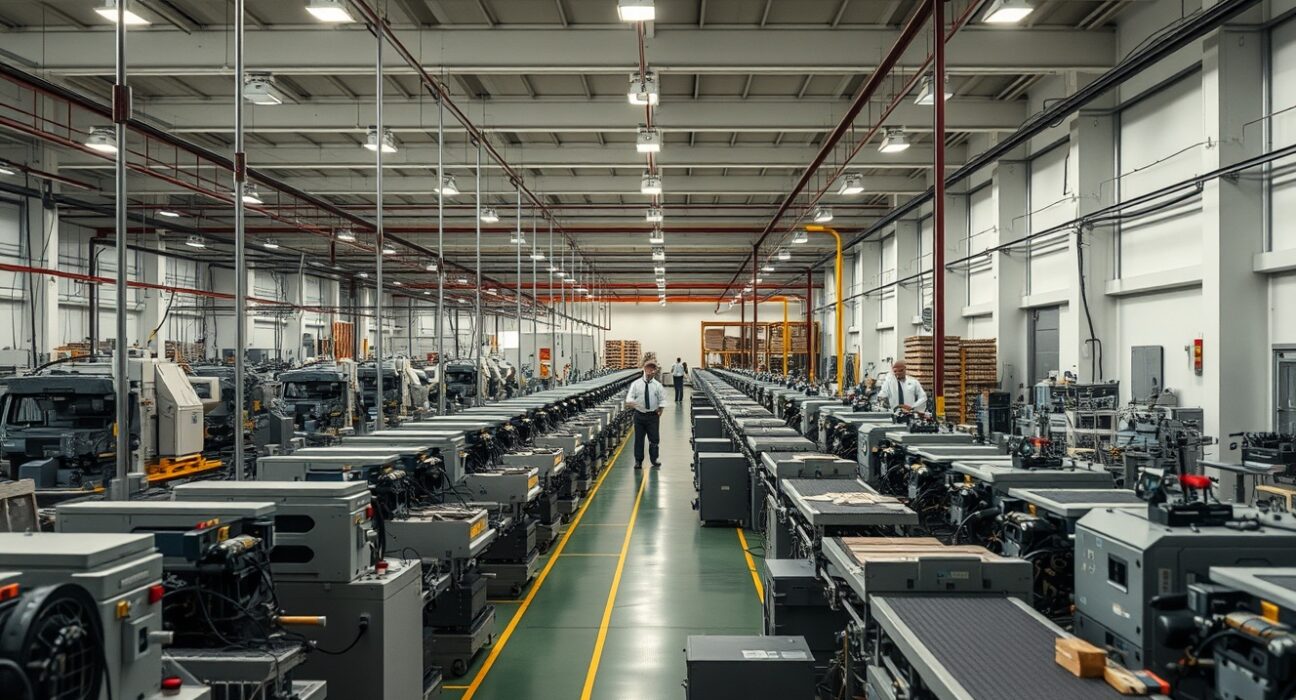
Brazil’s industrial production fell short of market expectations in May, posting a month-over-month contraction of 0.2%. The figure came in well below the 0.3% growth forecast by analysts, signaling a potential cooling in the country’s manufacturing sector.
May Data in Context
The negative reading for May marks a notable deceleration from the previous month’s performance. While the broader economic picture remains mixed, the industrial sector’s weakness adds to concerns about the pace of Brazil’s recovery. The data, released by the Brazilian Institute of Geography and Statistics (IBGE), reflects a broad-based slowdown, with declines observed across several key categories, including consumer durables and intermediate goods.
Implications for the Economy
The industrial output miss is a closely watched indicator for Brazil’s gross domestic product (GDP). A sustained contraction in manufacturing could weigh on overall economic growth, especially given the sector’s role in employment and investment. Analysts will now look to the next few months of data to determine whether May was a one-off dip or the beginning of a more pronounced trend.
Market and Policy Reactions
Financial markets reacted cautiously to the news, with the Brazilian real showing slight weakness against the US dollar. The data may also influence the central bank’s monetary policy decisions, as policymakers balance inflation control with the need to support economic activity. A weaker industrial sector could reduce pressure for further interest rate hikes, though inflation remains a key concern.
Conclusion
Brazil’s industrial output contraction in May, falling short of the 0.3% forecast, provides a cautionary signal for the economy. While a single month does not define a trend, the data warrants close monitoring in the coming months for its potential impact on GDP, employment, and monetary policy.
FAQs
Q1: What does a month-over-month (MoM) contraction mean?
A MoM contraction means that industrial output in May was lower than in April. The -0.2% figure indicates a decrease in production compared to the previous month.
Q2: Why is industrial output important for Brazil’s economy?
Industrial output is a key component of Brazil’s GDP. It affects employment, investment, and exports. A slowdown in manufacturing can signal broader economic weakness.
Q3: How might this data affect interest rates?
If the industrial slowdown persists, it could reduce pressure on the central bank to raise interest rates, as weaker economic activity can help contain inflation. However, the central bank will consider a range of factors before making policy decisions.
Disclaimer: The information provided is not trading advice, Bitcoinworld.co.in holds no liability for any investments made based on the information provided on this page. We strongly recommend independent research and/or consultation with a qualified professional before making any investment decisions.
