

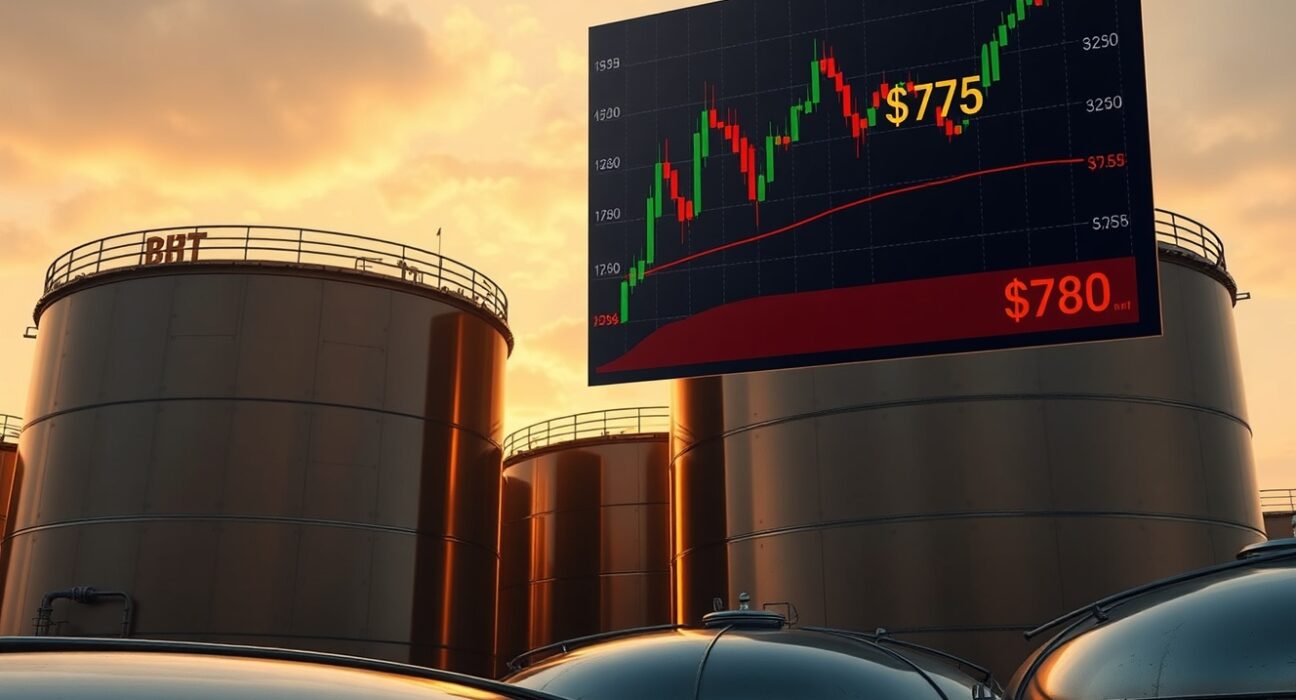
Brent crude oil is currently experiencing a significant pullback phase, a development that has captured the attention of global traders and energy analysts. Societe Generale, a leading European financial institution, has released a detailed technical analysis outlining the key levels that will define the next move for this benchmark commodity. Understanding these levels is crucial for anyone involved in the energy markets, from institutional investors to individual traders. This pullback, while concerning for some, may present strategic entry points for those who can read the charts correctly. The current market sentiment is mixed, with supply concerns and demand fluctuations creating a volatile environment.
Brent Crude Pullback: Understanding the Current Phase
The recent pullback in Brent crude prices follows a period of sustained gains. Societe Generale’s analysts point to a combination of technical resistance and fundamental factors driving this correction. The pullback phase is characterized by a decline from recent highs, testing key support zones. This movement is not unexpected in a cyclical market, but the speed and depth of the decline have raised questions about the sustainability of the previous uptrend. The bank’s report emphasizes that this is a corrective move within a larger, still-bullish structure, provided that critical support levels hold. The market is now watching for signs of a bounce or a deeper sell-off.
Key Levels for Brent Oil: Support and Resistance Zones
Societe Generale has identified several crucial price levels for Brent crude. The first major support zone lies near $75 per barrel. This level has historically acted as a pivot point, attracting buyers. Below that, the $72 mark represents a stronger floor, where a significant volume of open interest exists. On the upside, resistance is now established at $82, the recent swing high. A break above this level would signal a resumption of the uptrend. The bank uses Fibonacci retracement levels and moving averages to pinpoint these zones. Traders should watch these levels closely for potential reversals or breakdowns.
Support Levels to Watch
- $75 per barrel: Immediate support, tested multiple times in the past month.
- $72 per barrel: Major support, aligning with the 200-day moving average.
- $68 per barrel: Deeper support, representing a potential bearish scenario.
Resistance Levels to Watch
- $82 per barrel: Immediate resistance, the recent high.
- $85 per barrel: Psychological resistance and a previous breakout point.
- $90 per barrel: Major resistance, the top of the trading range.
Societe Generale Analysis: Expert Insights on Market Trends
Societe Generale’s technical strategy team brings decades of experience to this analysis. They use a combination of price action, volume analysis, and momentum indicators. Their approach is not merely predictive but descriptive, helping traders understand the current market structure. The bank notes that the pullback is losing momentum, as evidenced by declining volume on down days. This could signal an impending reversal. However, they caution that a close below $72 would invalidate the bullish thesis. The analysis is grounded in real-time data and historical patterns, providing a reliable framework for decision-making.
Impact on Global Oil Markets and Traders
The Brent crude pullback has ripple effects across the global economy. Lower oil prices can reduce inflationary pressures, benefiting consumers and central banks. Conversely, they can hurt oil-exporting nations and energy companies. For traders, this phase offers both risks and opportunities. Short-term traders may look to profit from the volatility, while long-term investors might use the dip to accumulate positions. The key is to align trading strategies with the identified support and resistance levels. The current environment demands discipline and a clear understanding of risk management.
Real-World Context and Background
This pullback occurs against a backdrop of geopolitical tensions and shifting energy policies. The ongoing conflict in Eastern Europe and OPEC+ production decisions continue to influence supply. Meanwhile, demand from China, the world’s largest oil importer, shows signs of slowing. These fundamental factors compound the technical picture. Societe Generale’s analysis integrates these elements, providing a holistic view. The bank’s reputation for rigorous research adds credibility to their findings. Investors should consider both the technical and fundamental drivers when assessing the market.
Conclusion
In summary, the Brent crude pullback phase presents a critical juncture for the oil market. Societe Generale’s identification of key support and resistance levels offers a valuable roadmap for traders. The focus keyword, Brent crude pullback, remains central to understanding this market movement. By monitoring these levels and applying sound risk management, market participants can navigate this volatile period effectively. The next few trading sessions will be decisive in determining whether this is a healthy correction or the start of a deeper downtrend. Stay informed and trade wisely.
FAQs
Q1: What is a pullback phase in oil trading?
A pullback phase is a temporary decline in price within a larger uptrend. It is often seen as a buying opportunity for traders who believe the overall trend will continue.
Q2: Why are the $75 and $72 levels important for Brent crude?
These levels are identified by Societe Generale as key support zones based on historical price action, moving averages, and volume analysis. They represent areas where buyers have previously stepped in.
Q3: How can traders use Societe Generale’s analysis?
Traders can use the identified support and resistance levels to set entry and exit points, place stop-loss orders, and manage risk. The analysis provides a framework for making informed decisions.
Q4: What happens if Brent crude breaks below $72?
A break below $72 would likely invalidate the bullish outlook and could lead to a deeper sell-off towards the $68 level or lower. It would signal a change in market sentiment.
Q5: Is this pullback a sign of a bear market?
Not necessarily. A pullback within a larger uptrend is a normal market phenomenon. It only becomes bearish if key support levels are broken and the trend reverses.
Disclaimer: The information provided is not trading advice, Bitcoinworld.co.in holds no liability for any investments made based on the information provided on this page. We strongly recommend independent research and/or consultation with a qualified professional before making any investment decisions.
