

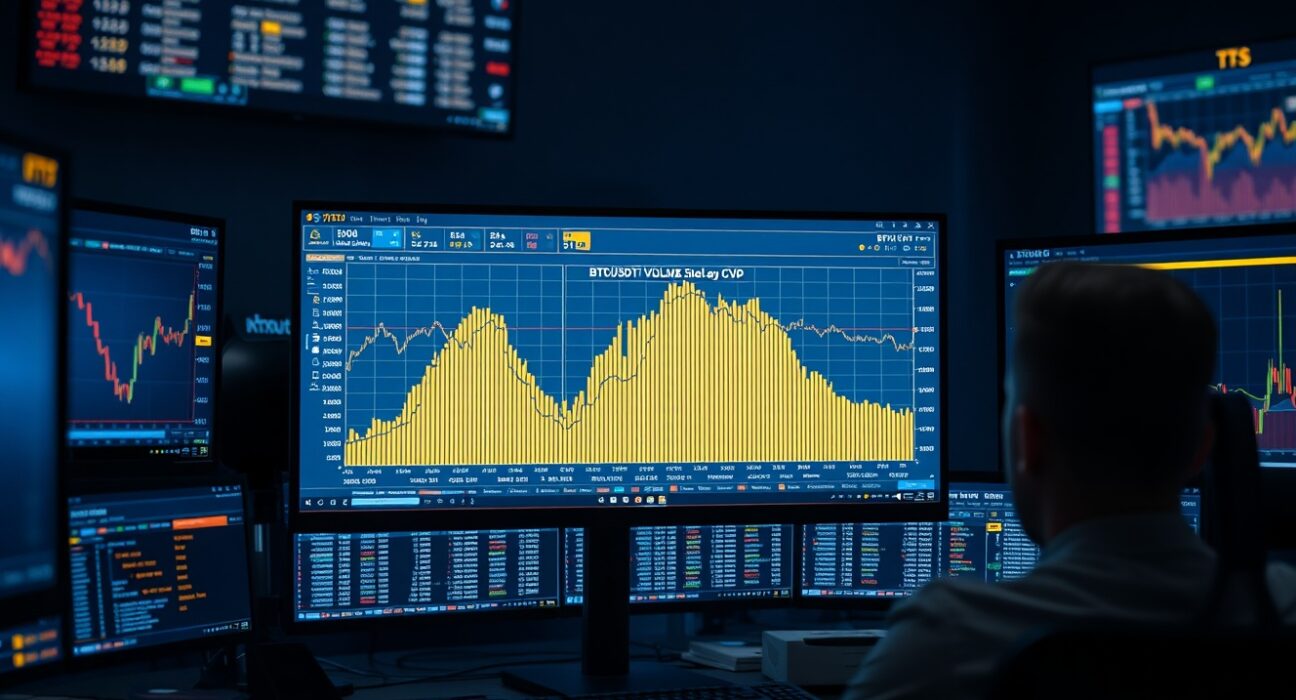
On May 21, the BTC/USDT spot Cumulative Volume Delta (CVD) chart provided traders with a detailed view of order book dynamics, highlighting key price levels where volume concentration may act as support or resistance. The analysis, based on data as of 9:00 a.m. UTC, breaks down trade activity by size, offering insights into the behavior of both retail and large-scale participants.
Understanding the Volume Heatmap
The top section of the chart displays a Volume Heatmap, which tracks the volume of trades executed at specific price levels. The background color intensifies when the price remains within a certain range for an extended period or moves significantly. Brighter areas on the heatmap often indicate zones where traders have concentrated activity, making them potential support or resistance levels. For Bitcoin traders, these zones can serve as key reference points for entry or exit decisions.
Cumulative Volume Delta by Trade Size
The lower section of the chart features the Cumulative Volume Delta (CVD) indicator, which categorizes buy and sell orders by trade size. As buy orders increase, the corresponding colored line rises. The yellow line represents orders between $100 and $1,000, typically associated with retail traders. In contrast, the brown line tracks large orders between $1 million and $10 million, often linked to institutional or high-net-worth participants. Divergences between these lines can signal shifts in market sentiment or potential accumulation or distribution phases.
Implications for Bitcoin Traders
Monitoring CVD by trade size allows traders to distinguish between retail-driven movements and institutional activity. A rising brown line alongside a flat or declining yellow line may suggest that large players are accumulating, which could precede a breakout. Conversely, if retail buying dominates while large orders decline, the move may lack conviction. The heatmap further refines this picture by identifying price levels where volume clusters, helping traders set stop-losses or profit targets with greater precision.
Conclusion
The BTC/USDT spot CVD chart as of May 21 offers a granular look at market structure through volume concentration and trade-size distribution. For traders, combining the Volume Heatmap with CVD data provides a clearer understanding of where buying and selling pressure originates, and at what price levels the market is most active. As always, these tools are best used alongside broader market analysis and risk management strategies.
FAQs
Q1: What does the Volume Heatmap show in BTC/USDT trading?
The Volume Heatmap displays the concentration of trading volume at specific price levels. Brighter areas indicate higher activity, which can act as potential support or resistance zones.
Q2: How is the Cumulative Volume Delta (CVD) different from regular volume?
Regular volume shows total trades, while CVD tracks the net difference between buy and sell orders, broken down by trade size, revealing the direction and strength of market participation.
Q3: Why are trade sizes important in CVD analysis?
Different trade sizes represent different types of traders. Small orders (yellow line) often reflect retail activity, while large orders (brown line) indicate institutional moves. Divergences can signal shifts in market sentiment.
Disclaimer: The information provided is not trading advice, Bitcoinworld.co.in holds no liability for any investments made based on the information provided on this page. We strongly recommend independent research and/or consultation with a qualified professional before making any investment decisions.
