

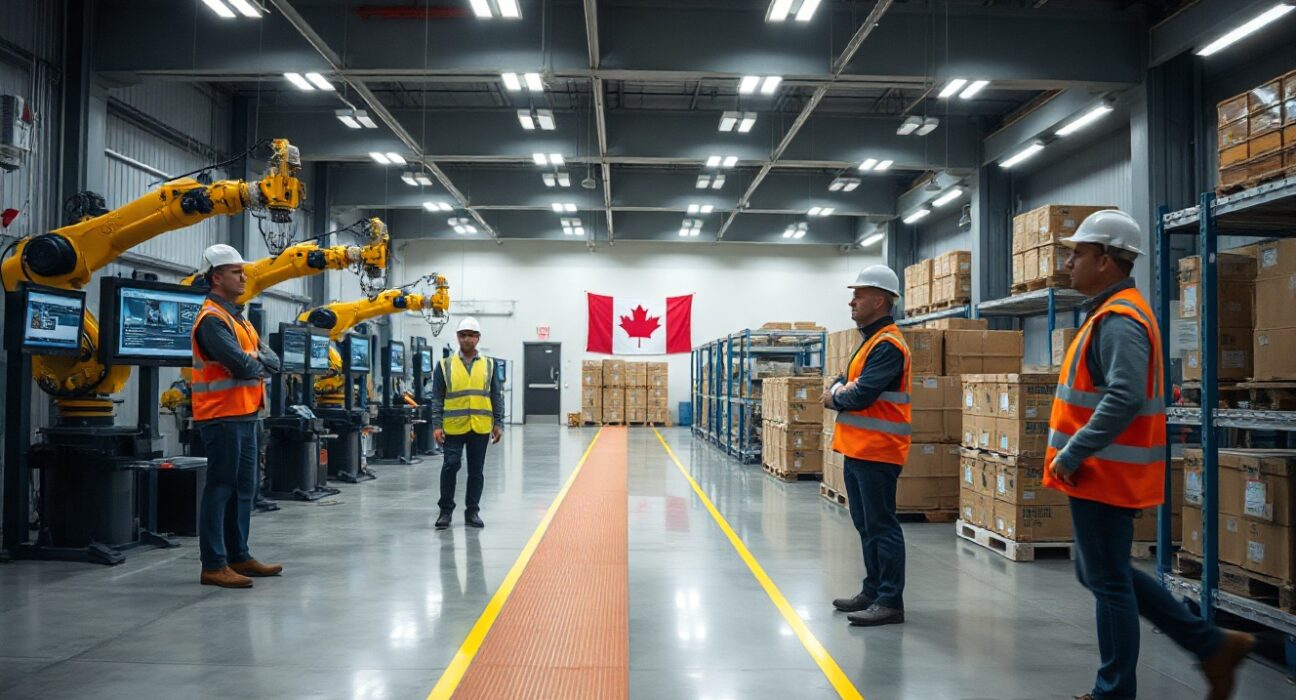
Canada’s manufacturing sector continued its expansionary trend in June, with the S&P Global Canada Manufacturing Purchasing Managers’ Index (PMI) rising slightly to 53.0 from 52.9 in May. The latest reading, released on July 1, 2025, indicates a modest acceleration in business conditions, remaining above the 50.0 threshold that separates growth from contraction for the fourth consecutive month.
Steady Expansion Amidst Global Uncertainty
The June PMI figure, while a marginal increase, signals resilience in Canada’s manufacturing industry. The index is a composite indicator derived from surveys on new orders, output, employment, supplier delivery times, and stocks of purchases. A reading above 50 signifies expansion in the sector.
Key drivers behind the June uptick included a sustained rise in new orders, particularly from domestic clients. Export orders, however, showed a slight softening, reflecting ongoing global trade frictions and slower demand from key trading partners. Manufacturers also reported a stabilization in input cost inflation, which had been a major concern earlier in the year.
Input Costs and Supply Chains Ease
A notable positive in the June data was the moderation in input price inflation. The rate of cost increases slowed to its weakest in several months, providing some relief to manufacturers who have been grappling with higher raw material and energy prices. This easing was partly attributed to improved supply chain conditions, with vendor delivery times shortening for the first time in 2025.
Employment levels in the sector remained broadly stable, with firms maintaining staffing levels to meet current demand. The survey also highlighted a slight improvement in business confidence, with manufacturers expressing cautious optimism about future output over the next 12 months.
What This Means for the Canadian Economy
The sustained PMI above 50 is a positive signal for Canada’s broader economic health. Manufacturing accounts for a significant portion of the country’s GDP and employment. Continued expansion suggests that the sector is weathering global headwinds, including high interest rates and geopolitical tensions. The data may influence the Bank of Canada’s monetary policy decisions, as it points to a resilient economy that may not require immediate further stimulus.
However, the modest nature of the increase—just 0.1 points—also indicates that the recovery is not accelerating rapidly. Manufacturers remain cautious, particularly regarding export markets. The coming months will be critical to see if this growth trajectory can be sustained or if headwinds will begin to slow the sector.
Conclusion
Canada’s manufacturing sector entered the second half of 2025 on a stable footing, with the S&P Global PMI edging up to 53.0 in June. While the improvement was marginal, the continued expansion, combined with easing cost pressures, provides a cautiously optimistic outlook. The sector’s resilience will be a key factor in Canada’s overall economic performance in the months ahead.
FAQs
Q1: What does a PMI of 53.0 mean for Canada’s manufacturing sector?
A PMI reading above 50 indicates that the manufacturing sector is expanding compared to the previous month. A reading of 53.0 suggests a moderate and sustained rate of growth, with improvements in areas like new orders and production.
Q2: Why did the PMI only increase slightly from 52.9 to 53.0?
The marginal increase reflects a stable but not accelerating growth environment. While domestic demand remained solid, export orders softened, and businesses remain cautious about the global economic outlook, which tempered the overall index gain.
Q3: How does the PMI affect consumers and businesses?
A stable or rising PMI generally signals a healthy manufacturing sector, which can lead to steady employment, stable prices, and consistent supply of goods. For businesses, it provides confidence for investment and inventory planning. For consumers, it often correlates with a stable job market and product availability.
Disclaimer: The information provided is not trading advice, Bitcoinworld.co.in holds no liability for any investments made based on the information provided on this page. We strongly recommend independent research and/or consultation with a qualified professional before making any investment decisions.
