

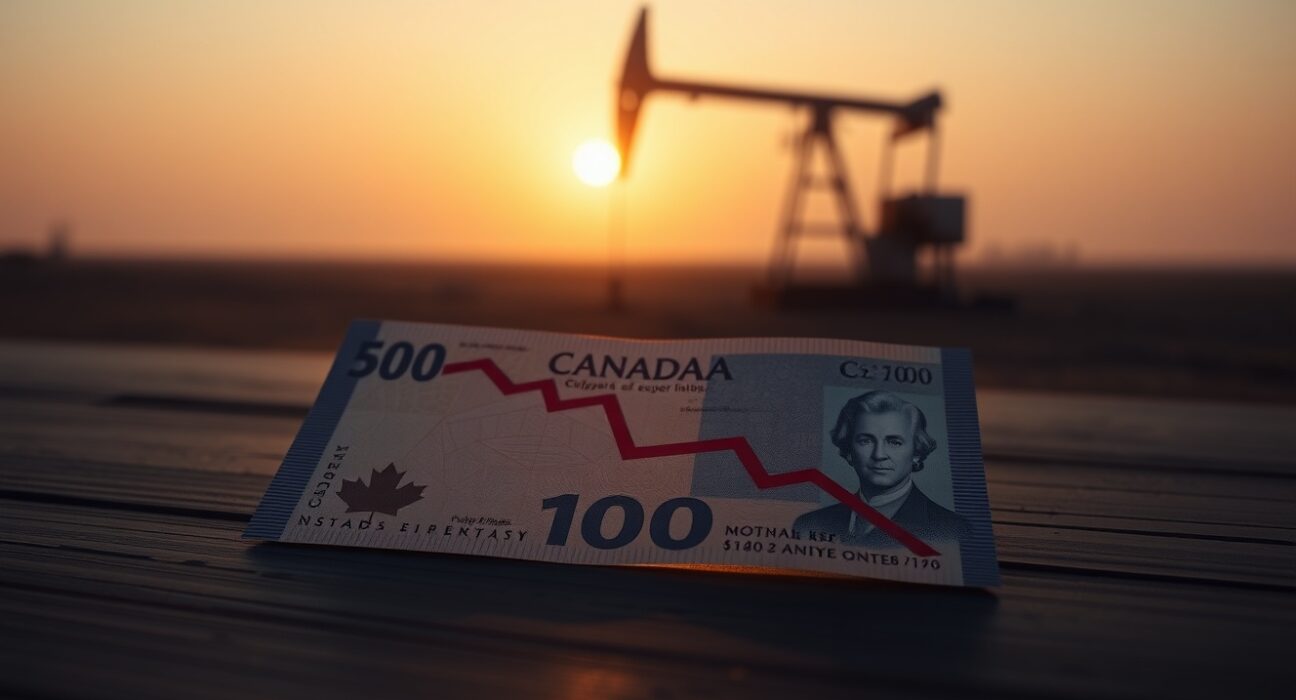
The Canadian dollar weakened against its major counterparts on Tuesday, extending its recent decline as crude oil prices eased. The move came amid growing market optimism that the United States and Iran may be moving closer to a diplomatic resolution, a development that could increase global oil supply and reduce geopolitical risk premiums.
Oil Prices Slip on Supply Expectations
West Texas Intermediate (WTI) crude, a key benchmark for Canadian oil exports, fell by more than 1.5% during the session, dipping below the $78 per barrel mark. The decline was driven by reports of behind-the-scenes negotiations between Washington and Tehran, raising the possibility of a new nuclear deal or sanctions relief. Such an outcome could allow Iran to ramp up its oil exports, adding more supply to a market already grappling with demand concerns.
The loonie, which is highly correlated with oil prices due to Canada’s status as a major crude exporter, felt the immediate impact. The USD/CAD pair rose to 1.3650, its highest level in nearly two weeks, as the greenback strengthened against its commodity-linked counterpart.
Geopolitical Context and Market Sentiment
Talks between the US and Iran have been intermittent for months, but recent signals from both sides suggest a renewed willingness to engage. While no formal agreement has been announced, market participants are pricing in a higher probability of a diplomatic breakthrough. This shift in sentiment has weighed on oil prices, which had previously benefited from supply disruptions and geopolitical tensions in the Middle East.
For the Canadian dollar, the correlation with oil is a double-edged sword. While higher oil prices typically support the currency, the prospect of increased Iranian supply is seen as a bearish factor for crude, which in turn drags on the loonie.
Impact on Canadian Economy and Trade
A weaker Canadian dollar has mixed implications for the domestic economy. On one hand, it can boost export competitiveness for Canadian manufacturers and resource producers. On the other hand, it raises the cost of imported goods, potentially feeding into inflationary pressures. The Bank of Canada, which has been navigating a delicate balance between controlling inflation and supporting growth, may find its task complicated by a sustained decline in the currency.
Traders are now closely watching for any official statements from US or Iranian officials that could confirm or deny the progress of negotiations. Until then, the Canadian dollar is likely to remain sensitive to headlines related to oil supply and geopolitical developments.
Conclusion
The Canadian dollar’s decline reflects a market recalibrating its expectations for oil prices in light of potential US-Iran peace progress. While the situation remains fluid, the immediate impact on the loonie is clear: lower oil prices are weighing on the currency. Investors should monitor diplomatic channels closely, as any concrete agreement could have lasting implications for energy markets and the Canadian dollar alike.
FAQs
Q1: Why does the Canadian dollar react to oil prices?
Canada is one of the world’s largest oil exporters, so the value of the Canadian dollar is closely tied to crude oil prices. When oil prices rise, the loonie typically strengthens, and when they fall, it weakens.
Q2: How would a US-Iran peace deal affect oil prices?
A diplomatic resolution could lead to the lifting of sanctions on Iran, allowing the country to increase its oil exports. This would add more supply to the global market, potentially pushing prices lower.
Q3: Is the Canadian dollar likely to keep falling?
The outlook depends on multiple factors, including the trajectory of oil prices, the outcome of US-Iran talks, and broader economic data. If oil continues to decline, the loonie may face further headwinds, but a reversal in sentiment could quickly change the picture.
Disclaimer: The information provided is not trading advice, Bitcoinworld.co.in holds no liability for any investments made based on the information provided on this page. We strongly recommend independent research and/or consultation with a qualified professional before making any investment decisions.
