

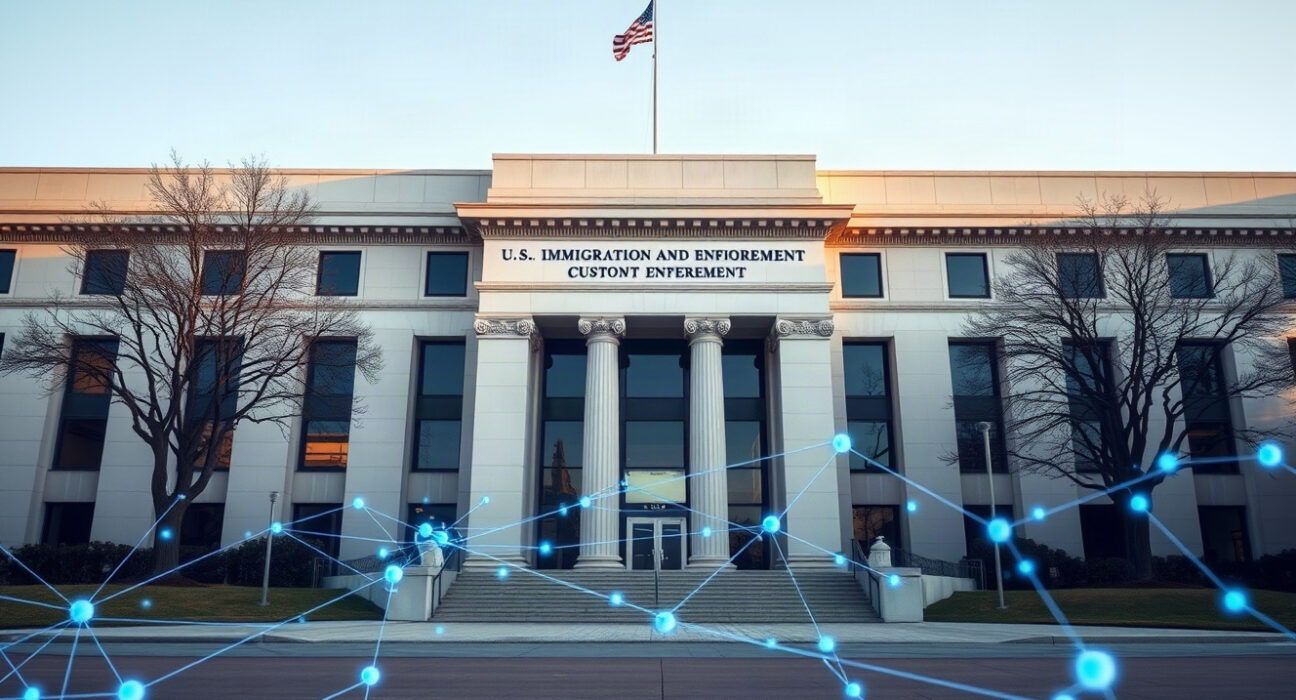
Blockchain analytics firm Chainalysis has filed a lawsuit against U.S. Immigration and Customs Enforcement (ICE) over a $94.66 million contract awarded to rival TRM Labs. The legal action, first reported by Wu Blockchain, alleges that ICE used undisclosed evaluation criteria and bypassed standard competitive bidding procedures, potentially tailoring the contract to TRM Labs’ existing products and business structure.
Contract award under scrutiny
The contract, valued at $94.66 million, is one of the largest in the blockchain analytics sector. Chainalysis argues that ICE’s sole-source award to TRM Labs violates federal procurement rules, which generally require open competition unless a specific exemption applies. The company is asking the court to halt the contract and mandate a new, transparent bidding process.
TRM Labs has intervened in the case to defend the award. A court hearing is scheduled for September 2, where a judge will consider Chainalysis’s request for an injunction. The outcome could set a precedent for how federal agencies procure blockchain analytics services, a market that has grown rapidly alongside cryptocurrency adoption and regulatory enforcement.
Why this matters for the crypto industry
This dispute highlights the increasing importance of blockchain intelligence tools to U.S. law enforcement. ICE uses such analytics to investigate illicit financial flows, including money laundering, sanctions evasion, and cybercrime. The contract’s size and the legal challenge reflect the high stakes for companies competing in this niche but critical sector.
For the broader crypto industry, the case raises questions about government procurement practices and the influence of private vendors on regulatory enforcement. It also underscores the competitive dynamics between Chainalysis and TRM Labs, two leading firms that have both secured significant government contracts in recent years.
Potential implications for federal procurement
If the court rules in Chainalysis’s favor, it could force ICE to reopen the bidding process, delaying the deployment of the chosen analytics tools. Conversely, a decision upholding the contract would affirm the agency’s discretion in sole-source awards, potentially encouraging similar direct contracts in the future. Legal experts note that federal procurement law requires agencies to document the rationale for bypassing competitive bidding, and Chainalysis’s lawsuit contends that ICE failed to do so adequately.
Conclusion
Chainalysis’s lawsuit against ICE over the $94.7 million contract to TRM Labs is a significant legal challenge with potential ramifications for both federal procurement and the blockchain analytics industry. The September 2 hearing will be closely watched by stakeholders, as the decision could influence how government agencies select vendors for sensitive financial surveillance tools. As the case unfolds, the outcome will likely shape competitive practices in this specialized market.
FAQs
Q1: What is the basis of Chainalysis’s lawsuit against ICE?
Chainalysis alleges that ICE awarded a $94.66 million contract to TRM Labs without a competitive bidding process and used undisclosed evaluation criteria that may have been tailored to TRM Labs’ products. The company seeks to halt the contract and require open bidding.
Q2: Why is this contract significant?
The contract is one of the largest in the blockchain analytics sector, reflecting the growing reliance of U.S. law enforcement on such tools to combat financial crimes involving cryptocurrencies. Its value and the legal challenge underscore the competitive importance of government contracts for analytics firms.
Q3: What could be the outcome of the court hearing on September 2?
The court may grant an injunction to stop the contract, allow it to proceed, or order a new bidding process. The decision will depend on whether the judge finds ICE’s sole-source award justified under federal procurement rules.
Disclaimer: The information provided is not trading advice, Bitcoinworld.co.in holds no liability for any investments made based on the information provided on this page. We strongly recommend independent research and/or consultation with a qualified professional before making any investment decisions.
