

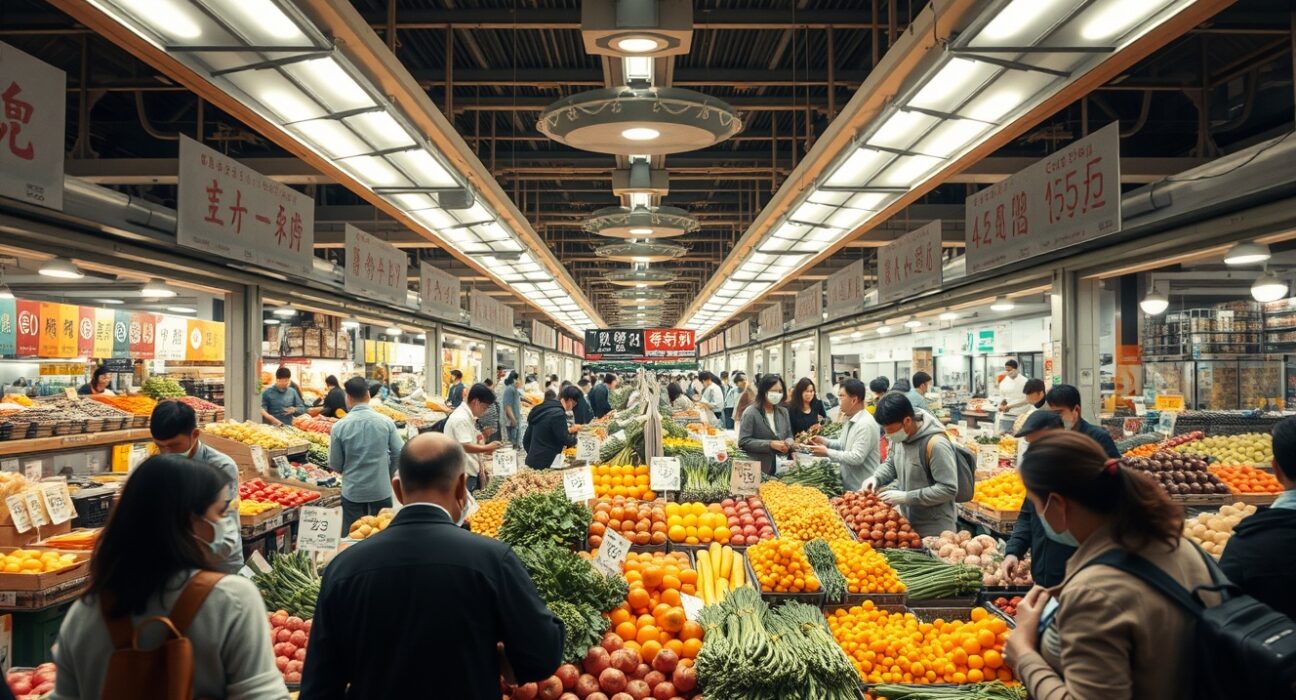
China’s consumer price index (CPI) rose 1.2% in April compared to the same month last year, official data showed on Saturday, accelerating from March’s 0.9% increase and surpassing the 0.8% consensus forecast among economists. The stronger-than-expected reading suggests domestic demand is stabilizing, even as the broader economic recovery faces headwinds from global trade tensions and a sluggish property sector.
Key Drivers Behind the CPI Beat
The National Bureau of Statistics attributed the uptick primarily to rising food prices, which climbed 2.5% year-on-year. Fresh vegetable prices surged 8.3% due to adverse weather in key growing regions, while pork prices, a staple protein, edged up 1.4% after months of decline. Non-food inflation remained moderate at 0.8%, with service sector prices rising 1.1% as domestic tourism and dining out continued to recover.
Core CPI, which strips out volatile food and energy costs, held steady at 0.7% year-on-year, unchanged from March. This indicates that underlying inflationary pressures remain contained, giving policymakers room to maintain accommodative monetary settings if needed.
Market and Policy Implications
The data comes ahead of the People’s Bank of China’s (PBOC) next rate decision in mid-May. Most analysts expect the central bank to hold its one-year loan prime rate at 3.1% and the five-year rate at 3.6%, as inflation remains below the PBOC’s 3% target for 2026. However, the above-consensus CPI print may reduce the urgency for further stimulus, particularly as industrial producer prices (PPI) have been rising steadily.
Producer price index (PPI) data for April is scheduled for release next week, with markets forecasting a 4.5% year-on-year increase. A sustained rise in factory-gate prices could eventually feed through to consumer costs, though the pass-through has been muted so far due to weak retail competition and cautious household spending.
What This Means for Investors and Consumers
For financial markets, the CPI beat is a modest positive signal for consumer-linked sectors such as food & beverage, retail, and tourism. However, the data alone is unlikely to shift the PBOC’s gradual approach to policy normalization. For ordinary households, the rise in fresh vegetable prices is the most immediate impact, though the overall inflation rate remains well below levels that would strain real incomes.
International observers will watch the next round of trade negotiations between Beijing and Washington closely. Any escalation in tariffs could disrupt supply chains and push import costs higher, adding to inflationary pressures later in the year.
Conclusion
China’s April CPI reading exceeded expectations, driven largely by seasonal food price increases. While the data signals steady consumer demand, core inflation remains subdued, suggesting the PBOC is likely to keep policy unchanged in the near term. The key risk to the inflation outlook remains external, particularly trade policy developments that could affect input costs and supply chains.
FAQs
Q1: Why did China’s CPI inflation exceed expectations in April?
A: The main driver was a sharp rise in fresh vegetable prices due to adverse weather in key agricultural regions. Food prices overall increased 2.5% year-on-year, pushing the headline CPI above the 0.8% consensus forecast.
Q2: How will this inflation data affect the PBOC’s monetary policy?
A: The PBOC is expected to hold rates steady at its next meeting. Core inflation remains below the 3% target, and the central bank is likely to maintain a cautious, data-dependent approach, prioritizing economic stability over reacting to a single monthly print.
Q3: What is the outlook for Chinese consumer prices for the rest of 2026?
A: Inflation is expected to remain moderate, with the full-year average likely between 1.5% and 2.0%. Key variables include global commodity prices, trade policy, and the pace of domestic demand recovery. A sharp escalation in tariffs could push inflation higher by raising import costs.
Disclaimer: The information provided is not trading advice, Bitcoinworld.co.in holds no liability for any investments made based on the information provided on this page. We strongly recommend independent research and/or consultation with a qualified professional before making any investment decisions.
