

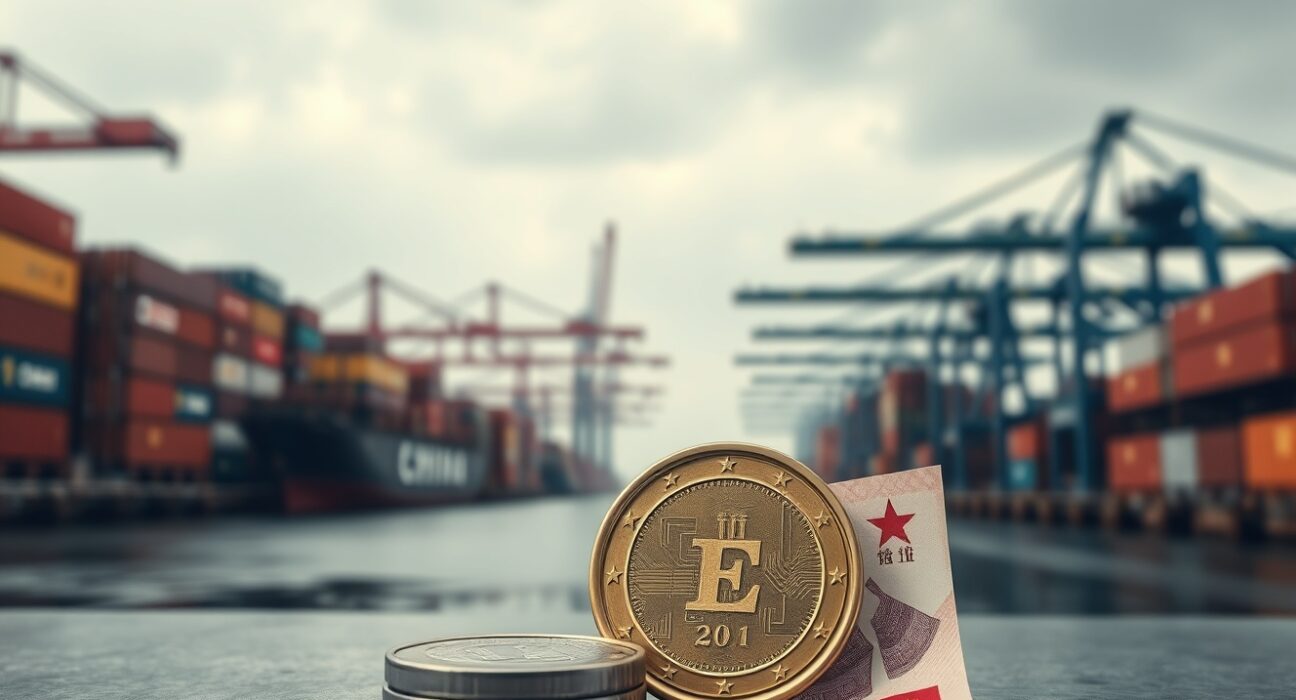
In a recent analysis, BNP Paribas highlighted the role of China as a deflationary channel for Euro area prices, a factor that could influence the European Central Bank’s (ECB) monetary policy trajectory. The report underscores how Chinese exports, driven by excess industrial capacity and subdued domestic demand, are contributing to lower import prices for Eurozone countries, thereby dampening overall inflation.
Understanding the Deflationary Channel
BNP Paribas economists point to China’s prolonged period of economic slowdown and its reliance on exports to absorb overcapacity. This dynamic has led to a sustained decline in the prices of Chinese goods, from consumer electronics to industrial machinery. For the Euro area, which imports a significant volume of these products, the effect is a downward pressure on consumer and producer prices. This is particularly relevant as the ECB has been battling to bring inflation back to its 2% target after a period of elevated price growth.
Implications for ECB Policy
The analysis arrives at a critical juncture for the ECB, which is weighing further interest rate cuts against the risk of persistent inflation. If Chinese deflationary pressures intensify, they could ease the ECB’s task by naturally lowering inflation, potentially allowing for a more accommodative stance. However, BNP Paribas also cautions that this dynamic could mask underlying inflationary pressures within the Eurozone, complicating the central bank’s assessment of the true state of the economy. The interplay between external disinflation and domestic inflation will be a key focus for policymakers in the coming months.
Broader Economic Context
This deflationary channel is not an isolated phenomenon. It is part of a broader global trend where China’s economic rebalancing is reshaping trade flows and price dynamics worldwide. For Euro area businesses, cheaper Chinese imports can reduce input costs, but they also intensify competition, potentially squeezing profit margins. For consumers, the effect is generally positive in the short term, as it boosts purchasing power. Yet, the long-term risk lies in the potential for a deflationary spiral if domestic demand in the Eurozone fails to pick up.
Conclusion
BNP Paribas’s analysis provides a timely reminder that global factors, particularly China’s economic trajectory, are playing an increasingly significant role in shaping Euro area inflation. While this may offer some relief to the ECB, it also introduces new complexities for monetary policy. Investors and policymakers will need to monitor these cross-border price effects closely as they navigate the uncertain economic landscape.
FAQs
Q1: How does China act as a deflationary channel for the Euro area?
China’s excess industrial capacity and weak domestic demand lead to lower export prices. When the Eurozone imports these cheaper goods, it puts downward pressure on consumer and producer prices, contributing to deflation.
Q2: What does this mean for the European Central Bank (ECB)?
It could make the ECB’s job of controlling inflation easier by naturally lowering prices. However, it also risks masking domestic inflation, making it harder for the ECB to set appropriate interest rates.
Q3: Is this analysis from BNP Paribas new?
The analysis reflects ongoing concerns about China’s economic slowdown and its global spillover effects. BNP Paribas’s report adds a specific focus on the Euro area, updating the discussion with current data and market conditions.
Disclaimer: The information provided is not trading advice, Bitcoinworld.co.in holds no liability for any investments made based on the information provided on this page. We strongly recommend independent research and/or consultation with a qualified professional before making any investment decisions.
