

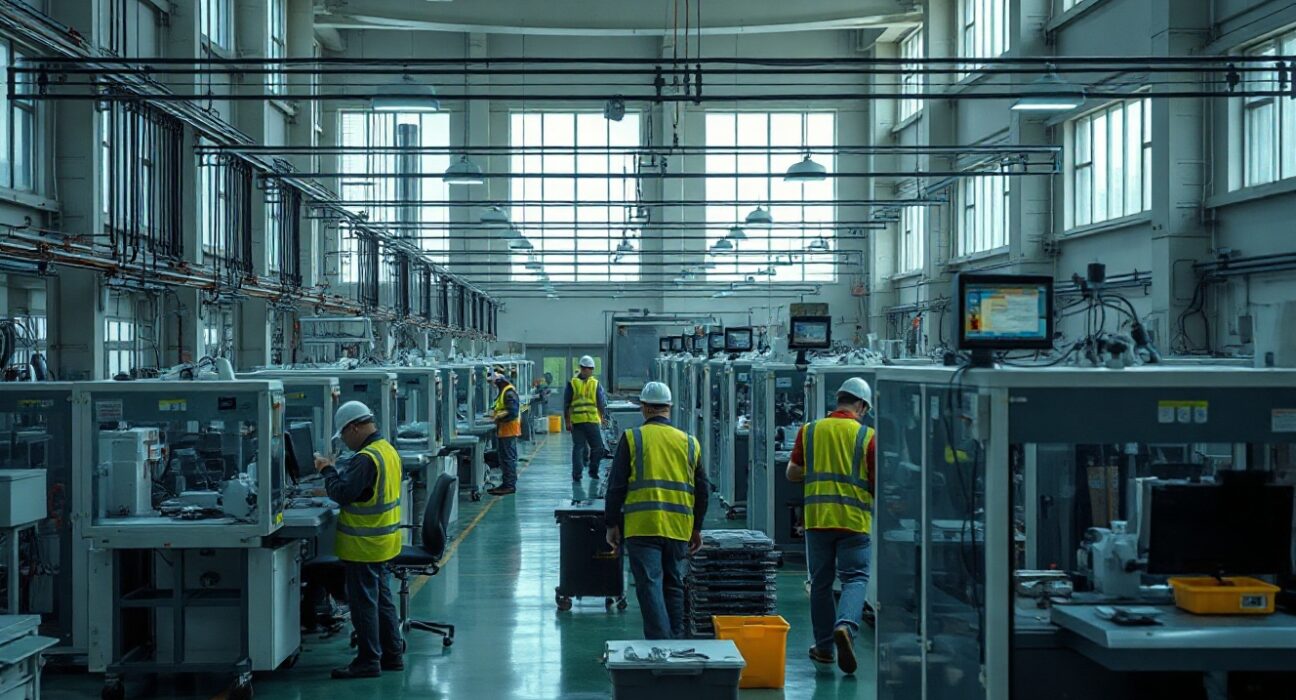
China’s official manufacturing Purchasing Managers’ Index (PMI) registered at 49.2 in July, below the expected 50.0 and down from 49.5 in June, signaling a deepening contraction in the country’s factory activity, according to data released by the National Bureau of Statistics (NBS) on July 31.
What the PMI Reading Indicates
A PMI reading above 50 indicates expansion, while a figure below 50 signals contraction. The July figure of 49.2 marks the third consecutive month of contraction, underscoring persistent weakness in the manufacturing sector amid subdued domestic demand and external headwinds.
The decline was broad-based, with both production and new orders indices falling. The new export orders sub-index also remained in contractionary territory, reflecting ongoing challenges in global trade. This suggests that manufacturers are facing softer demand both at home and abroad.
Why This Matters for the Economy and Markets
The manufacturing sector is a key driver of China’s economic growth, and its continued contraction raises concerns about the broader economic outlook. The data may prompt expectations of further policy support from Beijing, including potential interest rate cuts or increased fiscal spending to stimulate activity.
For global markets, a weaker Chinese manufacturing sector can signal reduced demand for commodities and imported goods, potentially affecting commodity prices and the earnings of multinational companies with significant exposure to China.
Impact on Global Supply Chains
China’s role as the world’s manufacturing hub means that a prolonged downturn could have ripple effects on global supply chains. Companies that rely on Chinese suppliers may face delays or higher costs, while logistics and shipping industries could see reduced volumes.
However, some analysts note that the PMI data may be volatile and that other indicators, such as retail sales and industrial production, have shown resilience in recent months. The services sector, tracked separately, has remained in expansion, offering some offset to manufacturing weakness.
Conclusion
China’s manufacturing PMI falling to 49.2 in July, below expectations, highlights ongoing challenges in the sector. The reading reinforces the case for targeted policy measures to support growth, while its global implications warrant close monitoring by investors and businesses.
FAQs
Q1: What is the PMI and why is it important?
The Purchasing Managers’ Index is a key economic indicator based on monthly surveys of purchasing managers in the manufacturing sector. A reading above 50 signals expansion, below 50 indicates contraction. It is closely watched as an early gauge of economic health.
Q2: What does a PMI below 50 mean for the average consumer?
A PMI below 50 suggests that manufacturing activity is shrinking, which could lead to slower economic growth, potential job losses in the sector, and possibly lower consumer confidence. However, it may also lead to lower prices for goods if demand weakens.
Q3: How does China’s manufacturing PMI affect global markets?
China is a major engine of global growth and a top importer of raw materials. A weak PMI can signal reduced demand for commodities, impacting prices, and can also affect companies that rely on Chinese manufacturing, influencing stock markets worldwide.
Disclaimer: The information provided is not trading advice, Bitcoinworld.co.in holds no liability for any investments made based on the information provided on this page. We strongly recommend independent research and/or consultation with a qualified professional before making any investment decisions.
