

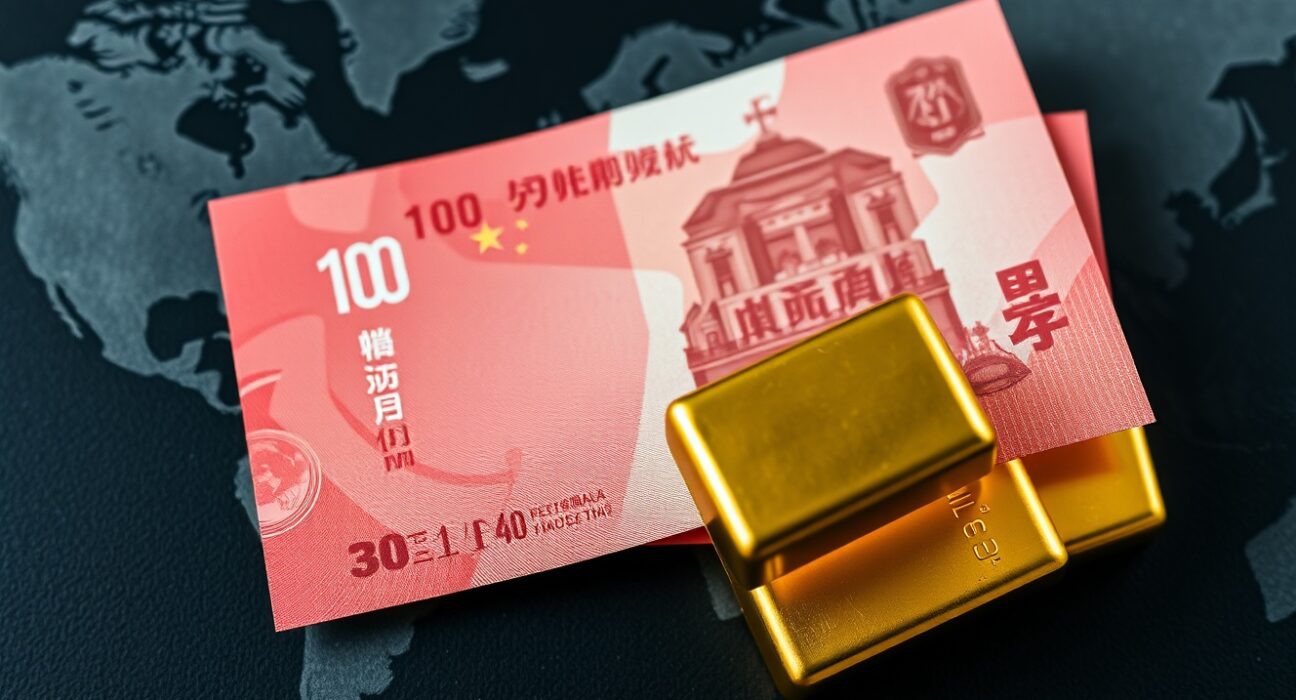
PARIS, March 2025 – The Chinese yuan (CNY) is rapidly evolving beyond its traditional role as an emerging market currency, with new analysis from Societe Generale highlighting its growing status as a global safe-haven asset. This significant shift, driven by deliberate policy measures and sustained economic strength, is fundamentally altering the dynamics of international finance and reserve management.
Chinese Yuan’s Safe-Haven Transformation
Historically, investors have flocked to assets like the US dollar, Swiss franc, Japanese yen, and gold during periods of market stress. However, recent geopolitical tensions and monetary policy divergence have prompted a reassessment of traditional havens. Consequently, the Chinese yuan has begun to demonstrate inverse correlation patterns during specific risk-off events. For instance, during regional banking uncertainties in early 2024, the CNY appreciated against a basket of currencies while other risk-sensitive assets declined. This behavior stems from China’s massive foreign exchange reserves, which exceed $3.2 trillion, providing a substantial buffer against external shocks. Furthermore, the country’s controlled capital account and managed exchange rate regime offer a perceived stability that contrasts with the volatility of freely floating currencies.
The Mechanics of Yuan Strength and Stability
Several structural factors underpin the yuan’s newfound resilience. First, China’s persistent trade surpluses generate a steady inflow of foreign currency, naturally supporting the CNY’s value. Second, the People’s Bank of China (PBOC) has refined its macroprudential toolkit, using tools like the counter-cyclical factor in its daily fixing to smooth excessive volatility without abandoning market-driven pricing. Third, the deepening of domestic financial markets, including the expansion of Chinese government bond programs, provides foreign investors with more liquid and accessible assets to hold. As a result, the currency’s correlation with global risk sentiment has demonstrably weakened over the past 24 months. A comparison of key safe-haven attributes illustrates this shift:
| Attribute | Traditional Safe Haven (USD) | Chinese Yuan (CNY) |
|---|---|---|
| Liquidity Depth | Extremely High | High & Growing |
| Policy Transparency | High | Moderate & Improving |
| Capital Account Openness | Fully Open | Managed & Gradual |
| Reserve Asset Backing | Strong | Exceptionally Strong |
Societe Generale’s Analytical Perspective
Economists at Societe Generale point to specific chart patterns and flow data that evidence this transition. Their research identifies increased CNY holdings in the reserve portfolios of central banks across Southeast Asia, the Middle East, and even some European nations. These institutions are not merely diversifying away from the US dollar; they are actively seeking stability from a currency backed by the world’s second-largest economy. Additionally, the bank’s analysis notes a decline in the yuan’s volatility index relative to its emerging market peers, bringing it closer to the profile of developed market currencies. This technical evidence supports the narrative of a fundamental re-rating.
Global Impacts and the Future of Reserve Currencies
The yuan’s ascent as a safe-haven asset carries profound implications. For global businesses, it provides an alternative currency for invoicing and settlement, potentially reducing transaction costs and hedging needs. For commodity markets, priced predominantly in US dollars, a viable competitor could gradually alter pricing mechanisms. Most importantly, for the international monetary system, it signals a move toward a multipolar currency world. This shift does not happen overnight, but the trajectory is clear. Key milestones in the yuan’s internationalization journey include:
- 2009: Launch of cross-border trade settlement pilot in CNY.
- 2016: Inclusion in the IMF’s Special Drawing Rights (SDR) basket.
- 2022: Expansion of the Cross-Border Interbank Payment System (CIPS).
- 2024: Record usage in bilateral trade agreements with BRICS+ nations.
Therefore, the current recognition of its safe-haven qualities represents a qualitative leap rather than a quantitative increment.
Conclusion
The analysis from Societe Generale confirms a pivotal development in global finance: the Chinese yuan is solidifying its role as a legitimate safe-haven currency. Driven by strategic policy, economic heft, and deliberate market development, the stronger CNY offers the world a new pillar of stability. While challenges regarding full convertibility and transparency remain, the trend toward currency multipolarity is now unmistakable. Consequently, investors, policymakers, and corporations must now factor the yuan’s safe-haven characteristics into their long-term strategic planning for 2025 and beyond.
FAQs
Q1: What exactly is a ‘safe-haven’ currency?
A safe-haven currency is one that tends to retain or increase its value during periods of global market turmoil, geopolitical stress, or economic uncertainty. Investors buy these currencies to preserve capital.
Q2: Why is the Chinese yuan considered a safe-haven now when it wasn’t before?
The yuan’s status has evolved due to China’s enormous foreign exchange reserves, reduced currency volatility through managed policies, deepening capital markets that offer foreign investors more assets, and its increasing use in global trade and central bank reserves.
Q3: Does this mean the yuan will replace the US dollar?
Not in the immediate future. The US dollar remains the world’s dominant reserve currency. The yuan’s rise indicates a move toward a multipolar system where several currencies, including the euro and yuan, play significant roles alongside the dollar.
Q4: How can ordinary investors gain exposure to the Chinese yuan?
Investors can access the yuan through currency ETFs (exchange-traded funds), yuan-denominated bonds (often called ‘dim sum’ bonds), or through financial instruments offered by banks and brokers that track the CNY exchange rate.
Q5: What are the main risks to the yuan’s safe-haven status?
Key risks include a significant slowdown in China’s economic growth, unexpected changes in capital control policies that affect liquidity, and geopolitical events that specifically impact China’s financial integration with the rest of the world.
Disclaimer: The information provided is not trading advice, Bitcoinworld.co.in holds no liability for any investments made based on the information provided on this page. We strongly recommend independent research and/or consultation with a qualified professional before making any investment decisions.
