

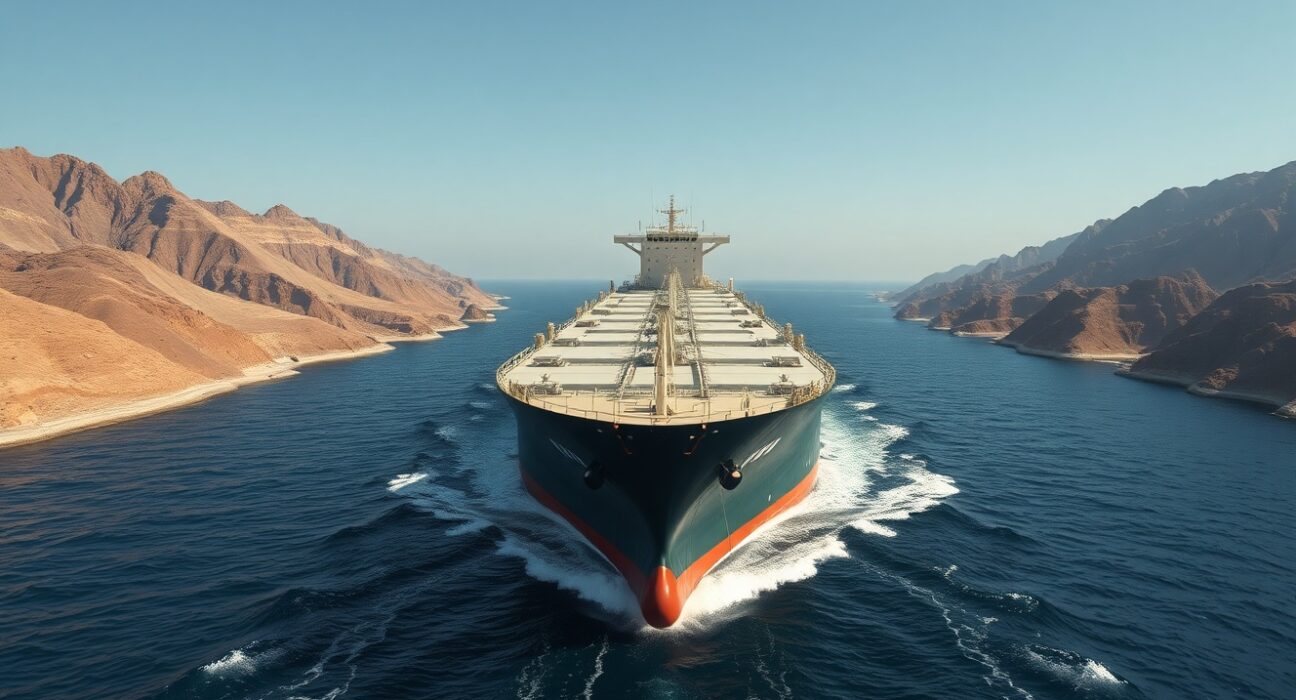
Global crude oil markets experienced a dramatic surge on Monday, March 10, 2025, as escalating military incidents in the critical Strait of Hormuz choked a vital artery for the world’s energy supply. Brent crude futures soared past $95 per barrel, marking the most significant single-day percentage gain in over a year. This price explosion directly reflects the market’s acute sensitivity to supply disruptions from the Persian Gulf. Consequently, analysts are now warning of sustained volatility and potential economic repercussions worldwide.
Crude Oil Prices React to Immediate Geopolitical Shock
The immediate catalyst for the price spike was a confirmed incident involving commercial shipping. According to maritime security reports, a series of unexplained explosions occurred near vessels transiting the strait. Furthermore, regional naval forces subsequently heightened their alert status. This development triggered an automatic risk premium in oil futures contracts. Traders rapidly priced in the heightened possibility of a prolonged supply blockage. The Strait of Hormuz is arguably the world’s most important oil transit chokepoint. Notably, the U.S. Energy Information Administration (EIA) states it handled about 21% of global petroleum liquids consumption in 2023. Therefore, any threat to this corridor sends immediate shockwaves through financial markets.
The Strategic Importance of the Strait of Hormuz
Understanding the price reaction requires context about this narrow waterway. The strait is a mere 21 nautical miles wide at its narrowest point. Its shipping lanes are just two miles wide in either direction. This geography creates an inherent vulnerability. Major oil exporters like Saudi Arabia, Iraq, the United Arab Emirates, and Qatar rely almost exclusively on this passage. For instance, over 85% of the crude oil and liquids exported from Saudi Arabia transited the strait last year. The following table illustrates the dependency of key producers:
| Country | Estimated Oil Exports via Strait (Million Barrels Per Day) | Percentage of Total Exports |
|---|---|---|
| Saudi Arabia | ~6.2 | ~87% |
| Iraq | ~3.3 | ~92% |
| United Arab Emirates | ~2.6 | ~99% |
| Qatar (LNG & Condensate) | ~1.8 | ~100% |
This concentration of supply creates systemic risk. A closure would force lengthy and costly rerouting. Alternate pipelines have limited spare capacity. Consequently, global spare production capacity would be tested severely. The International Energy Agency (IEA) maintains emergency stockpiles. However, these are designed for temporary disruptions, not a prolonged crisis.
Historical Precedents and Market Psychology
Market reactions are amplified by historical memory. Previous incidents in the Gulf have caused sharp but often temporary spikes. For example, the 2019 attacks on tankers and the 2022 Houthi threats led to similar volatility. However, analysts note the current geopolitical landscape is more fragile. Diplomatic channels appear strained. Military posturing has increased on all sides. This context makes the current situation uniquely dangerous. “The market is pricing in not just the event, but the escalating trend,” noted Dr. Anya Sharma, Lead Geopolitical Analyst at Global Energy Insights. “The risk premium now includes a higher probability of a miscalculation leading to a wider conflict.”
Global Impacts and Economic Repercussions
The surge in crude oil prices transmits instantly to the broader economy. Higher energy costs act as a tax on consumers and businesses. Key impacts include:
- Transportation Costs: Jet fuel, diesel, and gasoline prices rise immediately, increasing logistics expenses.
- Inflationary Pressure: Central banks, already cautious, may delay interest rate cuts if energy inflation persists.
- Consumer Spending: Discretionary income shrinks as more money is spent on fuel and heating.
- Corporate Margins: Industries like airlines, shipping, and manufacturing face squeezed profitability.
Emerging markets with high oil import bills are particularly vulnerable. Countries like India and Turkey could see fiscal and current account pressures intensify. Conversely, major exporters like Saudi Arabia and Norway may see short-term fiscal benefits. Nevertheless, prolonged high prices ultimately dampen global demand, harming all producers.
Energy Security and the Diversification Imperative
This crisis underscores the persistent fragility of global energy security. For decades, the world’s reliance on this single chokepoint has been a known strategic vulnerability. The current price shock will likely accelerate several existing trends:
- Strategic Stockpile Releases: The IEA and member countries may coordinate a release to calm markets.
- Investment in Alternatives: Economic viability for renewable energy and electric vehicles improves with higher oil prices.
- Supply Chain Rerouting: Shippers may increasingly consider longer routes around Africa, despite higher costs.
- Infrastructure Development: Pressure may grow to expand alternative pipeline networks, like the Iraq-Turkey pipeline.
However, diversification is a long-term project. In the immediate term, the market remains captive to the Strait’s security. Naval patrols by a U.S.-led coalition and regional actors are the primary deterrent. The effectiveness of these patrols in de-escalating the current situation is now the critical watchpoint for traders.
Conclusion
The explosive rise in crude oil prices is a direct barometer of geopolitical risk centered on the Strait of Hormuz. This event highlights the interconnected nature of energy, geography, and global security. While markets may stabilize if tensions ease, the underlying vulnerability remains. The crisis serves as a stark reminder that the transition to a more secure and diversified energy system is not just an environmental imperative but an economic and strategic one. The path of crude oil prices in the coming weeks will depend heavily on diplomatic and military developments in this narrow but crucial waterway.
FAQs
Q1: What exactly is the Strait of Hormuz and why is it so important for oil?
The Strait of Hormuz is a narrow channel between the Persian Gulf and the Gulf of Oman. It is the world’s most important oil transit chokepoint, with about one-fifth of global oil consumption passing through it daily from major producers like Saudi Arabia and Iraq.
Q2: How much did crude oil prices actually increase?
In the immediate reaction to the crisis, benchmark Brent crude futures surged by over 8%, breaking above $95 per barrel. This represents the largest single-day percentage gain in over a year.
Q3: Could this crisis lead to even higher gasoline prices?
Yes, typically. Crude oil is the primary feedstock for gasoline. A sustained increase in crude oil prices usually translates to higher prices at the pump within a period of one to two weeks, depending on regional refining and distribution factors.
Q4: Are there any alternative routes for oil if the Strait closes?
Yes, but they are limited. Some pipelines, like the Petroline in Saudi Arabia and the Iraq-Turkey pipeline, can bypass the strait, but their combined capacity is far less than the volume shipped by sea. Rerouting tankers around the southern tip of Africa adds significant time and cost.
Q5: What can governments do to stabilize the market?
Governments and agencies like the International Energy Agency (IEA) can authorize releases from strategic petroleum reserves (SPRs) to increase immediate supply. Diplomatic efforts to de-escalate the military situation are the most critical long-term action for market stability.
Disclaimer: The information provided is not trading advice, Bitcoinworld.co.in holds no liability for any investments made based on the information provided on this page. We strongly recommend independent research and/or consultation with a qualified professional before making any investment decisions.
