

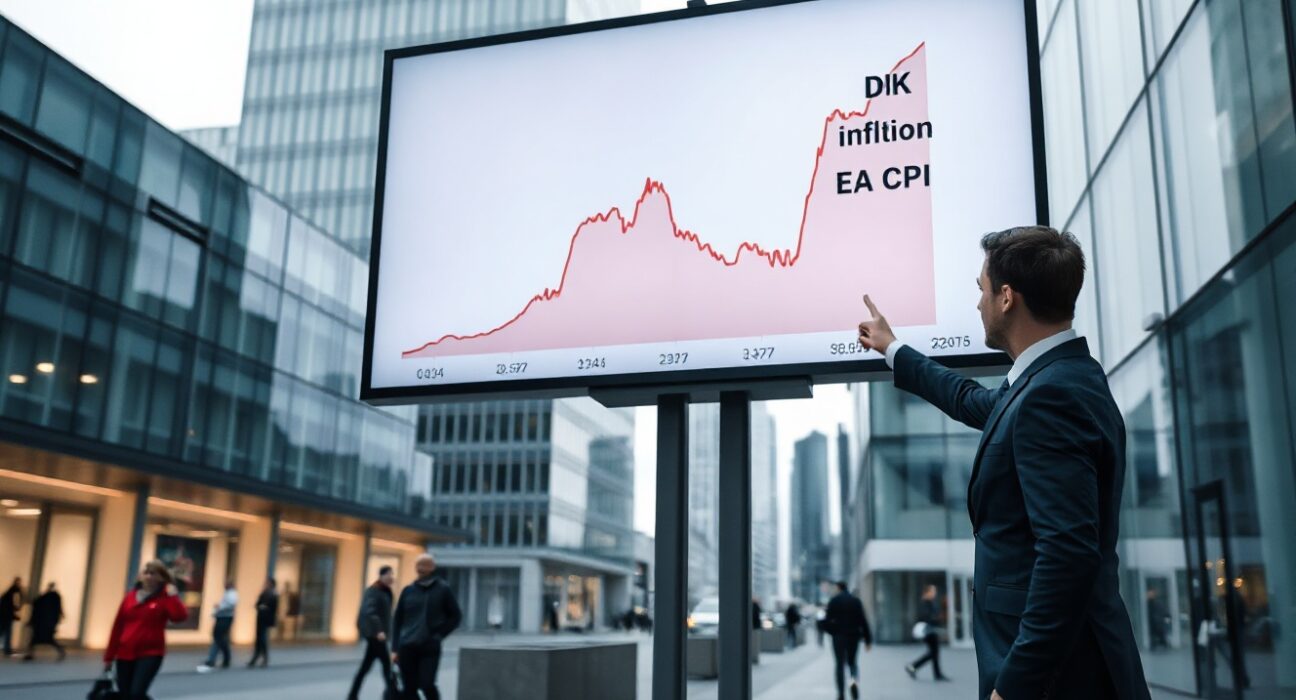
Denmark’s core inflation rate has shown a modest uptick, even as the country’s headline consumer price index (CPI) continues to trail the broader Euro area average, according to a recent analysis from Nordea. The data, which reflects the latest available readings, offers a nuanced picture of price pressures within the Danish economy.
Core Inflation on the Rise
Nordea’s report highlights that Denmark’s core inflation—a measure that excludes volatile items such as energy and unprocessed food—has increased. This rise suggests that underlying price pressures are building, potentially driven by domestic factors like wage growth or service sector costs. The bank’s economists note that while the headline figure remains relatively subdued, the core measure warrants close monitoring.
Headline CPI Below Euro Area
In contrast, Denmark’s headline CPI remains below the Euro area average. This divergence is partly attributed to differences in energy price dynamics and government subsidy programs. For instance, Danish households have benefited from caps on electricity and gas prices, which have tempered the overall inflation rate compared to neighboring countries in the Eurozone.
What This Means for the Danish Economy
The mixed inflation signals present a challenge for policymakers. The central bank, Danmarks Nationalbank, which pegs its currency to the euro, may find its monetary policy constrained by Eurozone decisions. A rising core inflation rate could, over time, influence wage negotiations and consumer spending patterns. For businesses, particularly those in the services sector, input costs may be rising even if headline inflation appears stable.
Nordea’s Outlook
Nordea’s analysts expect that Denmark’s core inflation will remain elevated in the coming months, while headline CPI may gradually converge toward the Euro area average as energy subsidies phase out. The bank advises investors and businesses to focus on core inflation trends for a clearer signal of domestic price dynamics.
Conclusion
Denmark’s latest inflation data reveals a subtle but important divergence: core pressures are building even as the headline figure stays contained relative to the Euro area. For readers, this means that while the cost of living may not be rising sharply overall, certain sectors and expenses are experiencing more significant price increases. Monitoring core inflation will be key to understanding the true trajectory of Danish inflation.
FAQs
Q1: Why is Denmark’s headline CPI lower than the Euro area average?
Denmark has implemented energy price caps and subsidies that have reduced the impact of rising energy costs on the headline CPI, keeping it below the Euro area average.
Q2: What does ‘core inflation’ exclude?
Core inflation excludes volatile items like energy and unprocessed food, providing a clearer view of underlying, sustained price trends in the economy.
Q3: How does Denmark’s inflation affect its monetary policy?
Denmark’s central bank pegs the krone to the euro, so its interest rate decisions are heavily influenced by the European Central Bank. Rising core inflation could create tension if the ECB maintains a looser policy.
Disclaimer: The information provided is not trading advice, Bitcoinworld.co.in holds no liability for any investments made based on the information provided on this page. We strongly recommend independent research and/or consultation with a qualified professional before making any investment decisions.
