

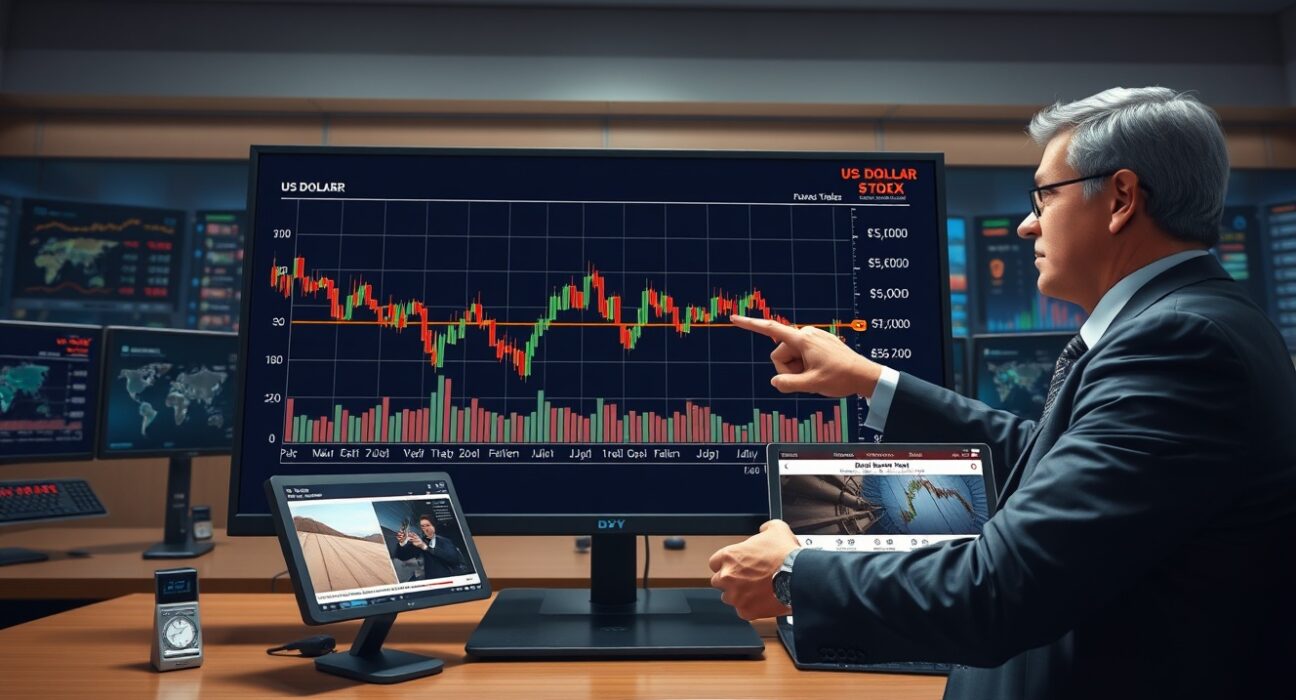
LONDON, March 14, 2025 – The US dollar extended its downward trajectory this week, positioning itself for a second consecutive weekly decline as renewed diplomatic momentum toward Iran peace negotiations triggered significant shifts across global currency markets. Market analysts now observe substantial capital rotation away from traditional safe-haven assets, reflecting changing investor perceptions of geopolitical risk.
Dollar Decline Accelerates Amid Diplomatic Developments
The dollar index (DXY), which measures the US currency against a basket of six major counterparts, fell approximately 0.8% this week alone. This movement follows last week’s 1.2% decline, marking the currency’s most sustained downward pressure since early 2024. Consequently, market participants have redirected capital toward emerging market currencies and commodities. The euro gained 0.6% against the dollar, while the Japanese yen appreciated by 0.9% during the same period.
Diplomatic sources confirmed preliminary talks between Western powers and Iranian officials in Geneva this week. These discussions focused on reviving the nuclear agreement framework abandoned in 2018. Furthermore, regional mediators reported progress on subsidiary agreements concerning regional security arrangements. Market reaction has been immediate and pronounced, with traders adjusting positions based on reduced Middle East tension expectations.
Geopolitical Shifts Reshape Currency Markets
Currency markets function as sensitive barometers of global political developments. The potential normalization of Iran’s international relations carries profound implications for several key economic factors. First, reduced regional tensions typically decrease demand for the US dollar as a safe-haven asset. Second, the prospect of Iranian oil returning to global markets could pressure energy prices, affecting petrodollar flows.
Expert Analysis on Market Dynamics
Dr. Evelyn Reed, Chief Currency Strategist at Global Financial Insights, provided context during a market briefing. “Historical patterns show currency markets often price in diplomatic developments weeks before official announcements,” Reed explained. “The current dollar weakness reflects sophisticated algorithmic trading responding to sentiment indicators from diplomatic channels.” She emphasized that markets now price in a 40% probability of a comprehensive agreement within six months.
The following table illustrates recent currency movements against the US dollar:
| Currency | Weekly Change | Primary Driver |
|---|---|---|
| Euro (EUR) | +0.6% | Reduced safe-haven demand |
| Japanese Yen (JPY) | +0.9% | Carry trade unwinding |
| Swiss Franc (CHF) | +0.4% | Moderate risk-on sentiment |
| British Pound (GBP) | +0.5% | Broad dollar weakness |
Several interconnected factors contribute to this market movement:
- Reduced safe-haven demand: Investors typically flock to the dollar during geopolitical uncertainty
- Commodity price expectations: Potential Iranian oil exports could alter global energy dynamics
- Interest rate differentials: Changing risk perceptions affect Federal Reserve policy expectations
- Capital flow patterns: Institutional investors rebalance portfolios toward growth-sensitive assets
Historical Context and Market Psychology
Currency traders frequently reference previous diplomatic breakthroughs when analyzing current movements. The 2015 Iran nuclear agreement triggered similar dollar weakness, though today’s market structure differs substantially. Currently, algorithmic trading accounts for approximately 80% of forex volume, compared to 60% in 2015. This automation accelerates price discovery but may amplify short-term volatility.
Market psychology plays a crucial role in these developments. The mere possibility of reduced Middle East tensions creates self-reinforcing market dynamics. As the dollar weakens, commodity prices denominated in dollars often rise, creating inflationary pressures that may influence central bank policies. This complex interplay demonstrates how diplomatic developments cascade through global financial systems.
Regional Economic Implications
Middle Eastern currencies have shown mixed reactions to these developments. The Saudi riyal, pegged to the US dollar, remains stable through its currency board arrangement. However, regional stock markets have generally rallied on improved economic outlooks. The Dubai Financial Market Index gained 2.3% this week, while Qatar’s index rose 1.8%. These movements suggest regional investors anticipate increased trade and investment flows if diplomatic progress continues.
Energy market analysts note particular attention to oil price movements. Brent crude futures declined 1.5% this week on expectations of increased supply. “The market is pricing in approximately 500,000 additional barrels per day within six months of sanctions relief,” noted energy analyst Marcus Chen. “This represents a fundamental shift in global supply dynamics.”
Federal Reserve Policy Considerations
The dollar’s weakness presents complex considerations for Federal Reserve policymakers. A weaker dollar typically supports US exports but may increase import prices. Fed officials monitor currency movements as part of their dual mandate assessment. Current market pricing suggests reduced expectations for aggressive interest rate hikes, with futures indicating only one additional increase likely in 2025.
International capital flows provide additional context. US Treasury data shows foreign investors reduced holdings of US government debt by $12 billion last month. While not a dramatic shift, this trend warrants monitoring if diplomatic progress continues. Central bank reserve managers may gradually diversify holdings if geopolitical risk perceptions meaningfully change.
Technical Analysis and Trading Patterns
From a technical perspective, the dollar index faces crucial support levels. The DXY currently tests its 100-day moving average, a key technical indicator watched by institutional traders. A sustained break below this level could trigger additional algorithmic selling. Trading volume analysis shows increased activity during European and Asian sessions, suggesting global participation in this thematic trade.
Options market data reveals growing demand for dollar put options, particularly against commodity-linked currencies. The Australian dollar and Canadian dollar have both benefited from this trend. Implied volatility in dollar currency pairs has increased moderately, reflecting uncertainty about diplomatic outcomes. This volatility creates both risk and opportunity for currency market participants.
Conclusion
The dollar decline reflects sophisticated market processing of evolving geopolitical developments. As Iran peace hopes gain diplomatic traction, currency markets continue adjusting to potential new realities. This dollar weakness demonstrates how financial markets function as forward-looking mechanisms, incorporating complex political developments into price discovery. The coming weeks will prove crucial for determining whether this trend represents short-term positioning or a more fundamental recalibration of global currency relationships. Market participants should monitor diplomatic developments alongside economic indicators for complete context.
FAQs
Q1: Why does the dollar decline when Iran peace talks progress?
The US dollar often functions as a safe-haven currency during geopolitical uncertainty. Reduced tensions decrease demand for this safe-haven status, while potential Iranian oil exports could alter global dollar flows.
Q2: How significant is a second weekly decline for the dollar?
While not unprecedented, consecutive weekly declines often indicate sustained market sentiment shifts rather than temporary fluctuations, particularly when driven by geopolitical developments.
Q3: Which currencies typically benefit from dollar weakness in this context?
Commodity-linked currencies (AUD, CAD), regional Middle Eastern currencies, and traditional safe-havens like the yen and Swiss franc often see relative strength during such periods.
Q4: Could this dollar decline affect Federal Reserve policy?
Potentially. The Fed considers currency movements as part of its economic assessment, particularly regarding import/export prices and financial conditions, though domestic inflation and employment remain primary focuses.
Q5: How do algorithmic trading systems respond to such geopolitical developments?
Modern trading algorithms analyze news sentiment, diplomatic statements, and market correlations, often executing trades within milliseconds of relevant information becoming available, which can amplify short-term movements.
Disclaimer: The information provided is not trading advice, Bitcoinworld.co.in holds no liability for any investments made based on the information provided on this page. We strongly recommend independent research and/or consultation with a qualified professional before making any investment decisions.
